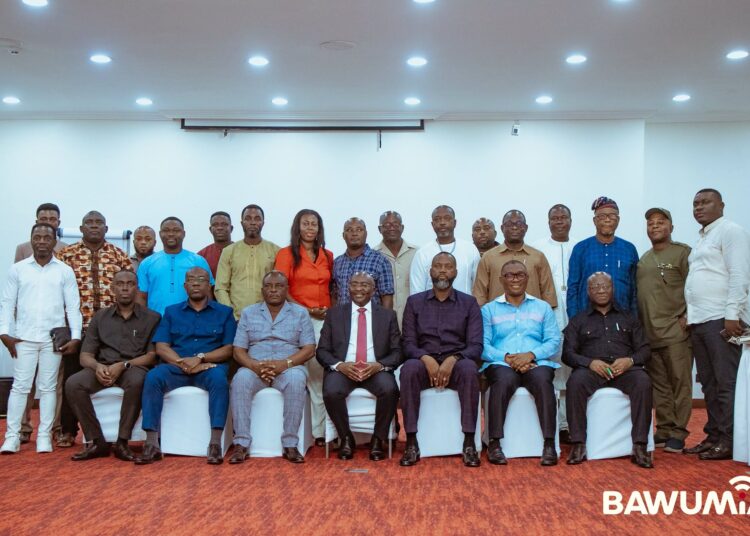
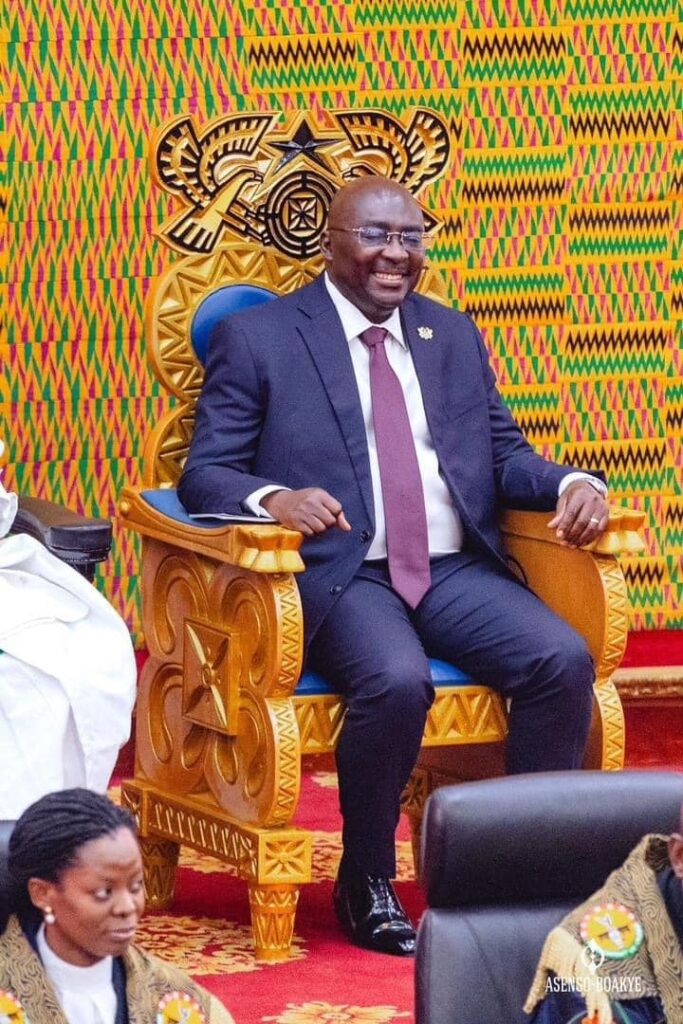
Dr. Mahamudu Bawumia, former Vice President and Flagbearer of the New Patriotic Party (NPP), spearheaded a high-level consultation with the leadership of the Ghana National Association of Small-Scale Miners (GNASSM) to map out actionable policy frameworks for the extractive industry.
The strategic session focused on developing sustainable mechanisms to reform artisanal operations, enforce environmental safeguards, and accelerate local value addition.
“Together with members of the NPP’s Identifiable Groups Committee on the Extractive Sector, I had a productive engagement today with the Ghana National Association of Small-Scale Miners as part of our ongoing consultations with key stakeholders. We discussed the challenges facing small-scale mining and practical reforms to promote responsible mining, protect the environment, create jobs and strengthen local value addition. I look forward to continued collaboration towards a sustainable and productive extractive sector.”
Dr. Mahamudu Bawumia,
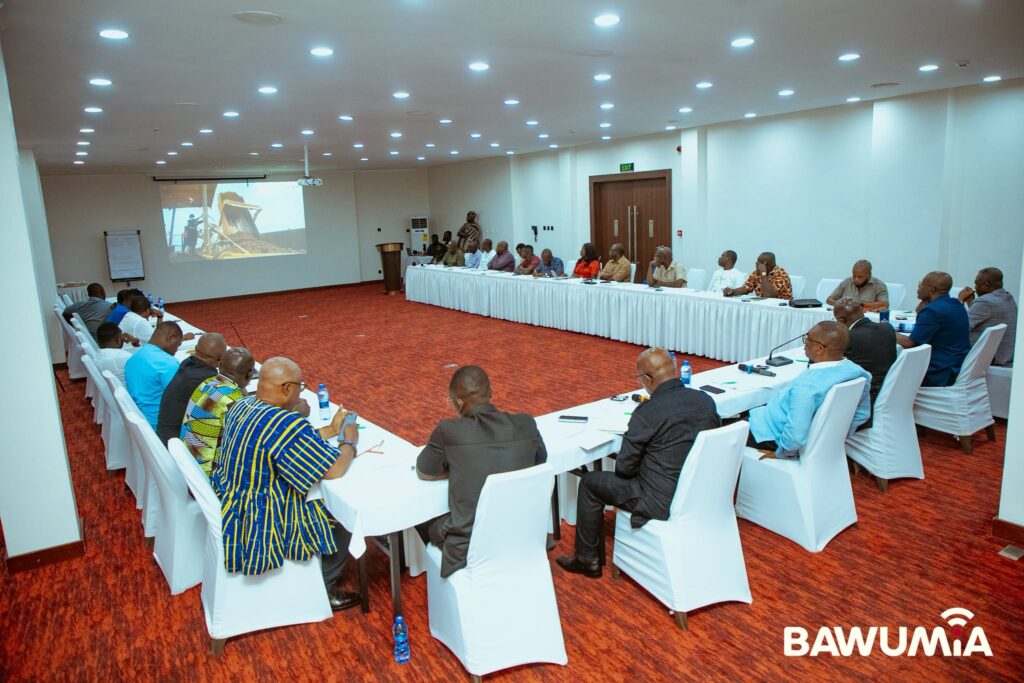
Building on this foundational dialogue, Dr. Bawumia and members of the NPP’s Identifiable Groups Committee on the Extractive Sector reviewed the socio-economic bottlenecks currently impeding small-scale operators.
The deliberations emphasized the need to formalize traditional operations, safeguard livelihoods, and bridge the gap between regulatory compliance and financial viability. By aligning party policy with on-the-ground operational realities, the NPP flagbearer aims to establish a transparent, environmentally friendly, and job-creating mining ecosystem that maximizes national resource benefits.
Imperative for High-Level Stakeholder Engagement
The decision to convene this dialogue underscores the critical role artisanal and small-scale mining (ASM) plays in Ghana’s national economy.
Accounting for a significant share of the country’s total gold output and providing direct employment for over one million Ghanaians, the small-scale sector remains a primary economic engine for rural communities.
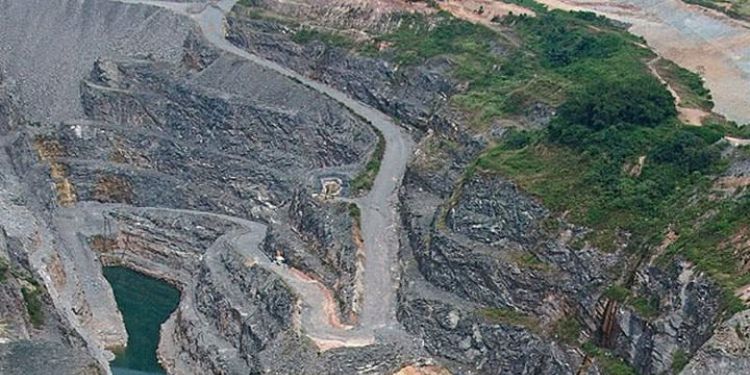
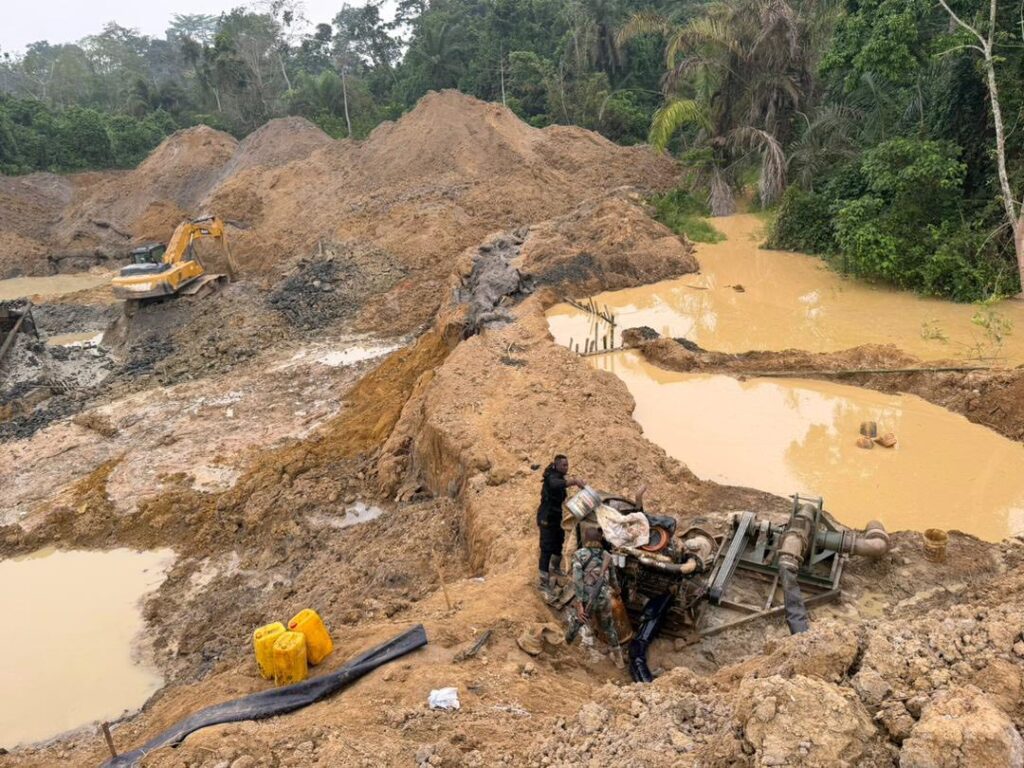
However, persistent issues ranging from land degradation and water pollution to bureaucratic licensing delays and inadequate access to formal credit have long hampered its potential.
Policy interventions must move beyond pure enforcement toward structured formalization. By directly consulting GNASSM operators, Dr. Bawumia seeks to craft reforms that balance strict ecological preservation with targeted economic empowerment, preventing legitimate operators from being squeezed out by illegal activity.
Policy Framework and Technical Re-engineering
Central to the discussions were structured proposals designed to modernize artisanal operations into robust, medium-scale enterprises.
The proposed reforms prioritize capacity building, decentralized regulatory supervision, and the provision of state-of-the-art reclamation equipment to minimize environmental degradation.
Furthermore, expanding the Community Mining Scheme and streamlining license approvals through district offices will ensure that miners operate within legal boundaries without facing unreasonable entry barriers.
These structural adjustments aim to transition informal miners into recognized commercial entities capable of adopting eco-friendly technology, such as mercury-free processing plants, thereby safeguarding river bodies and arable lands.
Strengthening Local Value Addition and Economic Inclusion
Beyond environmental sustainability, the engagement highlighted mechanisms to retain wealth within mining communities through structured value addition and domestic gold aggregation.
By strengthening the link between small-scale producers and state buying mechanisms such as the Bank of Ghana’s Domestic Gold Buying Programme the proposed policies intend to secure fair market pricing for miners while bolstering national reserves.
Integrating small-scale gold into domestic refining pipelines will expand local supply chains, foster downstream job creation, and ensure that indigenous miners drive national industrialization.
Collaborative policymaking remains the cornerstone for transforming Ghana’s extractive industry into a resilient model of sustainable resource management.
READ ALSO: Thousands of Seafarers Stranded in Persian Gulf as Shipping Crisis Deepens – IMO