
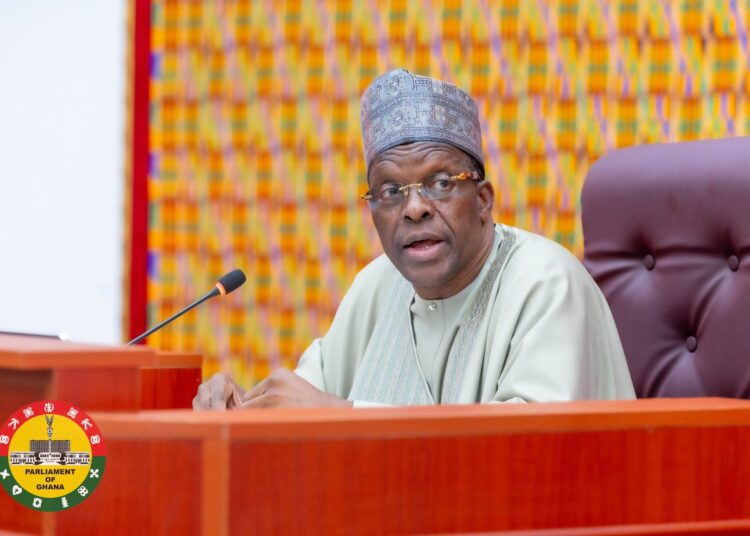
Parliament has approved President John Dramani Mahama’s five nominees to the Fiscal Council, putting members in place at a watchdog institution that has existed on paper since April last year. The House adopted the report of the Appointments Committee on a voice vote on Thursday, 27 August, during the emergency sitting recalled by Speaker Alban Bagbin.
The approval clears Dr Emmanuel Oteng Kumah to chair the body, alongside four members drawn from the categories the law prescribes. Speaker Bagbin used the moment to raise an objection of his own, telling the House the Council as constituted is a men’s club.
Procedural Motion Clears the Way
First Deputy Speaker Bernard Ahiafor, who chairs the Appointments Committee, moved the procedural motion on the Order Paper Addendum after the Committee’s report was laid and distributed to Members. Majority Leader James Agalga seconded it, and the Speaker carried it on the voices without objection.
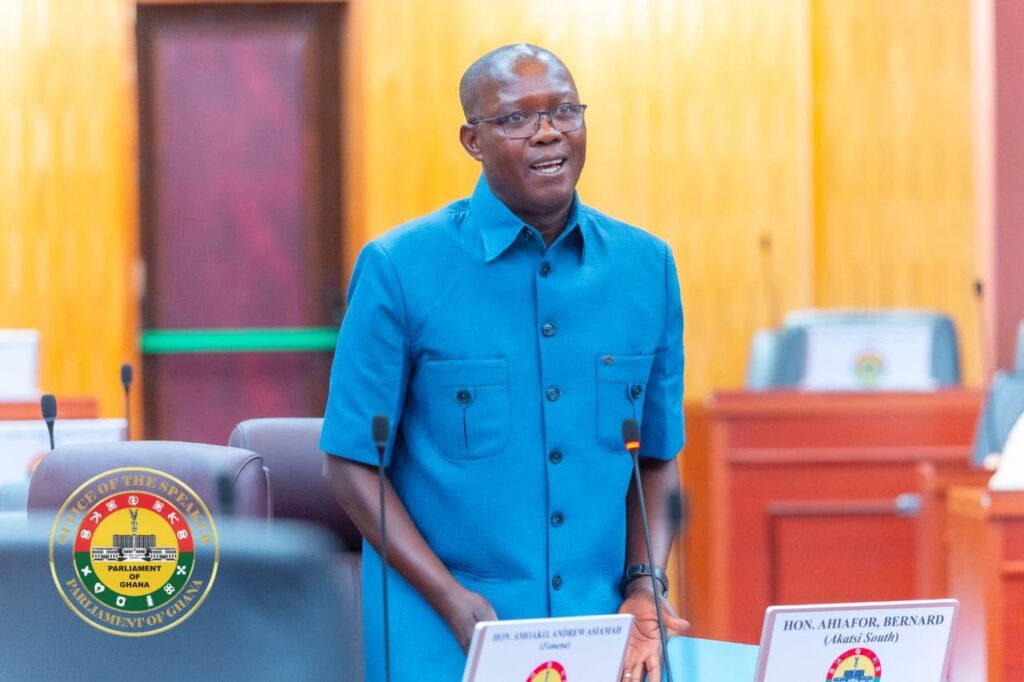
Hon. Bernard Ahiafor then moved the substantive motion for the House to adopt the report, asking that the full document be captured as read while he took the conclusion. He told the House the Committee recommended approval of the nominees by a majority of members present and voting.
Hon. James Agalga, seconding, made the case for the slate on competence. He noted that Oteng Kumah is an economist, that Professor Patrick Opoku Asuming comes from academia and is also an economist, and that the nominees, Dr Henry Kofi Wampah among them, hold the expertise the Council requires.
He prayed the House to approve. The question was put and the ayes carried it.
Speaker Objects to an All-Male Council
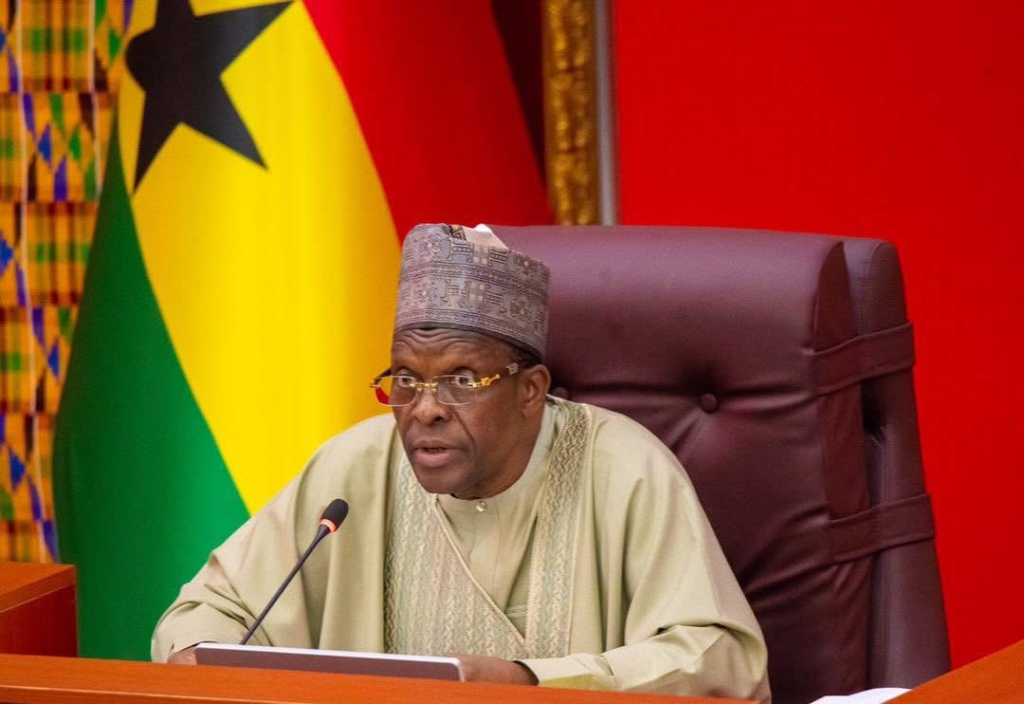
Having congratulated the appointees on behalf of the House, Bagbin drew attention to what the list does not contain. All five members are men. He urged the Council to consult gender partners in its deliberations, arguing that perspectives the body would benefit from sit outside the room as currently composed.
“It should not be a men-only club,” he said, adding that the Fiscal Council is for both men and women and that his intervention came as Speaker and gender advocate rather than from any partisan position.
The remark carries statutory weight beyond the Chamber. The Affirmative Action (Gender Equity) Act, 2024 (Act 1121) sets progressive targets for women’s representation in public appointments, and the Fiscal Council is precisely the kind of statutory body those targets contemplate.
Nothing in the Public Financial Management framework prevented a mixed slate. The categories the law specifies are professional, not gendered.
Who the Five Are
Dr Oteng Kumah takes the chair as an international economic consultant with 25 years at the International Monetary Fund, where he served as a division chief and as resident representative in Djibouti. He is a former board chairman of Standard Chartered Bank Ghana.
Asuming, an associate professor at the University of Ghana Business School, fills the academic seat. He is a development economist with a doctorate from Columbia University.
Leslie Dwight Mensah represents the research think tank category. An economist and senior research fellow at the Institute for Fiscal Studies, he has been among the more visible commentators on Ghana’s debt and fiscal position through the restructuring years.
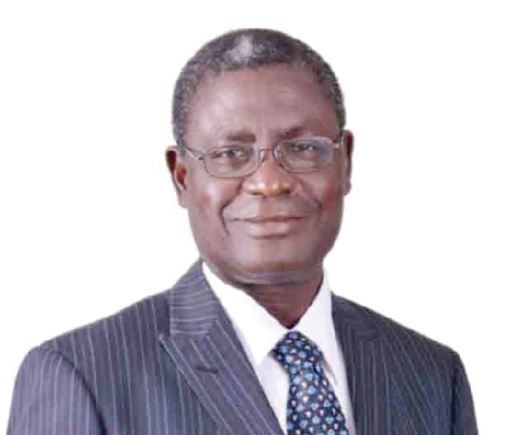
J. Kweku Bedu-Addo occupies the seat reserved for a former public policy expert from the Ministry of Finance. Wampah fills the equivalent seat for the Bank of Ghana, having served as Governor from 2013 to 2016 and as Deputy Governor from 2009, with earlier postings at the IMF and the West African Monetary Institute.
The Council was created by the Public Financial Management (Amendment) Act, 2025 (Act 1136), which President Mahama assented to on 2 April 2025. That law repealed the Fiscal Responsibility Act, 2018, dissolved the Presidential Fiscal Advisory Council and replaced it with a statutory body designed to be harder for government to ignore.
President Mahama submitted the five names to Parliament on 8 April 2026 under Section 11D of Act 921 as amended. Thursday’s approval comes almost five months after that submission and roughly sixteen months after the enabling law took effect, a gap during which Ghana has had fiscal rules on the books with no independent body monitoring compliance.
What the Council Is Meant to Do
Act 1136 gives the Council the job of independently assessing fiscal policy and compliance with two hard rules. The primary balance rule requires an annual surplus of at least 1.5 percent of GDP on a commitment basis. The debt rule caps public debt at 45 percent of GDP by 2034.
The Council advises the government on fiscal policy and supplies Parliament’s budget committee with an assessment of whether the executive is meeting those rules. It is required to hold media engagements at least twice a year to publish its findings.
Members are barred from holding any position in government, a provision written in to protect the body’s independence. The reforms were passed ahead of a September 2025 deadline under Ghana’s IMF-supported programme, which made an independent fiscal institution a structural commitment.
The timing places the new members in an unusually live environment. The Minority has spent this week pressing for a parliamentary inquiry into losses the IMF documented against the Bank of Ghana’s gold purchase programme, put at more than $1.7 billion for 2025.
Assessing exactly that kind of exposure falls squarely within the remit the House has now activated. Whether the Council reaches for it will be the first real measure of the independence Act 1136 promises on paper.
READ ALSO: Bright Simons Urges Data-Driven Exploration to Fix Africa’s Mineral Gap