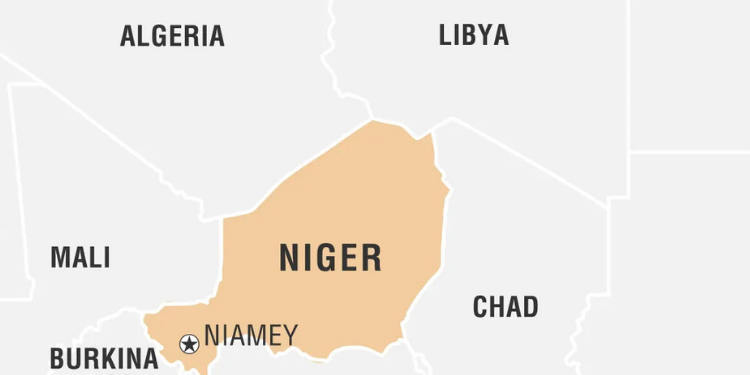
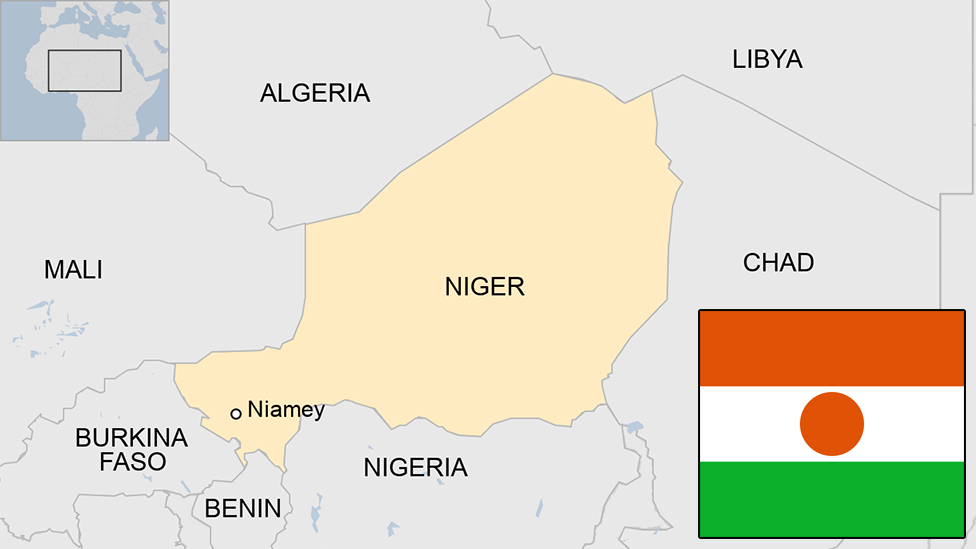
Niger’s capital, Niamey, has been rocked by sustained gunfire and explosions after attackers reportedly targeted the city’s international airport, a major military installation and the security perimeter around the presidential palace.
The sounds of heavy gunfire and blasts were reported across several parts of Niamey with witnesses describing intense exchanges around some of the capital’s most strategically important locations. The exact circumstances surrounding the violence remained unclear as the situation developed, while Niger’s military government had not immediately issued an official statement.
According to reports, “terrorists” had attacked Diori Hamani International Airport and attempted to breach the security perimeter surrounding the presidency. A separate security source noted that government forces had launched search operations and that some of the attackers had been “neutralised” while others had fled. The claims could not immediately be independently verified.
The reported attack comes at a particularly sensitive moment for Niger, a country that has experienced a profound political and security transformation since the military seized power in July 2023. The coup removed President Mohamed Bazoum and brought General Abdourahamane Tiani to power, setting the country on a sharply different foreign and security policy course.
Bana Wagana Ibrahim, a member of Niger’s Bureau of the Consultative Council and a Deputy in the Parliament of the Alliance of Sahel States, disclosed that the attackers had targeted Base 101 but that security forces had regained control of the installation.
The latest violence also highlights the persistent security challenges confronting Niger despite repeated pledges by its military rulers to restore stability.
Niger is one of the countries at the centre of the wider Sahel security crisis, with armed groups linked to al-Qaeda and Islamic State continuing to operate across parts of the region. The threat has affected Niger, Mali and Burkina Faso, all of which are now governed by military regimes and have increasingly coordinated their political and security policies through the Alliance of Sahel States.
The three countries have also moved away from traditional Western security partnerships, including cooperation with France, while developing closer relations with Russia.
Fresh Attack Tests Niger’s Security Strategy as Sahel Violence Persists
The latest incident places renewed scrutiny on Niger’s efforts to strengthen its security capabilities following the withdrawal of Western military partners and the junta’s decision to deepen cooperation with Russia.
The development is also notable because the Niamey airport has already been targeted this year. In January, the Islamic State affiliate in the Sahel claimed responsibility for an assault on the airport and nearby military airbase.
In June, another attack struck the airport and military airbase, with al-Qaeda-linked Jama’at Nusrat al-Islam wal Muslimin claiming responsibility.
The repeated attacks demonstrate the extent to which strategic installations in the capital remain exposed despite increased military efforts to strengthen security.
Niger’s security environment is also unfolding against major economic and geopolitical changes. The country is a significant producer of uranium and also possesses substantial oil and gold resources, making it strategically important to international markets. Its uranium sector has become a major point of tension with France following the junta’s seizure of assets belonging to French nuclear company Orano.
Recently, the Nigerien government reportedly reassigned former Orano and GoviEx uranium permits to state-backed companies, further consolidating state control over the sector.
The economic dimension adds another layer of significance to the security situation. Niger was previously an important supplier of uranium to Europe, with the country accounting for about 15% of Orano’s uranium supply at full capacity before relations deteriorated and the junta seized the company’s assets.
For the military government, maintaining control over strategic infrastructure is therefore not only a security priority but also crucial to protecting the country’s economic resources and political authority.
However, the ongoing attacks cast doubt on whether the security plan put in place since the coup in 2023 is bringing about the stability the junta has promised. Niger will be able to deal with armed groups more successfully, according to the military authorities, if there is more national control over security policy and tighter collaboration with new foreign partners. Nonetheless, the continued attacks in the city and rural areas show that the insurgency is still a serious problem.
READ ALSO: Danlad Ibrahim’s Shootout Heroics Power Kotoko to Democracy Cup Triumph Over Hearts