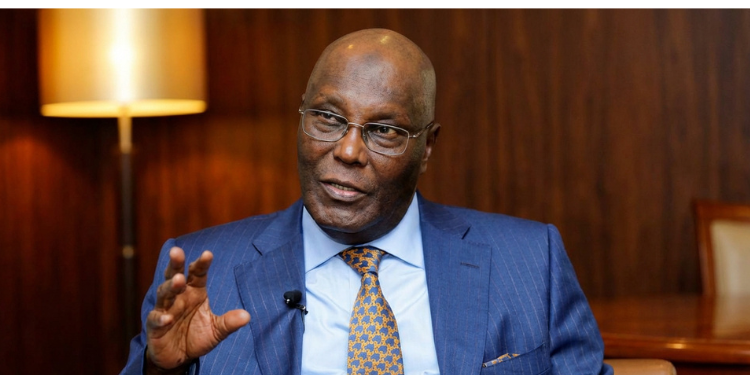
Nigeria’s political landscape has witnessed a fresh escalation as former Vice President Atiku Abubakar challenged the Federal Government to investigate and prosecute him if evidence exists linking him to the controversial $16 billion power sector expenditure during the administration of former President Olusegun Obasanjo.
The challenge comes amid an intensifying war of words between Atiku, the presidential candidate of the African Democratic Congress (ADC), and the administration of President Bola Tinubu over fuel subsidy removal, economic reforms and the management of public finances ahead of the 2027 general elections.
Atiku accused the government of reviving long-standing allegations surrounding power projects, privatisation exercises and public assets to distract Nigerians from questions regarding the utilisation of revenues generated following the removal of petrol subsidies.
In a statement issued by his Senior Special Assistant on Public Communication, Phrank Shaibu, the former Vice President argued that the renewed focus on the power sector controversy was politically motivated and intended to divert attention from worsening economic conditions and the growing burden of living costs on ordinary Nigerians.
“The people who removed subsidy from the poor cannot frighten us into silence by resurrecting allegations that governments with all the investigative machinery of the Nigerian state have had nearly two decades to establish.”
Atiku Abubakar
He added that, “if you have evidence against Atiku, bring it. If you have a case, prosecute it. But if you have neither, stop manufacturing distractions and answer Nigerians. You removed the subsidy. You collected the savings. Where is the money?”
The dispute has reopened one of Nigeria’s most enduring political controversies that is the debate over billions of dollars committed to power sector projects during the Obasanjo administration between 1999 and 2007.
Following the end of that administration, lawmakers launched investigations into power sector expenditures, with estimates of spending initially placed at about $11 billion before the figure became commonly cited as $16 billion.
The matter remained a recurring issue in Nigerian political discourse, although successive investigations produced differing conclusions regarding actual disbursements and project implementation.
Former President Obasanjo had previously defended the expenditures, citing investigations by the Economic and Financial Crimes Commission (EFCC) and presidential review processes that questioned claims that the entire amount had been squandered.
Reports have suggested that only a portion of approved funds was eventually released. One account indicated that approximately $3.7 billion of a budgeted $10 billion had been disbursed, while the balance remained with the Central Bank of Nigeria.
Another EFCC report published in 2018 reportedly stated that around N1.2 trillion had been allocated to the National Integrated Power Project (NIPP), but only about N360.7 billion was paid to contractors before the end of the Obasanjo administration.
Atiku insisted that despite multiple investigations over nearly two decades, no evidence of wrongdoing had been presented against him.
“The National Assembly investigated the power projects. I was never invited to answer any allegation of wrongdoing. Yes, I chaired the National Council on Privatisation as Vice President. But on the power project, I disagreed with its concept and did not preside over its implementation. The responsible minister did. The same applies to the Aluminium Smelter matter.”
Atiku Abubakar
He added, “I have repeatedly asked to be investigated. I left office in 2007 and have spent much of the period since then opposing governments in power. If there is evidence that I stole public money, why has no government produced it before a court?”
The former Vice President argued that the real issue confronting Nigerians was not historical allegations, but the present economic hardship following the removal of petrol subsidies.
Tinubu announced the end of the subsidy regime shortly after assuming office in May 2023, describing the policy as necessary to ease pressure on public finances and free resources for development projects.
While the government has defended the decision as economically unavoidable, the policy triggered sharp increases in fuel prices, transportation costs and inflation, making it one of the most debated reforms of the Tinubu presidency.
Atiku has increasingly centred his political message on the cost-of-living crisis, arguing that Nigerians have borne significant economic pain without clear evidence of how additional government revenues are being utilised.
“They removed subsidy from the poor and promised that the sacrifice would free resources for development. Nigerians accepted extraordinary pain on that promise. Today, petrol is more expensive, transportation is more expensive, food is more expensive, and the purchasing power of the Nigerian worker has been devastated.”
Atiku Abubakar
Presidency Rejects Atiku’s Claims, Questions Subsidy Proposal
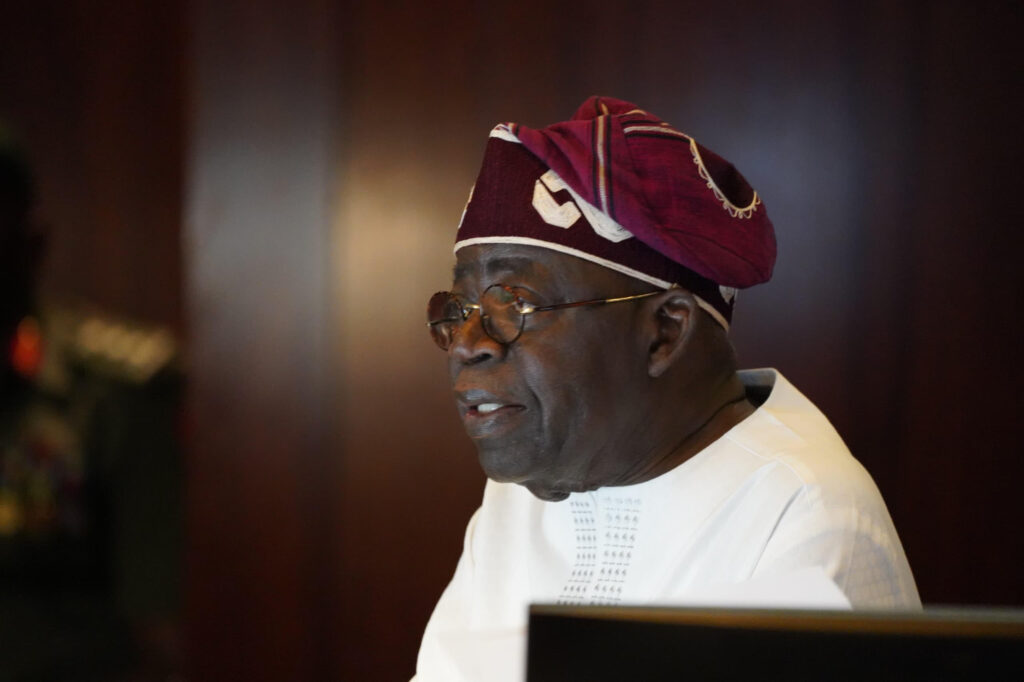
The Presidency swiftly responded to Atiku’s criticisms, accusing the ADC presidential candidate of adopting inconsistent positions on fuel subsidy and using economic issues for political advantage.
Special Adviser to the President on Information and Strategy, Bayo Onanuga, said statements issued by Atiku and his aides over the past week revealed contradictions regarding whether the former Vice President intended to restore fuel subsidies if elected.
Onanuga noted that one of Atiku’s aides had suggested that subsidy would be temporarily restored before being phased out, while another aide dismissed that interpretation. Atiku later clarified that he supported what he described as a targeted subsidy system.
According to the Presidency, these differing explanations raised important questions about the practical details of Atiku’s proposal.
He noted, “this is not merely a matter of semantics. It is a serious policy contradiction.”
The Presidency also challenged Atiku to explain how a targeted subsidy would work, including the cost, the categories of beneficiaries and the sources of funding.
“We therefore urge Atiku to stop shifting positions and explain precisely what he means by ‘targeted subsidy’: how much will it cost, who will benefit, how will beneficiaries be identified, how will it be funded and what objective economic conditions will determine its eventual termination?”
Special Adviser to the President
The government further argued that inflation and the rising cost of living were influenced by multiple factors beyond fuel prices, including exchange rates, insecurity, transportation logistics and agricultural challenges.
READ ALSO: Mbappé Hat-trick Against Sociedad Propels Real Madrid to First Home Win