
• About
  • Advertise
  • Privacy Policy
  • Contact
Sunday, September 20, 2026
  • Login
The Vaultz News
  • Top Stories
  • News
    • General News
    • Education
    • Health
    • Opinions
  • Economics
    • Economy
    • Finance
      • Banking
      • Insurance
      • Pension
    • Securities/Markets
  • Business
    • Agribusiness
    • Vaultz Business
    • Extractives/Energy
    • Real Estate
  • World
    • Africa
    • America
    • Europe
    • UK
    • USA
    • Asia
    • Around the Globe
  • Innovation
    • Technology
    • Wheels
  • Entertainment
  • 20MOBPL2DNew
  • Jobs & Scholarships
    • Job Vacancies
    • Scholarships
No Result
View All Result
The Vaultz News
  • Top Stories
  • News
    • General News
    • Education
    • Health
    • Opinions
  • Economics
    • Economy
    • Finance
      • Banking
      • Insurance
      • Pension
    • Securities/Markets
  • Business
    • Agribusiness
    • Vaultz Business
    • Extractives/Energy
    • Real Estate
  • World
    • Africa
    • America
    • Europe
    • UK
    • USA
    • Asia
    • Around the Globe
  • Innovation
    • Technology
    • Wheels
  • Entertainment
  • 20MOBPL2DNew
  • Jobs & Scholarships
    • Job Vacancies
    • Scholarships
No Result
View All Result
The Vaultz News
No Result
View All Result
in Extractives/Energy

IMANI VP: Africa Must Build Regional Mineral Supply Chains, not Just Refining

Evans Junior Owuby Evans Junior Owu
August 27, 2026
Reading Time: 5 mins read
Add as Preferred on Google
Bright Simons, Honorary Vice President of IMANI Centre for Policy and Education

Bright Simons, Honorary Vice President of IMANI Centre for Policy and Education

IMANI Centre for Policy and Education’s Honorary Vice President Bright Simons has called on African countries to move beyond conventional assumptions about mineral value addition and instead pursue data-driven regional supply chains, using the example of iron ball bearings imported from China at hundreds of millions of dollars in cost to argue that regional linkages, not just refining, can unlock greater economic value.

Speaking on Day Three at SYPALA 2026 in Accra, Mr Simons argued that mainstream thinking about minerals across Africa remains under-supported by rigorous research and public debate, leaving conventional wisdom, particularly around value addition, largely unexamined.

“I’m not here to knock value addition. Value addition is important. But value addition is not the same as incremental refinement. Almost everybody that we talk to in Africa says that when we talk about value addition, we mean that it’s definitely refining the mineral ore into certain tools that are out there”

Bright Simons, Honorary Vice President of IMANI Centre for Policy and Education

Value Addition Is Not the Same as Refining

He said lithium is a genuine case where refining makes strong economic sense, given the chemistry involved in converting raw lithium into lithium carbonate or lithium hydroxide. Gold, by contrast, does not offer the same opportunity, since its value chain runs through a different set of processes entirely.
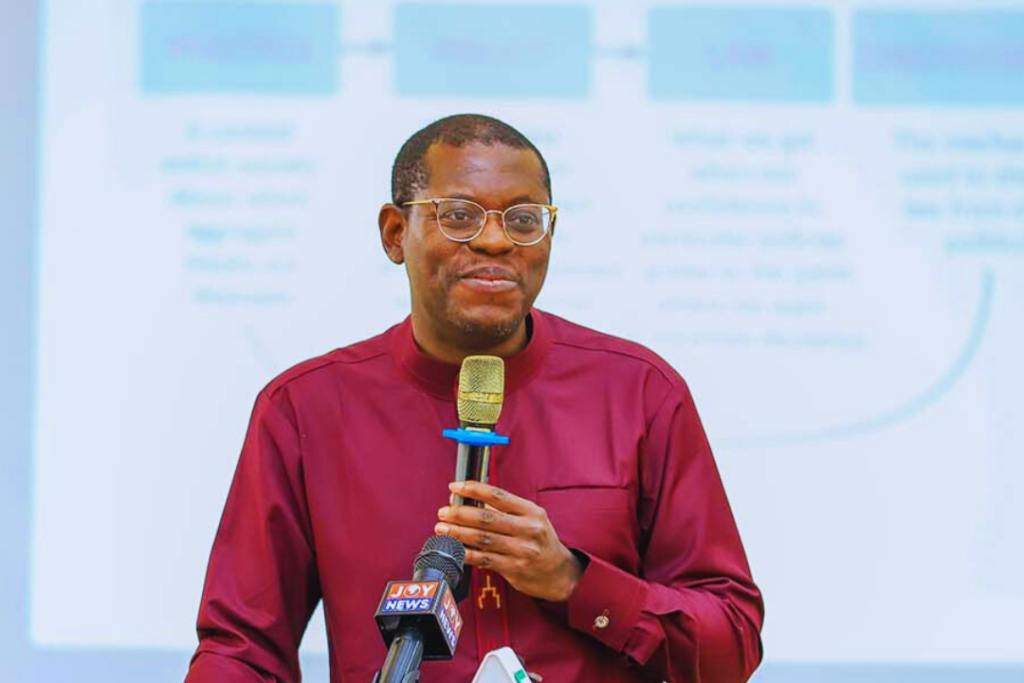
Bright Simons, Honorary Vice President of IMANI Centre for Policy and Education

He used gold mining itself to illustrate an overlooked opportunity. Extracting gold from rock requires grinding media, commonly steel ball bearings, to crush ore during processing.

ADVERTISEMENT

Ghana, he said, has imported hundreds of millions of dollars’ worth of these round metal balls from China over the years, despite the country possessing some iron reserves it has been unable to exploit domestically.

He argued that rather than pursuing costly gold refining, which he said would yield something in the range of $32 million even under highly favourable assumptions, Ghana could instead have built stronger regional value chains with iron-rich Liberia.

Such an arrangement, Mr said, would convert Liberian iron into ball bearings manufactured in Ghana, a strategy he said could have generated hundreds of millions of dollars in value rather than tens of millions.

Sulphuric Acid and the Cost of Import Dependence

The renowned policy analyst Mr Simons, offered a second example centred on industrial inputs rather than finished minerals.

He said countries including Zambia, Zimbabwe and the Democratic Republic of Congo consume large volumes of sulphuric acid across their mining industries, with total African consumption running into billions of dollars, yet the continent produces only a fraction of what it needs domestically.
ADVERTISEMENT
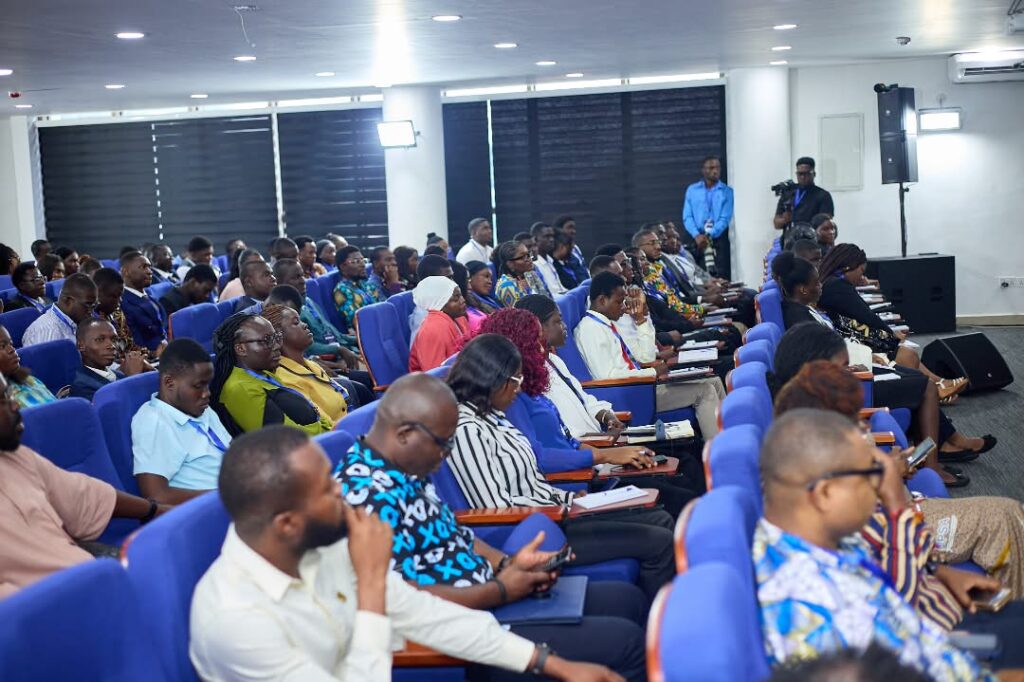
Delegates fill the hall for SYPALA 2026, organised by the IMANI Center for Policy and Education in partnership with UPSA from August 24 to 27.

He pointed to the disruption of Iranian acid exports during tensions around the Strait of Hormuz as an example of how that import dependence can translate directly into mine shutdowns and production slowdowns across the continent when external supply chains are interrupted.

A Call for Analytical Rigor Over Assumption

Mr Simons argued that both examples point to the same underlying failure: African mineral policy has relied too heavily on inherited assumptions rather than close analysis of where genuine economic value actually lies in a given supply chain.

He said building deeper regional linkages, whether for grinding media, industrial acids or other overlooked inputs, requires the kind of data-driven analysis precisely he said has been largely absent from public debate on the continent’s mineral strategy.

ADVERTISEMENT

“There are a lot of things we could do if we think more analytically, if we use data, as opposed to just believing in stereotypes,” he said, framing the observation as the bridge into a further part of his presentation on how Africa should reorient its approach to mineral policy going forward.

Bright Simons, Honorary Vice President of IMANI Centre for Policy and Education

Mr Simons’s ball-bearing example does more than critique a missed opportunity; it reframes what value addition should mean for African economies. The instinct to refine raw minerals into finished goods is not wrong, but it is incomplete, and in cases like Ghana’s, far less lucrative than building supply chains around unglamorous industrial inputs.

His broader point is methodological: African mineral policy has run on inherited assumptions rather than rigorous, debated analysis.

Correcting that, he suggests, matters more than any single refinery or trade agreement, since it is the discipline that would let African economies actually locate where their real value lies.

READ ALSO: Atiku Challenges Nigerian Government to Investigate Him Over $16bn Power Spending

ADVERTISEMENT

Sign Up to Our Newsletter

Fresh updates, Straight to your inbox

Tags: Bright Simonscritical minerals policydata-driven policyGhana Liberia ironIMANI Centre for Policy and EducationKatanomicsMineral value additionRegional Value Chainssulphuric acid AfricaSYPALA 2026
Please login to join discussion
Previous Post

Atiku Challenges Nigerian Government to Investigate Him Over $16bn Power Spending

Next Post

GSE Records 10 Gainers as Market Index Powers Higher

Related Posts

Downstream petroleum
Extractives/Energy

Ghana Seeks Bigger Role in West Africa’s Power Market

September 20, 2026
Hon. Joseph Nelson, the Western Regional Minister at Gold Fields Concessions
Extractives/Energy

AngloGold Concessions Suffer Encroachment by Illegal Miners in Western Region

September 20, 2026
Ghana Gas
Extractives/Energy

Ghana Gas Targets 2027 FID For $500m West-East Pipeline

September 19, 2026
Ghana Gold Board (GoldBod) with United States Department of Treasury
Extractives/Energy

Ghana Engages US Embassy On Mineral Value Creation

September 19, 2026
ADVERTISEMENT

Sign Up to Our Newsletter

Fresh updates, Straight to your inbox

ADVERTISEMENT

Recent News

Bank of Ghana Governor Johnson Pandit Asiama

Ghana Formalises Oversight of 3m-User Crypto Market

September 20, 2026
Resource Panellist at the African Cashew Alliance, 2026

ACA Conference Urges Early Pest Forecasting to Protect Africa’s Sustainable Cashew Production

September 20, 2026
Effia Nkwanta Regional Hospital

Effia Nkwanta Hospital Debunks Negligence Claims Over Patient’s Death

September 20, 2026
Erdogan Seeks Diplomatic Resolution To Israel-Iran Conflict

Trump Unveils Military Purpose For Proposed Triumphal Arch

September 20, 2026
Downstream petroleum

Ghana Seeks Bigger Role in West Africa’s Power Market

September 20, 2026
ADVERTISEMENT
Next Post
GSE Records 10 Gainers as Market Index Powers Higher

GSE Records 10 Gainers as Market Index Powers Higher

The Vaultz News

Copyright © 2025 The Vaultz News. All rights reserved.

Navigate Site

  • About
  • Advertise
  • Privacy Policy
  • Contact

Follow Us

Welcome Back!

Login to your account below

Forgotten Password?

Retrieve your password

Please enter your username or email address to reset your password.

Log In
No Result
View All Result
  • Top Stories
  • News
    • General News
    • Education
    • Health
    • Opinions
  • Economics
    • Economy
    • Finance
      • Banking
      • Insurance
      • Pension
    • Securities/Markets
  • Business
    • Agribusiness
    • Vaultz Business
    • Extractives/Energy
    • Real Estate
  • World
    • Africa
    • America
    • Europe
    • UK
    • USA
    • Asia
    • Around the Globe
  • Innovation
    • Technology
    • Wheels
  • Entertainment
  • 20MOBPL2D
  • Jobs & Scholarships
    • Job Vacancies
    • Scholarships

Copyright © 2025 The Vaultz News. All rights reserved.

This website uses cookies. By continuing to use this website you are giving consent to cookies being used. Visit our Privacy and Cookie Policy.