• About
  • Advertise
  • Privacy Policy
  • Contact
Thursday, August 27, 2026
  • Login
The Vaultz News
  • Top Stories
  • News
    • General News
    • Education
    • Health
    • Opinions
  • Economics
    • Economy
    • Finance
      • Banking
      • Insurance
      • Pension
    • Securities/Markets
  • Business
    • Agribusiness
    • Vaultz Business
    • Extractives/Energy
    • Real Estate
  • World
    • Africa
    • America
    • Europe
    • UK
    • USA
    • Asia
    • Around the Globe
  • Innovation
    • Technology
    • Wheels
  • Entertainment
  • 20MOBPL2DNew
  • Jobs & Scholarships
    • Job Vacancies
    • Scholarships
No Result
View All Result
The Vaultz News
  • Top Stories
  • News
    • General News
    • Education
    • Health
    • Opinions
  • Economics
    • Economy
    • Finance
      • Banking
      • Insurance
      • Pension
    • Securities/Markets
  • Business
    • Agribusiness
    • Vaultz Business
    • Extractives/Energy
    • Real Estate
  • World
    • Africa
    • America
    • Europe
    • UK
    • USA
    • Asia
    • Around the Globe
  • Innovation
    • Technology
    • Wheels
  • Entertainment
  • 20MOBPL2DNew
  • Jobs & Scholarships
    • Job Vacancies
    • Scholarships
No Result
View All Result
The Vaultz News
No Result
View All Result
in Extractives/Energy

Bright Simons: Africa Lacks Key Minerals Needed for Industrialisation

Evans Junior Owuby Evans Junior Owu
August 27, 2026
Reading Time: 4 mins read
Add as Preferred on Google
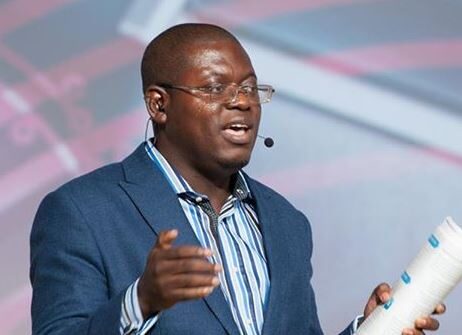
Bright Simons, Honorary Vice President of IMANI Centre for Policy and Education

Bright Simons, Honorary Vice President of IMANI Centre for Policy and Education

The Honorary Vice President of the IMANI Centre for Policy and Education, Bright Simons, has warned that Africa’s much-discussed mineral wealth does not include the specific minerals the continent will need most if it pursues genuine industrialisation, telling participants at SYPALA 2026 that Africa currently holds only a fraction of the reserves of industrial-scale minerals such as iron ore, lithium, nickel, tin and zinc.

Speaking in Accra on the third day of the event, Mr Simons said this shortage remains largely invisible today only because Africa is not yet industrialising at scale, meaning the continent has not yet felt the pinch of a deficiency that would become acute the moment industrial activity expanded.

The Minerals Africa Has Versus the Minerals It Needs

Mr Simons framed the distinction around what he called economic complexity, arguing that Africa’s core interest should not be industrialisation narrowly defined as manufacturing, but the broader set of activities that produce increasingly complex products and services.
Bright Simons, Honorary Vice President of IMANI Centre for Policy and Education

He said the minerals Africa possesses in abundance tend to be produced and consumed in relatively small quantities in natural and industrial processes, while the minerals underpinning every modern industrial system, iron ore, lithium, coal, nickel, tin and zinc among them, are precisely the ones Africa has the least of.

ADVERTISEMENT

He was explicit that his analysis concerned reserves rather than production. He distinguished between production, the easiest category to measure since it tracks what is actually mined and sold; reserves, meaning deposits that are known and can be profitably mined using current technology; and resources, deposits known to exist but not yet economically viable to extract.

His claim about Africa’s mineral shortage, he said, applies specifically to reserves. “The reason we don’t notice them is that we don’t do a lot of industrialisation in Africa yet, we are not industrialising yet, so we don’t feel the pinch of not having enough of these minerals.”

What Industrialisation Would Actually Require

Bright Simons illustrated the scale of the gap using a hypothetical in which Ghana consumed minerals at something close to the global average rate, roughly comparable to a country like Serbia rather than industrial leaders such as Taiwan, Korea or China.
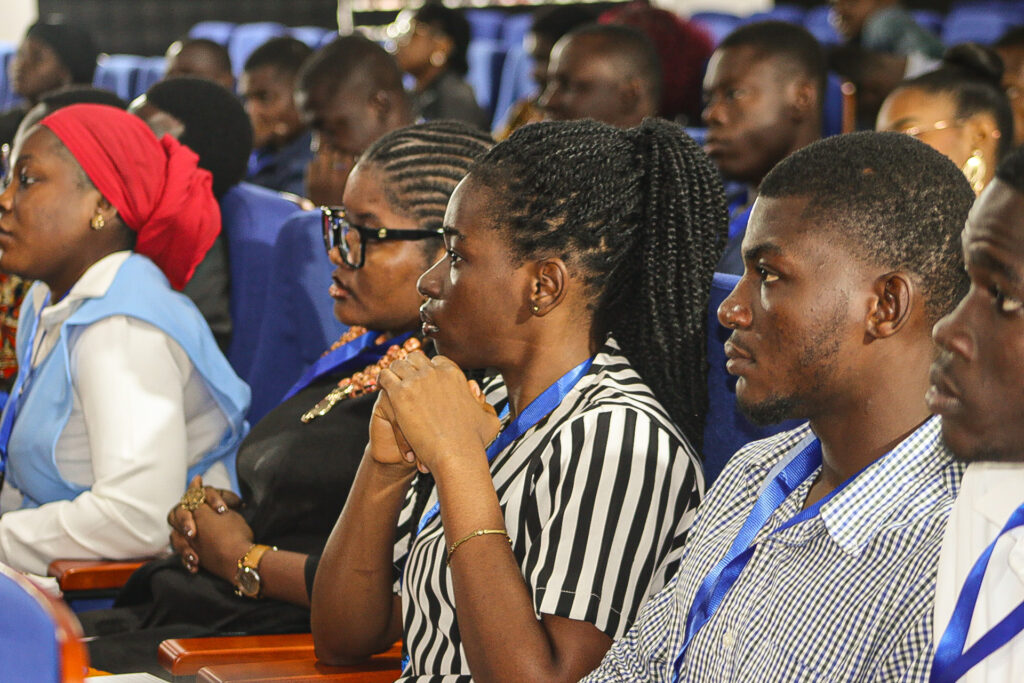
Delegates fill the hall for SYPALA 2026, organised by the IMANI Center for Policy and Education in partnership with UPSA from August 24 to 27.

Under that scenario, he said, Ghana alone would require roughly 14 times more steel than it currently produces, a striking figure given that Africa as a whole accounts for only about 0.6 percent of the world’s iron.

He said Ghana would similarly need around 5.5 million tonnes of pure copper to match average global consumption, a volume far beyond what the country currently produces or has readily accessible.

ADVERTISEMENT

He connected this shortage to a very tangible problem: the theft of railway lines and traffic light components in Ghana, which he attributed partly to the absence of functioning domestic smelters and mining capacity for the metals those systems require.

“We need a lot of these metals, more so than fruits, and they aren’t really available, because we don’t have proper smelters, we don’t have proper mines.”

A Warning Wrapped in an Opportunity

Mr Simons framed the finding as a warning against complacency rather than a reason for pessimism. He argued that the popular narrative of Africa’s mineral abundance actually obscures a more urgent strategic question: whether the continent has, or can secure, the specific inputs its own industrial ambitions will require.

ADVERTISEMENT

Without addressing that gap directly, he suggested, African economies risk discovering the shortage only once industrialisation is already under way and the shortfall becomes an active constraint on growth rather than a hidden one.
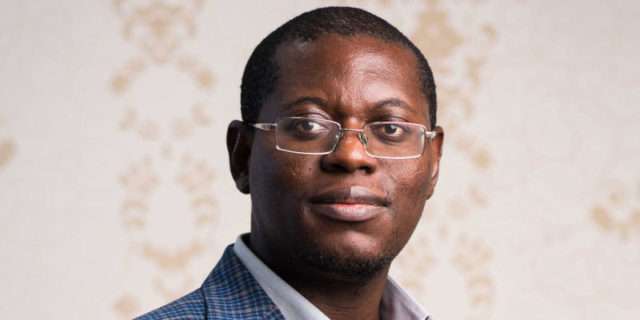
Bright Simons, Honorary Vice President of IMANI Centre for Policy and Education

Mr Simons’s argument reframes a familiar African narrative into a more urgent one. The continent has spent decades hearing that it sits atop vast mineral wealth, a story that offers comfort without demanding action.

His data suggests the opposite is closer to the truth: the specific minerals that power industrial economies are the ones Africa holds least of, and that gap stays hidden only because industrialisation itself has barely begun.

Once it does, he warned, the shortage stops being theoretical. The choice facing African governments, in his framing, is whether to confront that gap now, through deliberate investment in mining, smelting and regional supply, or discover it too late, as a constraint on the growth they are trying to build.

READ ALSO: Shatta Wale Announces Exciting September Concerts for SM Fans

ADVERTISEMENT

Sign Up to Our Newsletter

Fresh updates, Straight to your inbox

Tags: Bright SimonsCritical mineralseconomic complexityGhana copper steelIMANI Centre for Policy and EducationIndustrialisationIron OreLithiumMineral ReservesSYPALA 2026
Please login to join discussion
Previous Post

Most Hospital Projects in The Country Are Stalled – Rev. Opare Kwakye

Next Post

Atiku Challenges Nigerian Government to Investigate Him Over $16bn Power Spending

Related Posts

Bright Simons, Honorary Vice President of IMANI Centre for Policy and Education
Extractives/Energy

IMANI VP: Africa Must Build Regional Mineral Supply Chains, not Just Refining

August 27, 2026
Bright Simons, Honorary Vice President of IMANI Centre for Policy and Education
Extractives/Energy

Africa’s Mineral Share Is 1.8%, Not 30%, Bright Simons

August 27, 2026
MIIF with a delegation from Zijin Golden Ridge Limited
Extractives/Energy

Mining Sector Partnership Drives Environmental Restoration in Western Region Reserve

August 27, 2026
Prof. Alexander Bilson Darku, Director of Research at the Institute of Economic Affairs (IEA)
Extractives/Energy

Reported DGPP Loss, Misconstrued Valuation Entry – Prof Darku Clarifies

August 27, 2026
ADVERTISEMENT

Sign Up to Our Newsletter

Fresh updates, Straight to your inbox

ADVERTISEMENT

Recent News

Asamoah Boateng

AISS Director Backs Asamoah Boateng For NPP Chairmanship Position

August 27, 2026
A degraded soil

FAO Warns Soil Degradation Is Worsening as Sustainable Practices Lag Worldwide

August 27, 2026
GSE Records 10 Gainers as Market Index Powers Higher

GSE Records 10 Gainers as Market Index Powers Higher

August 27, 2026
Bright Simons, Honorary Vice President of IMANI Centre for Policy and Education

IMANI VP: Africa Must Build Regional Mineral Supply Chains, not Just Refining

August 27, 2026
former President Olusegun Obasanjo

Atiku Challenges Nigerian Government to Investigate Him Over $16bn Power Spending

August 27, 2026
ADVERTISEMENT
Next Post
former President Olusegun Obasanjo

Atiku Challenges Nigerian Government to Investigate Him Over $16bn Power Spending

The Vaultz News

Copyright © 2025 The Vaultz News. All rights reserved.

Navigate Site

  • About
  • Advertise
  • Privacy Policy
  • Contact

Follow Us

Welcome Back!

Login to your account below

Forgotten Password?

Retrieve your password

Please enter your username or email address to reset your password.

Log In
No Result
View All Result
  • Top Stories
  • News
    • General News
    • Education
    • Health
    • Opinions
  • Economics
    • Economy
    • Finance
      • Banking
      • Insurance
      • Pension
    • Securities/Markets
  • Business
    • Agribusiness
    • Vaultz Business
    • Extractives/Energy
    • Real Estate
  • World
    • Africa
    • America
    • Europe
    • UK
    • USA
    • Asia
    • Around the Globe
  • Innovation
    • Technology
    • Wheels
  • Entertainment
  • 20MOBPL2D
  • Jobs & Scholarships
    • Job Vacancies
    • Scholarships

Copyright © 2025 The Vaultz News. All rights reserved.

This website uses cookies. By continuing to use this website you are giving consent to cookies being used. Visit our Privacy and Cookie Policy.