• About
  • Advertise
  • Privacy Policy
  • Contact
Saturday, August 29, 2026
  • Login
The Vaultz News
  • Top Stories
  • News
    • General News
    • Education
    • Health
    • Opinions
  • Economics
    • Economy
    • Finance
      • Banking
      • Insurance
      • Pension
    • Securities/Markets
  • Business
    • Agribusiness
    • Vaultz Business
    • Extractives/Energy
    • Real Estate
  • World
    • Africa
    • America
    • Europe
    • UK
    • USA
    • Asia
    • Around the Globe
  • Innovation
    • Technology
    • Wheels
  • Entertainment
  • 20MOBPL2DNew
  • Jobs & Scholarships
    • Job Vacancies
    • Scholarships
No Result
View All Result
The Vaultz News
  • Top Stories
  • News
    • General News
    • Education
    • Health
    • Opinions
  • Economics
    • Economy
    • Finance
      • Banking
      • Insurance
      • Pension
    • Securities/Markets
  • Business
    • Agribusiness
    • Vaultz Business
    • Extractives/Energy
    • Real Estate
  • World
    • Africa
    • America
    • Europe
    • UK
    • USA
    • Asia
    • Around the Globe
  • Innovation
    • Technology
    • Wheels
  • Entertainment
  • 20MOBPL2DNew
  • Jobs & Scholarships
    • Job Vacancies
    • Scholarships
No Result
View All Result
The Vaultz News
No Result
View All Result
in Extractives/Energy

Africa’s Mineral Share Is 1.8%, Not 30%, Bright Simons

Evans Junior Owuby Evans Junior Owu
August 27, 2026
Reading Time: 4 mins read
Add as Preferred on Google
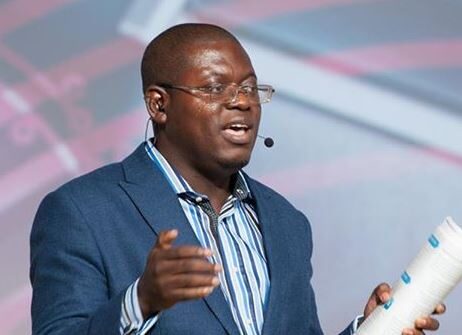
Bright Simons, Honorary Vice President of IMANI Centre for Policy and Education

Bright Simons, Honorary Vice President of IMANI Centre for Policy and Education

Bright Simons, Honorary Vice President of the IMANI Centre for Policy and Education, has challenged the widely repeated claim that Africa holds 30 percent of the world’s mineral reserves, arguing at the Students and Young Professionals African Liberty Academy that the figure appears in some of the world’s most prestigious publications without any underlying statistical analysis to support it.

Speaking on day three of SYPALA 2026 on Wednesday, August 26, under the title “The Seductive Illusion of Africa’s 30% Mineral Wealth,” Mr Simons said the figure recurs across International Monetary Fund reports, Atlantic Council publications and Western peer-reviewed journals, yet in every instance he examined, the number was presented without disclosing which minerals it referred to or how it was calculated.

Why the 30% Figure Doesn’t Add Up

Mr Simons said the claim collapses under a basic question: which of the roughly 5,000 mineral items found in the Earth’s crust is the 30 per cent supposed to describe. Many of those minerals, he said, are not globally traded and have no established market price, making any aggregate share meaningless.

Bright Simons, Honorary Vice President of IMANI Centre for Policy and Education

To produce a workable estimate, he restricted his analysis to the 38 minerals that are widely traded internationally, including gold, diamonds and manganese, where reliable pricing and volume data exist. Using that narrower set, Mr Simons calculated that Africa’s share of global mineral output by tonnage is approximately 5.5 per cent.

ADVERTISEMENT

Restricting the analysis further to minerals prioritised by wealthy nations reduces the figure to around 4 percent, and adjusting for each mineral’s actual weight in global trade, since a mineral like tanzanite is consumed in tiny quantities compared to iron ore, brings the figure down to roughly 1.8 percent.

“What is true and what is factual is that if you take the large set of minerals, the largely traded, the most widely traded minerals, and you do an application, there is nowhere you get 30%, nobody will be able to produce 30%, unless basically there is an increase, like you take 2 minerals or something like that”.

Bright Simons, Honorary Vice President of IMANI Centre for Policy and Education

Tracing the Number to Its Source

Mr Simons said he traced the 30 per cent claim to a report published by a prominent United Nations agency, which he said analysed only about seven minerals.

Applying a simple average across those seven produced a figure around 90.6 per cent, he said, while using a median, which he described as the statistically appropriate measure because it corrects for outliers, produced a figure closer to 99.9 percent.
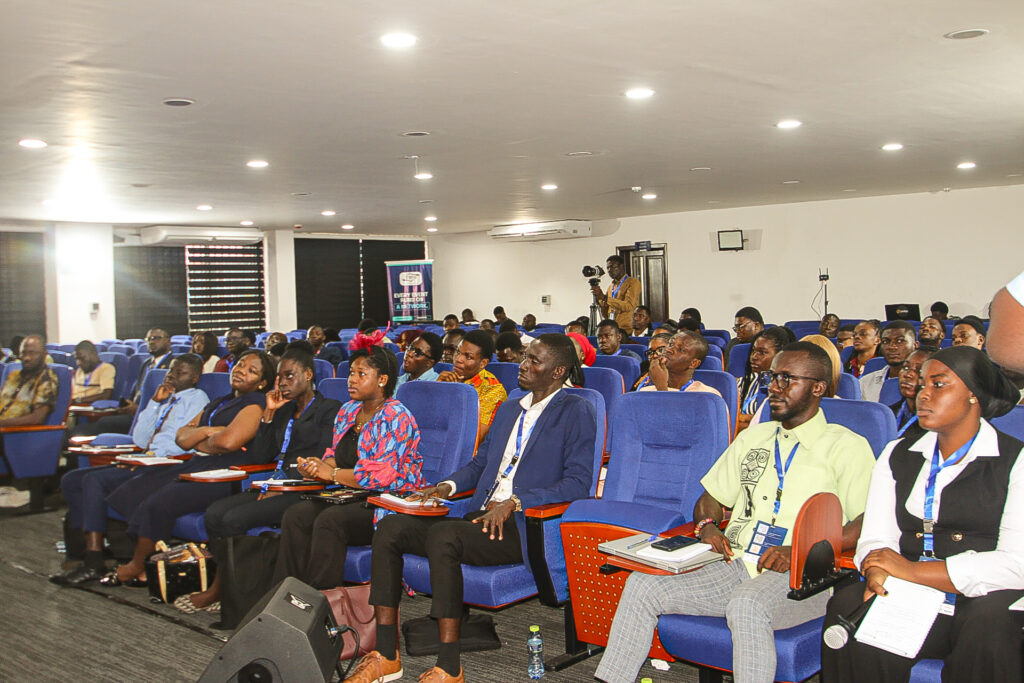
Delegates fill the hall for SYPALA 2026, organised by the IMANI Center for Policy and Education in partnership with UPSA from August 24 to 27.

Neither approach, he said, produced anything resembling 30 per cent. “Anybody tells you Africa has 30% of the world’s minerals, tell them to show me the data,” he said. “Where did they get it from? Which minerals? Which data set?”

Bright Simons was careful to draw a line between the debunked aggregate claim and a separate, more defensible one: that specific African countries hold substantial shares of specific minerals.

ADVERTISEMENT

South Africa, he said, accounts for roughly 83 to 90 percent of global platinum group metals output. Morocco is a major phosphate producer, DR Congo dominates global cobalt supply, and Guinea holds substantial phosphate and bauxite reserves.

But he said this concentration in individual countries and individual minerals does not translate into a claim that Africa as a whole is rich in minerals across the board, calling this distinction critical to understanding the rest of his argument.

Not All Minerals Are Made Equal

Bright Simons illustrated the danger of conflating different minerals by comparing Australia’s mineral wealth to Africa’s. He said nearly half of Australia’s annual mineral earnings come from iron ore alone, a mineral consumed in vast global volumes even though each tonne is relatively cheap.
ADVERTISEMENT
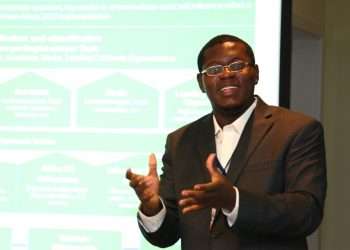
Bright Simons, Honorary Vice President of IMANI Centre for Policy and Education

In 2022, he said, Australia, with a population of roughly 30 million, earned roughly as much from non-fuel minerals as the whole of Africa, with a population nearing 1.4 billion, combined.

He said the comparison shows why headline claims about mineral wealth are misleading without accounting for both the volume in which a mineral is traded and its price, and he noted that even Ghana’s own gold earnings have shifted dramatically with global price movements, rising to nearly $20 billion recently from roughly $3 billion a few years earlier as gold prices nearly tripled.

READ ALSO: AUABC Chair Proposes Five-Question Test to Measure AU Performance

ADVERTISEMENT

Sign Up to Our Newsletter

Fresh updates, Straight to your inbox

Tags: Africa mineral wealthAustralia iron oreBright SimonsCritical mineralsDR Congo cobaltIMANI Centre for Policy and Educationmineral reserves dataSouth Africa platinumSYPALA 2026
Please login to join discussion
Previous Post

Shatta Wale Announces Exciting September Concerts for SM Fans

Next Post

Most Hospital Projects in The Country Are Stalled – Rev. Opare Kwakye

Related Posts

Energy Commission of Ghana
Extractives/Energy

Energy Commission Deepens EV And Energy Conservation Engagement

August 28, 2026
Nelson Cudjoe Kuagbedzi,
Extractives/Energy

Nelson Kuagbedzi Calls for Gold Purchase Reforms Rather Than Programme Abandonment

August 28, 2026
Nelson Cudjoe Kuagbedzi,
Extractives/Energy

Market Gold Pricing Essential To Prevent Smuggling – Expert Asserts

August 28, 2026
MPTI with Mining Companies
Extractives/Energy

MPTI, Mining Companies Partner on Local Workforce Capacity

August 28, 2026
ADVERTISEMENT

Sign Up to Our Newsletter

Fresh updates, Straight to your inbox

ADVERTISEMENT

Recent News

New Patriotic Party

NPP National Elections: 40 Out Of 50 Aspirants Complete Filing

August 29, 2026
Niger on Map

Gunfire and Explosions Rock Niger’s Capital

August 29, 2026
image 209

Danlad Ibrahim’s Shootout Heroics Power Kotoko to Democracy Cup Triumph Over Hearts

August 28, 2026
The Newly Commissioned Northshore Factory at Savelugu in the Northern Region

Mahama Commissions Northshore Apparel Factory, Creates 2,000 Jobs for 24-Hour Economy Policy

August 28, 2026
Exim Bank Makes Major Lending Shift Under 24-Hour Economy

Exim Bank Makes Major Lending Shift Under 24-Hour Economy

August 28, 2026
ADVERTISEMENT
Next Post
Moderator of the Presbyterian Church of Ghana Rt. Rev. Dr Abraham Nana Opare Kwakye

Most Hospital Projects in The Country Are Stalled - Rev. Opare Kwakye

The Vaultz News

Copyright © 2025 The Vaultz News. All rights reserved.

Navigate Site

  • About
  • Advertise
  • Privacy Policy
  • Contact

Follow Us

Welcome Back!

Login to your account below

Forgotten Password?

Retrieve your password

Please enter your username or email address to reset your password.

Log In
No Result
View All Result
  • Top Stories
  • News
    • General News
    • Education
    • Health
    • Opinions
  • Economics
    • Economy
    • Finance
      • Banking
      • Insurance
      • Pension
    • Securities/Markets
  • Business
    • Agribusiness
    • Vaultz Business
    • Extractives/Energy
    • Real Estate
  • World
    • Africa
    • America
    • Europe
    • UK
    • USA
    • Asia
    • Around the Globe
  • Innovation
    • Technology
    • Wheels
  • Entertainment
  • 20MOBPL2D
  • Jobs & Scholarships
    • Job Vacancies
    • Scholarships

Copyright © 2025 The Vaultz News. All rights reserved.

This website uses cookies. By continuing to use this website you are giving consent to cookies being used. Visit our Privacy and Cookie Policy.