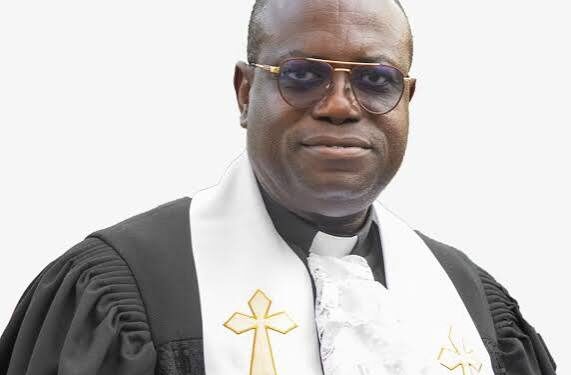
The Moderator of the Presbyterian Church of Ghana, Rt. Rev. Dr Abraham Nana Opare Kwakye, has raised concern over the number of stalled hospital projects across the country, warning that many communities outside Accra remain without proper access to healthcare while numerous facilities sit unfinished, some now overgrown with weeds.
Speaking on the state of the country’s health infrastructure, the Moderator acknowledged recent developments, including the work of a committee that investigated a widely reported hospital death and the government’s response to concerns raised about patients being turned away from facilities due to bed shortages.
He said the Church takes note of assurances given by President John Dramani Mahama on the matter but insisted that the underlying problem extends far beyond any single incident.
According to Rev. Opare Kwakye, the case that had drawn national attention was, in his view, only a visible symptom of a much larger structural challenge affecting healthcare delivery nationwide.
He said it was worth considering how many similar cases may have occurred quietly in other parts of the country, where the absence of adequate facilities has cost lives without attracting the same level of public attention.
“You can imagine how many others have lost their lives across this country simply because there were no facilities to take care of them.”
Rt. Rev. Dr Abraham Nana Opare Kwakye
Progress Acknowledged, But Gaps Remain Wide
The Moderator did credit government for ongoing efforts to expand hospital infrastructure, referencing the Agenda 111 hospital construction programme and welcoming the recent opening of the Weija Children’s Hospital, a development he said the Church had previously highlighted in its own communications before the facility became operational.

However, he was quick to note that many other hospital projects across the country remain incomplete, with some sites now overtaken by overgrown vegetation despite ongoing assurances that work will resume.
He contrasted the situation in Accra, where the presence of numerous private hospitals offers residents alternative options even when public facilities fall short, with conditions in more rural parts of the country, where entire communities are left without any reliable access to formal healthcare.
“When I travel out of Accra, I see whole territories without any proper healthcare, and you begin to wonder whether these are also citizens of this country, people we truly care for.”
Rt. Rev. Dr Abraham Nana Opare Kwakye
Government’s Phased Completion Plan
Addressing the pace of progress on stalled projects, the Moderator referenced statements from the Minister of Health indicating that Agenda 111 hospitals are being addressed at different levels, with some facilities set for government completion and others earmarked for partnership arrangements involving the private sector and the Christian Health Association of Ghana (CHAG).
He confirmed that the Presbyterian Church of Ghana is part of CHAG, positioning the Church as a potential partner in any such arrangement.
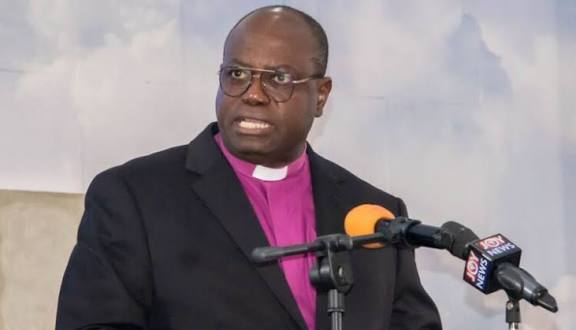
He said the Church remains supportive of efforts to see these projects through to completion, stressing that the matter should not be viewed through a partisan lens but rather as a shared national development priority that transcends political affiliation.
Pressed on whether Ghana’s churches, many of which now command substantial financial resources, should take on a more prominent role in establishing health facilities, the Moderator pointed to existing examples of church involvement in the sector, noting that denominations such as the Catholic Church, the Methodist Church and the Seventh-day Adventist Church already provide healthcare services to numerous communities that would otherwise be underserved by government facilities.
He acknowledged, however, that these efforts remain insufficient relative to the scale of need across the country, and said there is more that faith-based institutions could contribute, particularly given the successes churches have already recorded in the education sector.
Framing Healthcare As A National, Not Partisan, Priority
The Moderator closed his remarks by appealing to a shared national interest in completing stalled hospital projects, arguing that ordinary citizens and the country’s elite alike stand to benefit once these facilities are finished.
He recalled that during the COVID-19 pandemic, even wealthy and influential Ghanaians were unable to travel abroad for medical treatment and had to rely on local healthcare services, a reality he said should motivate stronger collective investment in the country’s own health infrastructure.
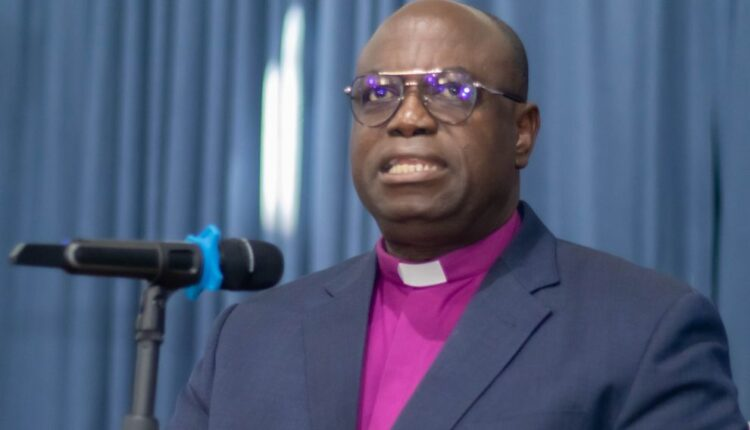
He further noted that the risks associated with travelling long distances between communities in search of care have, in some cases, cost lives, reinforcing his argument that completing existing hospital projects would serve the direct interests of Ghanaians across all social and economic backgrounds.
The Presbyterian Church, he said, has consistently been among the more vocal religious institutions speaking out on the state of the country’s healthcare infrastructure.
READ MORE: KOICA Explores Partnership With Ghana to Tackle Maternal Mortality Crisis