
Ghana’s exploration effort in the Voltaian Basin is moving from years of subsurface data gathering towards a more decisive stage, with the Ghana National Petroleum Corporation (GNPC) preparing for the drilling of the Basin’s first exploratory well at Chegu in the Mion District.
The planned TUA 1X well represents a significant transition in Ghana’s search for new hydrocarbon provinces.
Since 2018, GNPC has undertaken four phases of 2D seismic acquisition and additional technical studies across the Voltaian Basin, engaging nearly 500 communities in the process.
The next phase will put those geological interpretations to the test through drilling, generating direct subsurface information that seismic surveys alone cannot provide.
The development is therefore important not simply because a well is being drilled, but because Ghana is moving closer to resolving one of the central uncertainties surrounding the Basin: whether the geological structures identified through exploration contain hydrocarbons in quantities and conditions that could eventually support commercial development.
From Seismic Data To Subsurface Evidence
GNPC’s exploration campaign has spent years building an understanding of the Basin’s geology before committing to drilling.
That process reflects the nature of frontier exploration, where geological models have to be progressively refined before a company can determine whether a prospect justifies the financial and technical risks associated with a well.

Chief Executive of GNPC, Mr. Kwame Ntow Amoah, stressed that the planned drilling should not be interpreted as evidence that Ghana has already established a commercial oil or gas discovery.
“An exploratory well does not mean oil or gas has already been found. It is the next step in finding out whether hydrocarbons exist and whether any discovery can eventually be developed commercially.”
Chief Executive of GNPC, Mr. Kwame Ntow Amoah
That distinction is crucial for the Voltaian Basin. Drilling is effectively the point at which GNPC can begin comparing its geological interpretation with actual subsurface conditions.
The results could provide evidence of hydrocarbons, indicate that further exploration is necessary, or change the understanding of the Basin altogether.
Mr Ntow Amoah said information obtained from the well would deepen GNPC’s understanding of the Basin’s geology and structural evolution and provide subsurface data to guide subsequent exploration decisions.
The value of the well, therefore, extends beyond whether hydrocarbons are encountered. Even an unsuccessful well can generate geological information that helps narrow the areas requiring further exploration and improves the quality of future investment decisions.
Infrastructure Now Becomes Part Of Exploration
With drilling approaching, the nature of the project is also changing on the ground.
GNPC Explorco Managing Director, Sam Opoku-Arthur, said construction of a 13.5-kilometre access road to Chegu is the next major activity ahead of preparations for the proposed well location.
This may appear secondary to the drilling itself, but access infrastructure is an essential component of frontier petroleum exploration.
Heavy equipment, personnel and other materials must reach the well location safely and efficiently, making logistics a practical determinant of how exploration activity can proceed.

The road also signals a shift from predominantly subsurface and technical exploration into a phase that will have a more visible physical presence within host communities.
That increases the importance of planning, consultation and environmental management.
The GNPC delegation’s engagement with the Regent Overlord of Dagbon, Kampakuya-Naa Yakubu Abukari II, was consequently significant as the Corporation prepares for more intensive activity.
The Regent welcomed the progress but emphasised that traditional authorities and communities should be engaged before major activities take place.
“Partners are not informed after the fact. They are engaged before.”
The statement captures an increasingly important dimension of frontier exploration in Ghana. The success of an exploration programme is not determined only by geological prospects.
Companies also need a workable social environment in which access, land use, environmental concerns and community expectations can be managed.
Managing Expectations Around A Potential Discovery
The Voltaian Basin has generated interest partly because it offers Ghana an opportunity to expand its exploration footprint beyond the country’s established offshore petroleum areas.
But frontier exploration also carries a higher degree of uncertainty.
The planned TUA 1X well is intended to test geological assumptions rather than confirm a predetermined outcome.

This makes expectation management particularly important, especially in communities where the arrival of petroleum exploration can create expectations around employment, infrastructure and future economic opportunities.
GNPC’s continued engagement with traditional leadership therefore has a practical purpose. It provides a channel through which the Corporation can explain what the exploration programme can realistically deliver at each stage.
That distinction becomes even more important if the well encounters hydrocarbons. A discovery would not automatically mean immediate commercial production.
Additional appraisal work would be required to determine the size and quality of the resource, the technical conditions for development and whether the economics justify further investment.
The sequence matters: exploration, discovery, appraisal, development and production are separate stages.
Ghana’s experience in the offshore petroleum sector demonstrates why each stage requires different technical and financial decisions.
Local Benefits Form Part Of The Exploration Equation
Alongside the technical preparations, GNPC is also highlighting its social investment activities across northern Ghana.
Managing Director of the GNPC Foundation, Helga Boadi, said needs assessments covering Mion, Karaga, Gushegu, Tolon, Zabzugu and Bimbila are being used to identify potential interventions in water, primary healthcare, education, sanitation and livelihoods.

GNPC also cited 297 scholarships awarded to students at the University for Development Studies and Tamale Technical University, alongside other investments including boreholes, WASH facilities, educational infrastructure and skills development.
These initiatives do not determine whether the Basin contains commercially recoverable hydrocarbons. However, they form part of the broader relationship between the national oil company and communities in an area where exploration activity is becoming more prominent.
For GNPC, maintaining that relationship could become increasingly important as the project progresses from surveys to drilling and potentially to more intensive exploration activity.
For communities, the distinction between social investment and petroleum development is equally important.
Development interventions can provide immediate benefits, but they should not be interpreted as evidence that a commercial petroleum project is guaranteed.
A New Test For Ghana’s Exploration Strategy
The Voltaian Basin drilling programme also carries significance for Ghana’s broader upstream strategy.
The country’s mature offshore fields have faced production challenges, increasing the importance of new exploration and the search for additional resources.
Opening up a new petroleum province would potentially broaden Ghana’s resource base, although that outcome remains dependent on the results of exploration.
The Basin’s development could also generate valuable geological knowledge for Ghana’s upstream institutions.
Exploration in a relatively underdeveloped petroleum province requires capabilities in seismic interpretation, basin modelling, drilling, well evaluation and resource assessment.
That technical knowledge can become an institutional asset regardless of the immediate outcome of the first well.
The current preparations therefore represent more than a single drilling operation. They are the culmination of several years of geological work and an opportunity to test the effectiveness of Ghana’s frontier-exploration approach.
Mr Opoku-Arthur said preparations had progressed considerably since Explorco’s previous engagement with the Palace, while thanking traditional leaders and communities for their cooperation.
Following the engagement in Yendi, GNPC management visited the proposed TUA 1X well location at Chegu to assess preparations for the next phase.
The visit puts the project firmly at the point where geological ambition has to meet operational execution.
For Ghana, the significance of the first well will ultimately lie in the quality of the information it produces and what that information enables the country to do next.
If hydrocarbons are encountered, the focus will shift towards establishing the scale and commercial potential of the resource.
If they are not, the geological evidence will still help determine whether further exploration is justified and where future efforts should be concentrated.
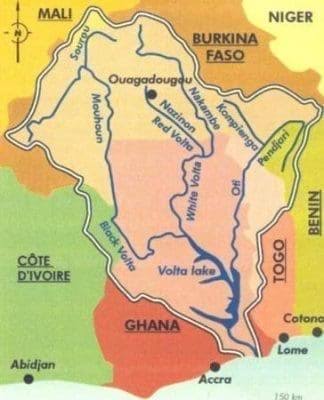
Either way, the well marks a critical test of Ghana’s long-running effort to understand the Voltaian Basin.
The immediate story is therefore not that Ghana has found another oil field.
It is that after years of seismic acquisition, technical studies and community engagement, the country is finally moving towards the stage where the Basin’s geological promise can be tested directly beneath the surface.
READ ALSO: Government Must Establish Dedicated Fund for Child Protection – Ameko