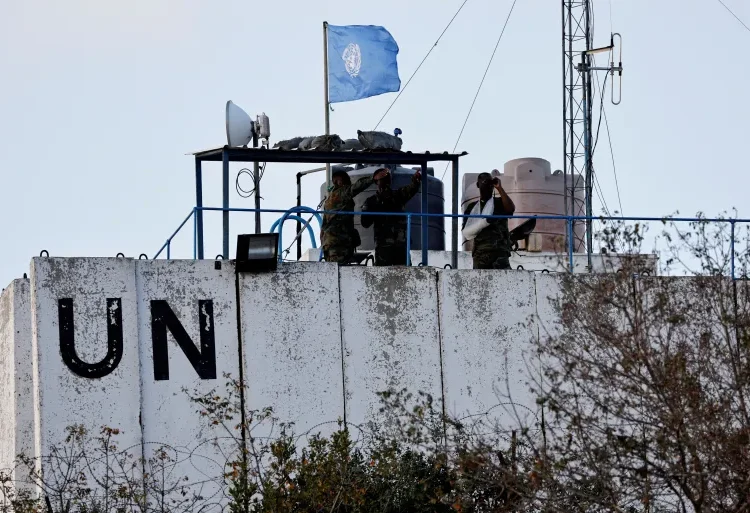
Lebanon’s Parliamentary Foreign Affairs and Expatriates Committee has called on the United Nations Security Council to extend the mandate of the UN peacekeeping mission in southern Lebanon, warning that its continued presence is essential to preventing further escalation along the country’s border with Israel.
The committee held a session to coordinate Lebanon’s diplomatic efforts on the issue, meeting with ambassadors from UN Security Council member states to discuss the future of the United Nations Interim Force in Lebanon (UNIFIL).
The meeting was chaired by MP Fadi Allameh and attended by Defence Minister Michel Mansi, with discussions focusing on UNIFIL’s role in southern Lebanon and its support for the implementation of UN Security Council Resolution 1701.
UNIFIL has been tasked with monitoring the ceasefire between Israel and Hezbollah and supporting efforts to maintain stability along the Blue Line, the demarcation line separating Lebanon and Israel.
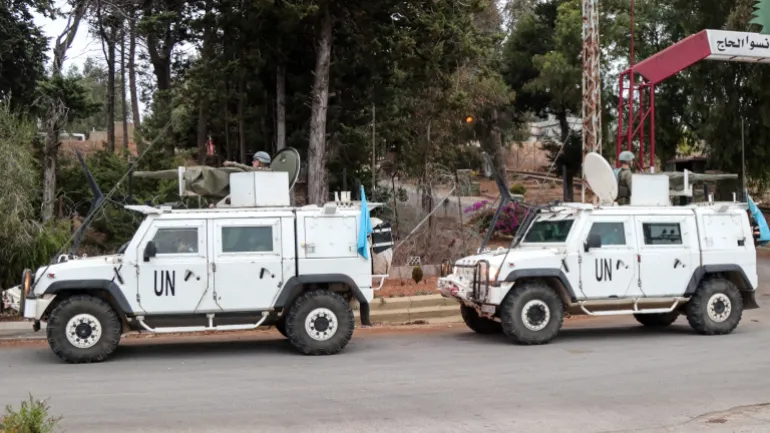
Allameh described UNIFIL’s presence as critical to maintaining stability and preventing tensions from escalating into wider conflict. “The presence of UNIFIL is a fundamental pillar of stability and the only mechanism for communication to prevent friction and escalation along the Blue Line,” he said.
He also stressed the importance of continued cooperation between UNIFIL and the Lebanese Armed Forces as Beirut works to expand the army’s deployment south of the Litani River.
Allameh said that the army’s deployment needed continued cooperation with UNIFIL so that the process could move forward “without creating any security gaps.”
He called for a “realistic approach” to any potential changes to UNIFIL’s mandate, arguing that decisions should take into account the progress made by the Lebanese army in expanding its presence in the south.
The Lebanese lawmaker also cautioned against “moving away from predetermined dates” for the mission’s mandate, citing continued Israeli attacks in southern Lebanon.
The push for an extension comes as concerns grow over the security vacuum that could emerge when UNIFIL, which has operated in Lebanon for decades and currently has about 7,500 personnel, is expected to leave in January.
Lebanon and France have both backed extending the UN mandate, but the United States and Israel have not indicated support for prolonging the mission.
The uncertainty surrounding UNIFIL’s future comes amid fears that renewed Israeli military operations could further destabilise southern Lebanon.
Israel and Lebanon have held several rounds of US-brokered talks aimed at reducing tensions along their border. A US-mediated framework agreement was reached between the two countries in June, but it did not require Israel to withdraw from the large area of southern Lebanon it currently occupies.
Israeli attacks have continued despite the agreement, increasing concerns in Lebanon over the possibility of another major military campaign.
The situation remains linked to demands for the disarmament of Hezbollah, with Israel maintaining that the Lebanese armed group must be disarmed as a key condition for an Israeli withdrawal from southern Lebanon.
Lebanese officials have therefore stressed the importance of maintaining mechanisms capable of monitoring developments and preventing incidents along the border from escalating.
Meanwhile, European and Arab military chiefs are meeting in Paris to assess the Lebanese Armed Forces’ needs and discuss the looming end of the United Nations peacekeeping mission UNIFIL, amid fears of a renewed Israeli military campaign in southern Lebanon. The talks will initially be chaired by French President Emmanuel Macron alongside Lebanese President Joseph Aoun and Jordan’s King Abdullah II.
Lebanon Death Toll Rises to 4,386
The humanitarian cost of the escalating violence has also continued to mount, with Lebanon’s Ministry of Public Health reporting that 4,386 people have been killed since Israel intensified its attacks on Lebanon on March 2.
A further 12,407 people have been wounded during the same period, according to the ministry.
The figures come amid growing fears in Lebanon of a renewed Israeli military campaign, despite a ceasefire that was intended to halt Israeli attacks and allow thousands of displaced people to return to their homes.
The continued violence and rising casualty figures have added urgency to calls for diplomatic efforts to reduce tensions along the border.
The future of UNIFIL, for Lebanese officials, is therefore closely connected to the broader security situation in southern Lebanon. The committee’s appeal to the Security Council reflects concerns that the departure of the peacekeeping force could leave a gap in monitoring and communication at a time when tensions remain high.
The Lebanese government is seeking continued international support for the implementation of Resolution 1701 and for the Lebanese army’s deployment in the south, while diplomatic efforts continue to address the wider dispute between Lebanon and Israel.
READ ALSO: 24-Hour Economy Unveils Six Strategic Industrial Projects for Private Investors in Ghana