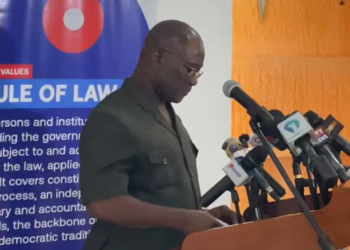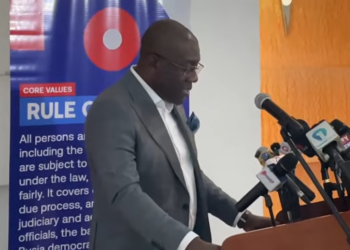
Chief Executive of Adaklu District and Dean of Volta Region Metropolitan, Municipal and District Chief Executives (MMDCEs), Jerry Yaw Ameko, has called for the establishment of a dedicated fund for child protection, arguing that current budgetary allocations remain buried within central administration and recurrent expenditure, leaving little room for effective spending on child protection cases at the district level.
Speaking at a National Dialogue on Financing Child Protection, Ameko said the country needs to return to the drawing board and reconsider how existing funding structures allocate resources specifically toward safeguarding children, rather than continuing to embed child protection spending within broader administrative budgets.
Ameko explained that district assemblies often face public pressure to prioritise visible, tangible development projects such as roads, classrooms and water systems, since these are the outcomes, communities can readily see and measure.
However, he argued that less visible but equally critical services, including child protection interventions, tend to suffer as a result of this pressure, since they compete for funding against central administration costs and other recurrent expenditure obligations.
He acknowledged the practical difficulty this creates for district chief executives attempting to properly resource social welfare functions, describing the daily reality of balancing limited allocations against multiple competing demands.
“So within that, if welfare is supposed to take a portion, if other committees, other assembly works and other things are supposed to take a certain part from this 5 percent, what are you allocating, what do you think you can spend?”
Jerry Yaw Ameko

Budget Allocations Often Go Unexhausted
According to Ameko, even when budgetary provisions are made for child protection within existing frameworks, districts frequently struggle to properly exhaust these allocations due to the nature of the challenges involved.
He explained that cases reported from communities often require medical-legal examinations, which carry direct costs that many affected families are simply unable to afford.
He noted that when parents cannot finance these required examinations, they are sometimes compelled to resolve matters informally within the household instead, a situation he explicitly described as constituting a form of abuse in itself, given that it prevents proper legal and medical intervention in cases that require it.
Child Protection Rooted In Constitutional Mandate
Ameko stressed that child protection should not be treated as a discretionary or charitable undertaking by district assemblies, but rather as a constitutional obligation.
He cited Article 28 of Ghana’s 1992 Constitution as providing clear grounding for the responsibility MMDCEs hold toward safeguarding children within their jurisdictions.

“Our job as MMDCEs, we are the laws of this country, and Article 28 of our national constitution gives us that clear indication that what we do for our children is not mere charity, is not a favour that we are doing for them,”
Jerry Yaw Ameko
Responding directly to a question on whether he would support a dedicated funding percentage specifically for child protection, separate from the broader central administrative allocation, Ameko confirmed his support for such an arrangement, provided it operates within properly structured guidelines determined at the appropriate policy level.
Ghana’s Historical Leadership On Children’s Rights
He argued that if district chief executives were properly resourced to support the Department of Social Welfare and Community Development, alongside other relevant agencies working to ensure children’s safety and wellbeing, there would be no obstacle to revisiting existing allocation guidelines to establish a dedicated percentage specifically earmarked for child protection.
Ameko noted that Ghana holds historical significance as the first country to ratify the United Nations Convention on the Rights of the Child, later domesticated through Act 560 in 1998.
He argued that given this pioneering role, it is particularly troubling that the country now finds itself relying heavily on donor and foreign partner support to address child protection issues, rather than adequately financing these efforts through domestic resources.
He suggested that Ghana’s continued emphasis on physical infrastructure development, while understandable given public demand, should not come at the expense of investing in the children who will eventually inherit and maintain that same infrastructure in the future.
Empowering Social Welfare Officers Through Reliable Financing
Ameko argued that establishing a dedicated child protection fund would directly empower social welfare officers handling cases at the district level, ensuring that budgeted resources are genuinely available when needed to facilitate case resolution, including necessary medical-legal processes.
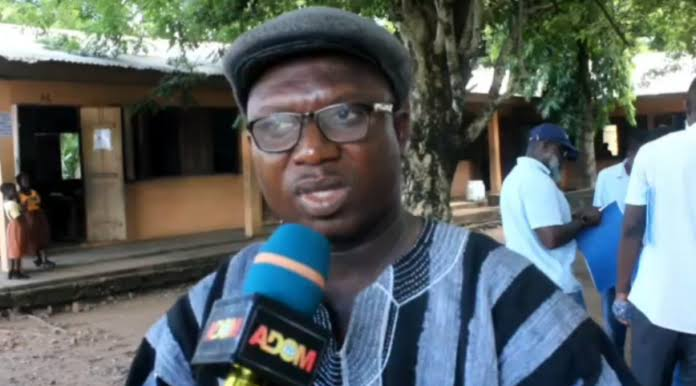
He explained that when officers know funding is reliably available to support their work, they are better positioned to pursue cases fully rather than allowing them to stall due to financial constraints faced by affected families, ultimately strengthening the overall safety and security of children within their communities.
READ MORE: There’s Policy Confusion, Minority Demand Apology over Lack of Clear Educational Policy