Ghana’s nuclear power ambition is moving into a more consequential phase: proving that the country can turn years of technical preparation into a financially credible, institutionally ready and commercially sustainable power project.
The shift matters because Ghana has already moved beyond the question of whether nuclear energy should form part of its future electricity mix.
‘In August 2026, the government confirmed that the country had formally entered Phase Two of the International Atomic Energy Agency’s Milestones Approach, with detailed site studies, institutional strengthening, stakeholder engagement and discussions with technology vendors described as being at an advanced stage.’
The next challenge is therefore less about announcing nuclear power and more about demonstrating that Ghana can finance, regulate, construct and ultimately operate a nuclear facility without creating a new long-term burden for the power sector.
That is the real significance of the programme’s current stage.
From Nuclear Ambition To Investment Discipline
Nuclear power could give Ghana something its electricity system increasingly needs: large-scale, dependable generation capable of operating independently of rainfall and less exposed to the fuel-price volatility associated with thermal generation.
The case becomes stronger as Ghana looks to support industrialisation, rising electricity demand and a more diversified generation portfolio.
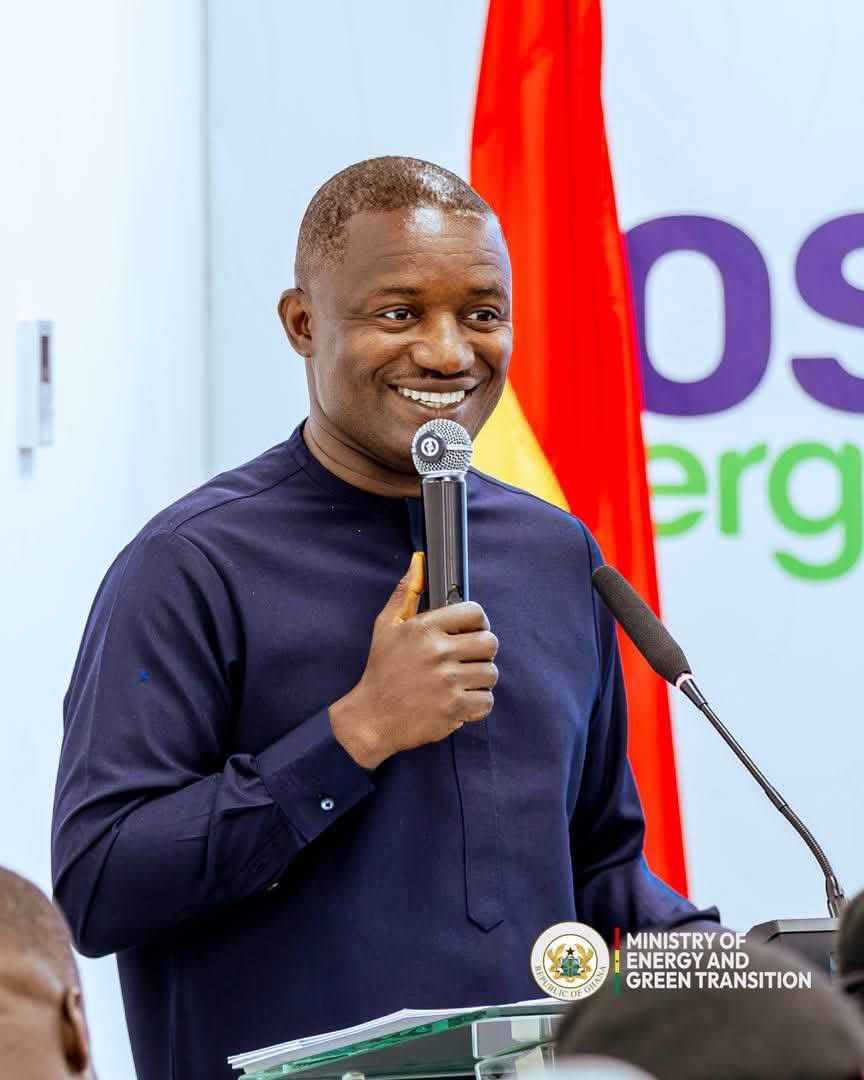
Energy Minister Dr John Abdulai Jinapor has argued that increasing demand, diminishing hydroelectric potential and the high cost of thermal generation make nuclear power an important option for Ghana’s future electricity needs.
But the economic logic of nuclear power cannot stop at the fuel cost or the number of megawatts produced.
A nuclear plant is a long-lived infrastructure asset requiring substantial capital before it produces a single unit of electricity.
Financing costs, construction timelines, procurement arrangements, grid integration, regulatory requirements and eventual decommissioning all form part of the economic equation.
For Ghana, this makes financing architecture as important as reactor technology.
The country’s power sector is still working through financial pressures, including the longstanding accumulation of liabilities across the electricity value chain.
Government has been tightening the cash waterfall mechanism and improving payments to independent power producers, with the stated objective of eventually reaching full monthly payments.
A nuclear programme entering this environment cannot simply assume that future electricity demand will automatically generate sufficient revenue to service a multibillion-dollar investment.
It needs a financing model designed around the realities of Ghana’s power market.
The Cost Of Getting Ready Matters
One of the less visible challenges is that nuclear projects require considerable expenditure before construction begins.
Site characterisation, environmental assessments, regulatory development, grid studies, emergency preparedness, human-capital development and institutional strengthening all have to progress before a reactor can safely move towards construction.
This creates an unusual financing problem.
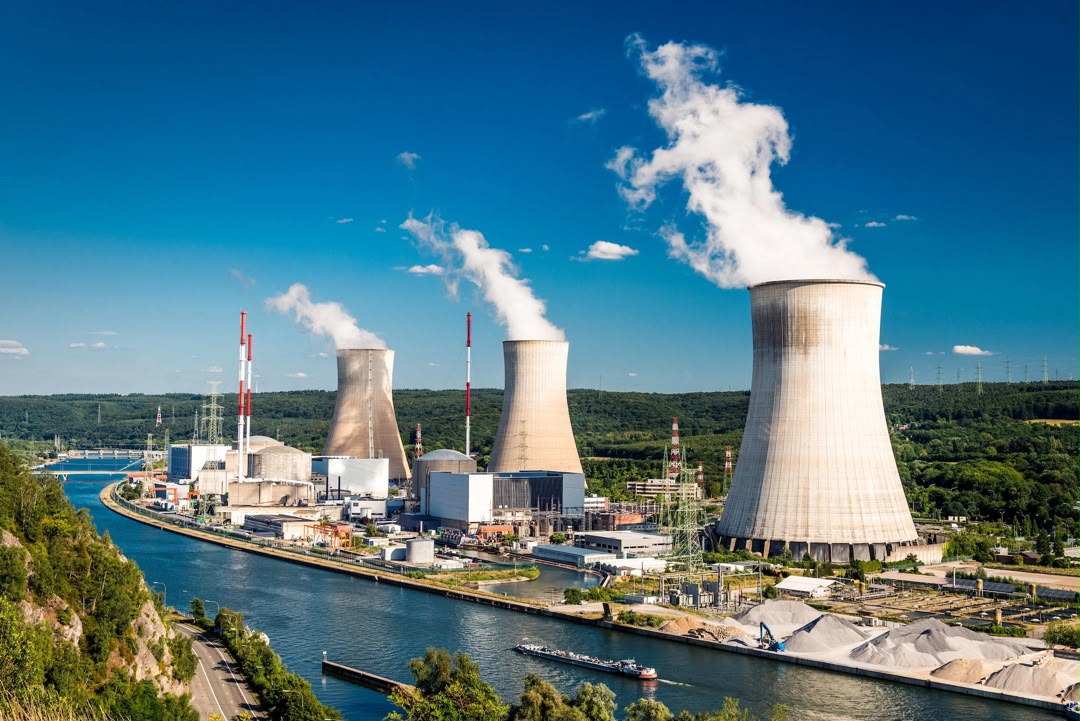
The country must spend money to establish that a much larger future investment is technically and commercially viable, even though the eventual project financing may depend on the results of those studies.
That makes the current phase strategically important.
The government has said Ghana is already advancing site studies and other preparatory requirements. At the same time, Ghana’s nuclear institutions have identified human capital as a major determinant of whether Africa’s nuclear ambitions succeed.
The lesson is straightforward: construction readiness is not simply about having a site and a reactor vendor. It is about having an entire ecosystem capable of supporting the asset for decades.
Building The People Before The Plant
One of the more practical signs of Ghana’s preparation is the acquisition of a nuclear power plant simulator at the Ghana Atomic Energy Commission.
The simulator is intended to allow personnel to practise plant operations and test procedures in a controlled environment before an actual nuclear facility is constructed.
That may appear technical, but it has a much broader economic significance.
A nuclear plant cannot be operated successfully by importing expertise indefinitely. Ghana will require engineers, reactor operators, safety specialists, regulators, maintenance professionals, emergency-response teams, cybersecurity specialists and other technical personnel capable of managing the facility throughout its operating life.
This is also where Ghana’s existing nuclear-science infrastructure becomes strategically valuable.
The Ghana Atomic Energy Commission and related academic institutions have spent decades developing expertise in nuclear science and its applications.
The nuclear programme therefore has the potential to become more than a power-generation project if Ghana uses it to deepen domestic engineering, scientific research and technical training.
The opportunity is to build an ecosystem rather than simply acquire a reactor.
Nuclear Must Solve A Power Problem
There is another question Ghana cannot avoid: what precisely is nuclear power expected to solve?
The answer should not simply be “add generation.”
Ghana already has significant installed generation capacity. The more important issue is the quality, cost and reliability of the electricity delivered to consumers, as well as the financial sustainability of the institutions purchasing and distributing that electricity.
Recent government data and policy discussions have focused heavily on improving the financial health of the power sector, including stronger revenue mobilisation and payments across the electricity supply chain.
That means a future nuclear plant must fit into a broader least-cost power strategy.
If nuclear electricity is significantly more expensive than alternative dependable sources, the project could transfer the problem from generation shortages to tariff and fiscal pressures.
Conversely, if Ghana can structure the project effectively and use nuclear generation to displace expensive thermal generation over time, it could provide a valuable source of stable electricity for industrial development.
The economics will therefore depend not only on the reactor itself but on when it is delivered, how it is financed and what generation it replaces.
The Grid Cannot Be An Afterthought
Nuclear power also changes the requirements placed on the national electricity network.
A large nuclear unit represents a substantial block of generation entering the grid. That requires careful planning around transmission capacity, system stability, reserve margins and demand growth.
This makes the nuclear programme inseparable from Ghana’s wider transmission and distribution modernisation agenda.
The country is simultaneously investing in transmission infrastructure, renewable generation and battery storage, while also considering additional thermal capacity. Nuclear power must therefore be integrated into a generation portfolio rather than developed in isolation.
That portfolio question is becoming increasingly important as Ghana pursues both energy security and a lower-carbon electricity system.
Nuclear can provide firm generation. Solar and other renewables can contribute lower-carbon electricity but require flexibility and storage. Gas can provide dispatchable generation, although its economics remain exposed to fuel availability and pricing.
The strategic value of nuclear will ultimately depend on how well these resources complement one another.
Ghana Cannot Afford Institutional Gaps
The strongest nuclear programme on paper can still fail if the institutions surrounding it are weak.
Regulatory independence, safety oversight, emergency preparedness, radioactive-waste management, security and public communication are not secondary requirements. They are core infrastructure.
Ghana has been building its regulatory framework with international assistance and technical cooperation. The International Atomic Energy Agency’s infrastructure approach explicitly treats nuclear development as a 19-issue process covering areas ranging from legal and regulatory frameworks to human resources, financing, emergency planning and radioactive-waste management.
This is why Ghana’s movement into Phase Two is meaningful, but it should not be interpreted as equivalent to construction approval.
Phase Two is about preparing the infrastructure required to make a knowledgeable decision on the nuclear programme and move towards implementation. The harder test is whether Ghana can close the remaining institutional, technical and financial gaps without compromising standards.
The Bigger Industrial Opportunity
There is also a broader economic argument that deserves attention.
If Ghana approaches nuclear development purely as a power-generation project, much of the value could remain with foreign technology providers, contractors and financiers.
But if the programme is deliberately linked to local engineering, construction services, technical education, manufacturing, research and maintenance capabilities, it could become an industrial-development platform.
That will require deliberate localisation.
Ghana’s nuclear workforce cannot be built overnight. Nor can local companies instantly acquire the technical qualifications required to participate in safety-critical nuclear activities.
But a long development timeline also provides an opportunity to build those capabilities gradually.
The country could use the preparation period to establish specialised training pipelines, certification systems, research partnerships and supplier-development programmes.
That is where nuclear policy intersects with industrial policy.
The Decision Ghana Ultimately Has To Make
Ghana’s nuclear programme has reached a point where ambition alone is no longer the most useful measure of progress.
The country has entered Phase Two, advanced site and institutional work and strengthened its human-capital preparation.
The question now is whether those preparations can be converted into a project that makes economic sense.
That means establishing a financing model that protects Ghana’s fiscal position, a tariff and power-purchase structure that does not destabilise the electricity market, a regulatory system capable of independent oversight, and a workforce capable of operating the plant safely.
It also means being honest about timing.
Nuclear power cannot solve Ghana’s immediate electricity-sector financial problems. Nor should the promise of future nuclear generation distract from the reforms required today to improve distribution efficiency, revenue collection, transmission reliability and the financial sustainability of the power market.
Its value lies in the longer horizon.
If Ghana gets the economics and institutions right, nuclear power could become an anchor for a more diversified electricity system, reducing dependence on rainfall and expensive thermal generation while providing firm low-carbon electricity for a more industrialised economy.
If those foundations are weak, however, the country could end up with an expensive infrastructure commitment whose financial burden outlasts the political cycle that approved it.
That is why Ghana’s nuclear story is entering its most important phase.
The first milestone was deciding to pursue nuclear power.
The next is proving that Ghana can pay for it, regulate it, operate it and extract enough economic value from it to justify the investment.
That is the standard by which the programme should now be judged.
READ ALSO: T-Bills Become GFIM’s Liquidity Powerhouse As Turnover Nears GH¢1bn