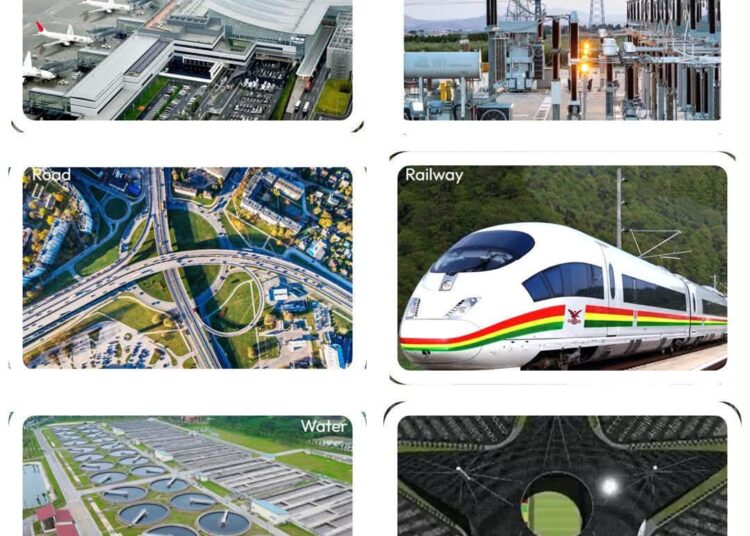
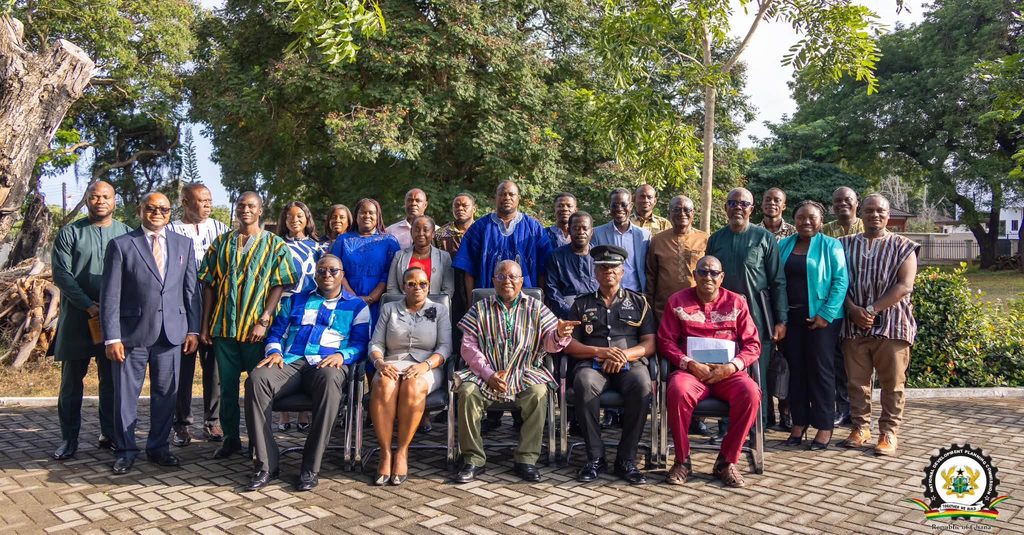
Ghana is moving to overhaul how major infrastructure is planned, financed and delivered as policymakers seek to reduce project discontinuity and improve the return on scarce public investment. The National Development Planning Commission inaugurated a Technical Committee on Wednesday, 16 September 2026, with a four-month mandate to review, update and finalise the Ghana Infrastructure Plan, including its results framework, financing options and institutional arrangements for implementation.
The exercise carries broader economic significance because Ghana’s infrastructure challenge is not simply a shortage of projects. The official Ghana Infrastructure Plan estimates investment requirements of about US$1.1 trillion between 2018 and 2047, equivalent to roughly US$37.2 billion annually. Housing accounts for 62% of the requirement, transport 23% and energy 8%, while the plan says Ghana’s current revenue and expenditure cannot support investment on that scale.
The review therefore raises a harder question than how many roads, railways, power systems or public facilities Ghana can announce. It is whether the country can select, finance and complete infrastructure that removes production bottlenecks and attracts private investment without creating fiscal pressures that undermine future development spending.
Project Continuity Becomes Economic Issue
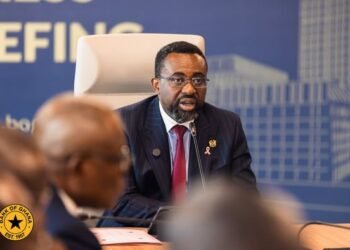
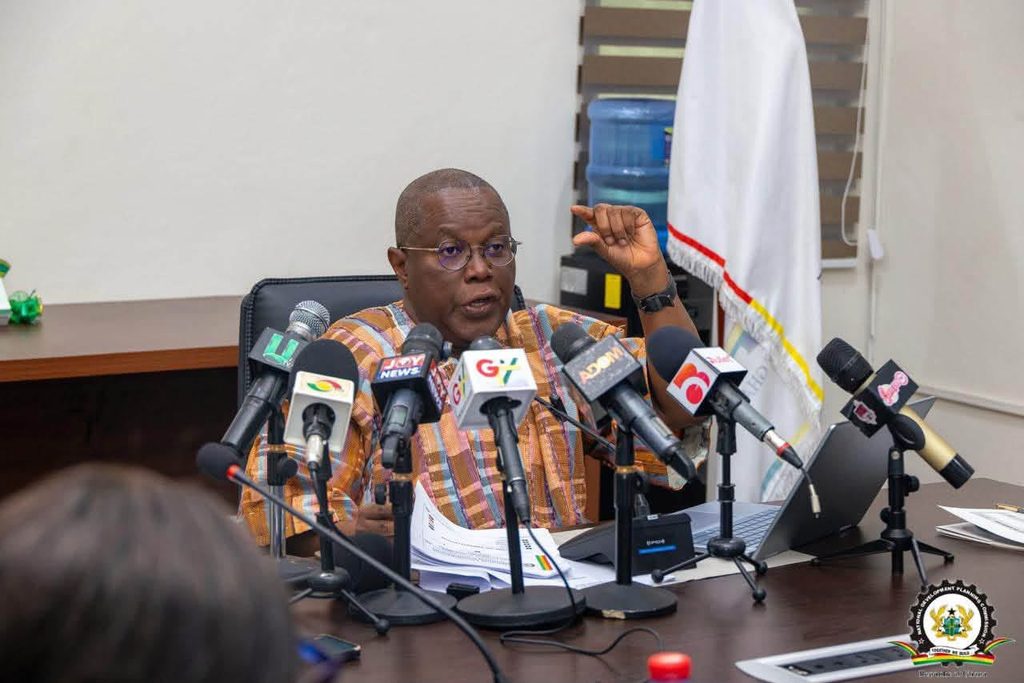
NDPC Chairman Dr Nii Moi Thompson said the updated framework should help Ghana break with inconsistent development planning. “It’s important that we move away from this stop-and-go approach to national development and have a more consistent, predictable, and transparent approach.”
The economic cost of discontinuity can be substantial. Infrastructure raises productive capacity when it lowers transport costs, improves power reliability, links producers to markets and reduces the time businesses spend moving goods and workers. Those gains depend on completion, maintenance and coordination; a partly completed project can absorb public resources while delivering little of the return used to justify it.
That distinction is increasingly relevant as Ghana expands large infrastructure programmes. The debate over the economic return from the Accra-Kumasi Expressway already illustrates why major projects should ultimately be judged by lower freight costs, safer movement, wider market access and the private investment they unlock, rather than by construction values alone.
Financing Cannot Rely on the Budget Alone
The scale of Ghana’s infrastructure requirement makes financing central to the review. Government revenue will remain important, but the financing gap means public-private partnerships and other long-term funding structures will need careful consideration where project economics can support them. The challenge is to mobilise capital without transferring poorly priced risks back to the state.
Not every project has the same commercial potential. Revenue-generating infrastructure may attract private capital, while roads, drainage systems and other projects with large public benefits may still require budget support. Matching financing instruments to project characteristics therefore matters as much as raising money itself.
This is also relevant to Ghana’s US$10 billion New Economy programme, where NDPC is expected to assess whether investment produces measurable gains in productivity, employment, exports and household incomes. A credible national framework could help prevent separate programmes from competing for limited fiscal space or producing infrastructure that is poorly connected across sectors.
Better Selection Could Raise Investment Returns
For Ghana, the central issue is not whether infrastructure matters. It is whether projects are selected and sequenced in ways that produce economic returns large enough to justify their costs. Roads must connect productive centres, industrial zones require reliable power and water, and digital networks generate larger gains when firms and public institutions can use them effectively.
The financing numbers make prioritisation unavoidable. An annual requirement of about US$37.2 billion is far beyond what the state can provide from ordinary revenue. Private investment can narrow the gap, but it cannot substitute for credible project appraisal, realistic demand assumptions, transparent procurement or clear allocation of risks between government and investors.
A stronger national framework could also reduce policy uncertainty. Businesses make long-term decisions partly on expectations about future transport links, energy availability, logistics and digital capacity. A visible pipeline of credible projects can influence investment before construction is complete, provided firms believe the projects will actually be delivered.
Implementation Will Determine Whether Plan Matters
The committee’s four-month review can strengthen the framework, but another plan will have limited economic value if budgets, procurement decisions and sector programmes later diverge from it. Publishing project pipelines, financing structures, implementation milestones and completion rates would make it easier to distinguish planned infrastructure from projects genuinely moving towards delivery.
Greater transparency would also improve scrutiny of cost overruns, delays and abandoned projects while giving businesses better visibility over the infrastructure networks shaping future investment decisions. It would allow policymakers and the public to judge whether scarce capital is being directed towards projects with stronger economic returns.
Ghana’s infrastructure deficit is ultimately a productivity constraint, but poorly financed infrastructure can become a fiscal constraint. The opportunity in the current review is to connect those two realities: invest enough to remove bottlenecks while selecting and financing projects carefully enough to preserve macroeconomic stability. What follows the committee’s report will determine whether the revised plan breaks the stop-go cycle or merely describes it more clearly.
READ ALSO: Gov’t Positions Economic Zones as Drivers of Jobs and Exports