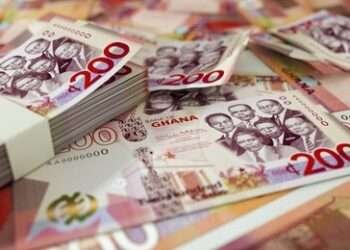
Bank of Ghana Governor Dr Johnson Pandit Asiama says limited cedi depreciation can sometimes form part of exchange-rate strategy, putting the focus on how much currency flexibility Ghana can accommodate without reigniting inflation and import-cost pressures.
Ghana’s central bank has signalled that limited movements in the cedi can be consistent with its broader exchange-rate strategy, as Governor Dr Johnson Pandit Asiama sought to distinguish normal currency adjustment from a loss of monetary control.
Speaking on Thursday at the official launch of the Central Securities Depository’s InvestorConnect platform at the Ghana Stock Exchange in Accra, Asiama said some depreciation can at times be allowed deliberately within the Bank’s strategy. “Sometimes it’s a deliberate policy to allow the cedi to depreciate a little bit. It’s all within the strategy.”
The comment comes as the currency has weakened modestly from its end-August level. Bank of Ghana data put the end-August interbank rate at GH¢11.25 to the US dollar, while the weighted median rate stood at GH¢11.4824 on September 15.

The movement is small compared with Ghana’s past currency episodes, but it matters because the cedi remains a key channel through which international fuel, imported inputs and other external costs reach domestic prices.
Flexibility Not a Devaluation Target
Dr Asiama’s remarks suggested that exchange-rate management does not require the cedi to remain fixed at one level every day. A central bank can smooth excessive volatility without eliminating every market-driven movement. Dollar demand from importers, energy companies and other businesses changes through the year, while export receipts, remittances and central-bank operations affect supply.
Allowing some adjustment can reduce the reserves required to defend a particular level. But that benefit disappears if depreciation becomes large enough to destabilise expectations or materially increase domestic prices.
Inflation Sets the Limit
Ghana enters that trade-off with headline inflation at 5.0% in August, below the Bank of Ghana’s medium-term target band of 8% plus or minus 2 percentage points. The Monetary Policy Rate remains at 14%, after the Monetary Policy Committee held it unchanged in July while balancing low inflation against renewed domestic and external price risks.

The current configuration has already put the relationship between Ghana’s 5% inflation and the 14% policy rate in focus. That inflation position gives policymakers more room than during periods of double-digit inflation, but it does not make the exchange rate irrelevant.
Ghana still imports fuel, machinery, medicines, industrial inputs and consumer goods, so a weaker cedi raises the local-currency cost of dollar-priced imports when other factors are unchanged.
The sensitivity is greater now because global energy prices have again become an inflation risk. The recent oil shock has increased pressure on Ghana’s inflation and external buffers, meaning currency weakness and higher dollar fuel prices can reinforce each other. The issue is therefore whether cedi movements remain gradual enough to preserve Ghana’s disinflation gains.
External Buffers Determine Policy Space
The Bank’s ability to tolerate ordinary exchange-rate movement also depends on Ghana’s external buffers. At end-June, gross international reserves stood at US$12.94 billion, equivalent to about five months of imports.
In its July policy deliberations, the Bank said the cedi had faced elevated foreign-exchange demand from the energy, commerce and manufacturing sectors before recovering after interventions aimed at containing excessive volatility.

That distinction is important. It suggests the Bank separates normal market adjustment from disorderly movement that may require intervention. Reserve adequacy provides a buffer, but continuously defending a particular nominal rate would carry a cost, especially when Ghana must also meet energy payments and other external commitments.
Ghana’s stronger trade and current-account position provides additional support, although a strong external surplus does not eliminate short-term cedi pressure. The timing of export receipts can differ from corporate dollar demand, creating periods when the currency moves even though the broader external account remains favourable.
September MPC Raises the Stakes
The timing of Asiama’s statement matters because the Monetary Policy Committee meets on September 23 and 24, with its decision due at the conclusion of the meetings on September 24. Policymakers will enter those meetings with inflation below the target band and economic growth remaining firm, while energy costs and foreign-exchange conditions pose upside risks to the price outlook.
The Governor’s remarks indicate that the Bank does not equate every small depreciation with policy failure. The harder test is whether modest currency flexibility can coexist with anchored inflation expectations and orderly market conditions. If exchange-rate weakness remains limited, the Bank retains more room to focus on broader monetary conditions. If depreciation accelerates and feeds into fuel, transport and import prices, that room narrows.
For businesses and households, the distinction is practical. Importers care about exchange-rate predictability, exporters about competitiveness, and consumers about whether currency movements raise prices. Stability therefore does not necessarily mean a motionless cedi. It means avoiding large, disorderly swings that make contracts, investment and household budgets difficult to plan.
The next MPC decision will provide a clearer indication of how the Bank is weighing that balance. Asiama’s comments suggest limited exchange-rate adjustment can fit within the strategy, but the durability of that approach will depend on inflation, foreign-exchange supply and whether current movements remain contained.
READ ALSO: Gov’t Positions Economic Zones as Drivers of Jobs and Exports