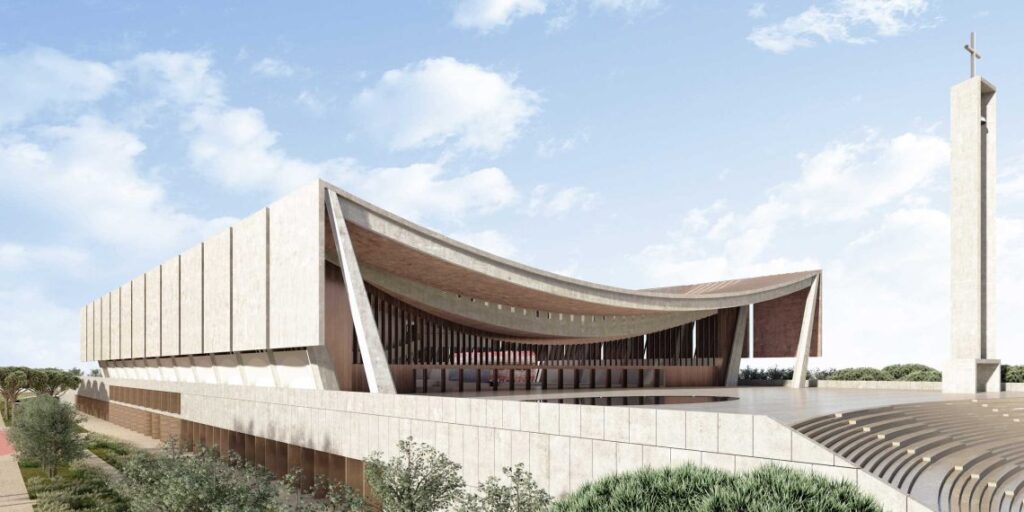
The conception of the National Cathedral under former President Nana Addo Dankwa Akufo Addo was well intentioned, but the project could have achieved a different outcome if Christian leaders had been given greater independence to execute the vision, Reverend Jehoaida Godwin Amuzu has argued.
The Interfaith and Ecumenical Relations Coordinator added that the Christian community welcomed the idea because it was intended to create a national Christian monument and provide a place that could represent the country’s Christian heritage.
Rev Amuzu explained that while the former President could provide the vision for the project, the responsibility for pursuing and implementing it could have been entrusted more fully to established Christian leadership. In his view, the decision to assemble eminent Christian clerics on the project committee demonstrated that government recognised their expertise and judgement, making it necessary to give them sufficient room to work independently.
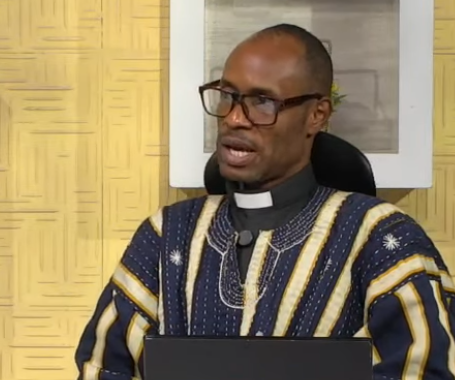
“You are bringing us together because you trust our expertise, you trust our judgment, you trust our competence. So, you leave us to do the work.”
Reverend Jehoaida Godwin Amuzu
The Interfaith and Ecumenical Relations Coordinator suggested that political considerations could affect the effectiveness of committees created by governments, particularly when members do not have complete freedom to make decisions. He pointed to the involvement of senior church leaders as an opportunity that could have been used to shape important aspects of the project, including decisions concerning its execution.
Rev Amuzu specifically questioned whether the eminent clergy involved would have supported the decision to demolish existing structures and develop the cathedral at its chosen site. He observed that the location already experiences significant congestion whenever major activities take place around the State House, Parliament, the Accra Ridge Church and the International Conference Centre.
The Interfaith and Ecumenical Relations Coordinator therefore suggested that a more independent approach could have produced different decisions and potentially improved the project’s prospects.
He emphasised that the church leaders appointed to the committee possessed the necessary competence to pursue the vision if they had been allowed to operate without political interference. Rev Amuzu argued that the involvement of Christian leadership should not have been merely symbolic, since their inclusion was intended to bring their institutional experience and knowledge into the project.
He added that the project itself is a worthwhile national idea, even though aspects of its implementation created difficulties. For the Interfaith and Ecumenical Relations Coordinator, the experience demonstrates the importance of separating political authority from the technical and institutional execution of major national projects.
Christian Council Questions National Cathedral Site And Project Execution
The location selected for the National Cathedral created significant challenges for the project and contributed to the difficulties surrounding its execution, Reverend Jehoaida Godwin Amuzu has said.
The Interfaith and Ecumenical Relations Coordinator argued that a major religious facility intended to attract worshippers and promote religious tourism required a more suitable and peaceful environment away from the congestion of central Accra. Rev Amuzu described the chosen location as fundamentally problematic because several major institutions and facilities already operate within the area. He explained that traffic becomes particularly heavy when activities take place at the State House, Parliament, the Accra Ridge Church or the International Conference Centre.
“The location is fundamentally problematic. The conception of the project was good, but the execution was a bit problematic.”
Reverend Jehoaida Godwin Amuzu
The Interfaith and Ecumenical Relations Coordinator proposed that the cathedral could have been constructed on undeveloped land on the outskirts of the city, where visitors would have greater space and a more serene environment for worship and religious activities.
He cited the location of the Pentecost Church’s convention centre as an example of how a major religious facility could operate away from the pressure and distractions of the city centre. Rev Amuzu also drew attention to the additional expenditure associated with preparing the selected site, particularly the demolition of existing structures and the removal of debris.
According to him, the demolition process created costs that could have been avoided if government had selected a suitable undeveloped site for the project from the beginning. The issue of accommodation for judges affected by the demolition also became part of the wider financial debate surrounding the project, with substantial public funds reportedly spent on temporary accommodation.
Rev Amuzu, however, rejected suggestions that the Christian Council of Ghana simply remained silent while questions emerged over the project. He explained that senior clergy members served on the committee and had a responsibility to discharge their duties respectfully while recognising the importance of the office of the President.
The Interfaith and Ecumenical Relations Coordinator noted that some members eventually recused themselves or resigned when they believed the project could have been handled differently. He argued that such decisions reflected the difficulty of publicly challenging an administration while simultaneously serving on a committee appointed by the President.
Rev Amuzu therefore distinguished between the original vision behind the National Cathedral and the decisions taken during its implementation. He stressed that the idea of creating a national Christian monument could have produced significant benefits, including opportunities for religious tourism, if the project had been situated appropriately and managed with greater independence.
READ ALSO: WHO Chief Calls for Scaled-Up Ebola Response in DR Congo