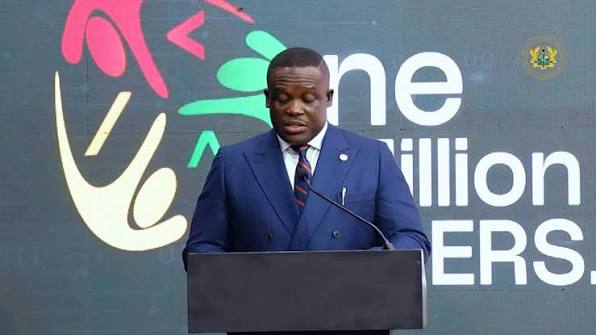
Minister for Communications, Digital Technology and Innovation Samuel Nartey George has disclosed that Ghana’s One Million Coders Programme has grown into what he called a genuine national movement, reporting nearly 142,000 registered accounts and almost 6,000 course completions as of early August 2026.
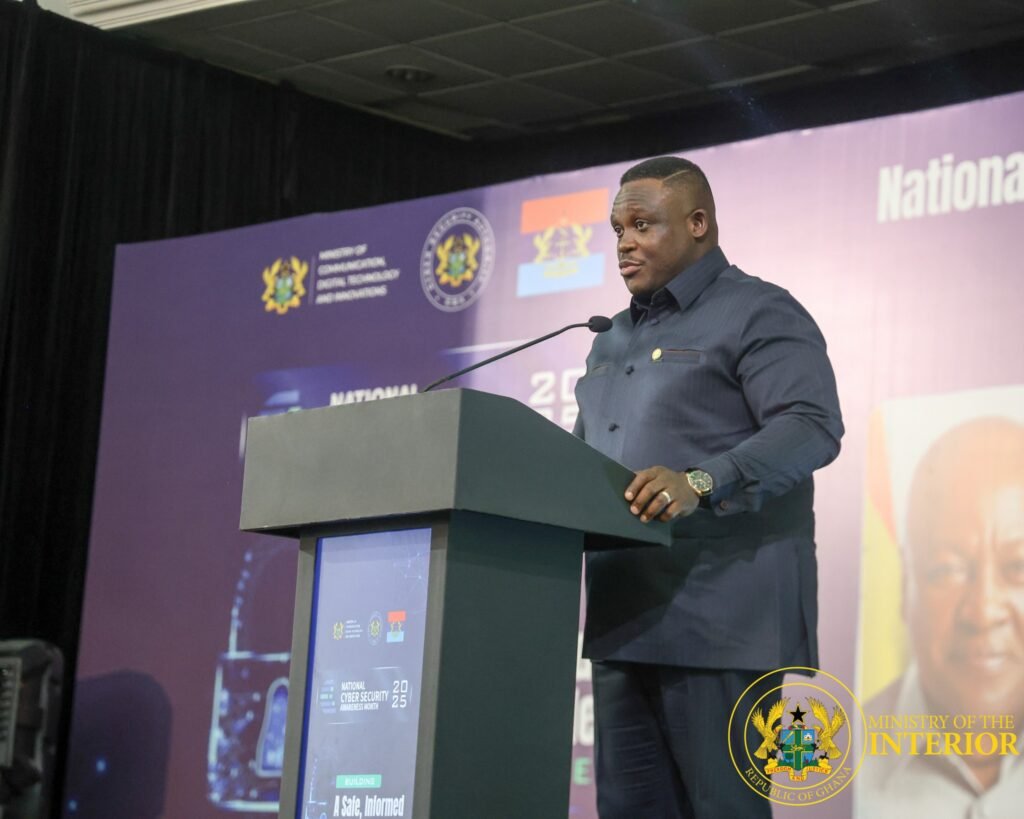
Hon Sam George presented the figures during the Government Accountability Series at the Jubilee House on Monday, September 7, 2026, offering the most detailed public accounting yet of how the flagship digital skills initiative has performed since its launch, including enrolment pathways, top-performing centres and the specific technical skills drawing the highest demand from learners.
As of August 2, 2026, the programme’s database held 141,959 registered accounts, with almost 30,000 admitted learners actively engaged in studies at that date and close to 6,000 course completions already recorded. Hon Sam George broke down how those learners are accessing the programme, noting that admissions span several distinct pathways.
Over 30,000 learners are enrolled through Coursera, more than 10,000 through the Start to Code Alliance, and almost 2,000 through the Net Accard Partnership, with additional learners moving through tracks run by the Data Protection Commission, Digital Literacy, CNST and Data Analytics programmes.
Of the total learner base, more than 25,000 are pursuing self-paced studies independently, while a further 7,000 require centre-based support to complete their coursework, a distinction that speaks to the programme’s effort to accommodate learners with varying levels of digital access and independence.
Cybersecurity Tops Demand
Hon Sam George said enrolment patterns closely track what Ghana’s labour market is actually demanding.
Cybersecurity leads all skill categories with 8,570 learners, followed by Data Analytics, AI Essentials, AI Professionals and Project Management, a ranking he presented as evidence that the programme is steering learners toward genuinely marketable skills rather than generic digital literacy alone.
The ministry has signed Memoranda of Understanding with 11 of Ghana’s leading universities, including the University of Ghana, the Kwame Nkrumah University of Science and Technology, the University of Energy and Natural Resources, the Ghana Communication Technology University and the University of Cape Coast, to embed One Million Coders certifications directly into degree and diploma programmes.

That integration effectively allows students pursuing traditional academic qualifications to earn recognised digital skills credentials alongside their formal degrees.
Hon Sam George said the ministry is now working with the Ministry of Education and the Ghana Education Service to extend foundational digital skills training to senior high school students between the ages of 13 and 19, a move that would push the programme’s reach beyond university-level participants and into the secondary education system.
Centre Performance and Regional Participation
Delivery on the ground has kept pace with demand, according to Hon Sam George. Centre monitoring data collected between June 1 and August 15, 2026 recorded 11,683 cumulative attendances across 118 reporting centres nationwide. He named Twifo-Praso, Dafema, Sagnerigu, Yendi and Wamanafo among the highest-performing centres during that period.
Regionally, the Northern Region, Greater Accra and the Upper West Region are leading nationwide participation in the programme, a spread that suggests the initiative has achieved meaningful geographic reach beyond Ghana’s traditionally better-resourced southern urban centres.
Hon Sam George disclosed that the ministry has partnered with the National Council on Persons with Disabilities to identify and prioritise a list of centres for accessibility onboarding, part of a broader push to ensure the programme serves learners with disabilities rather than assuming universal physical access to its facilities.
He was candid about one area where the programme has not yet met its own ambitions.

Men continue to outnumber women among registered participants by a fair margin, and Hon. Sam George identified closing that gender gap as a specific priority for the remainder of the year, alongside the broader goal of converting registrations into actual course completions.
That distinction, between the nearly 142,000 people who have registered and the roughly 6,000 who have completed a course, represents the One Million Programme’s central operational challenge going forward: ensuring that early enrolment enthusiasm translates into finished, credentialed skills training at scale.
READ ALSO: EU Unveils €200m Greenland Investment