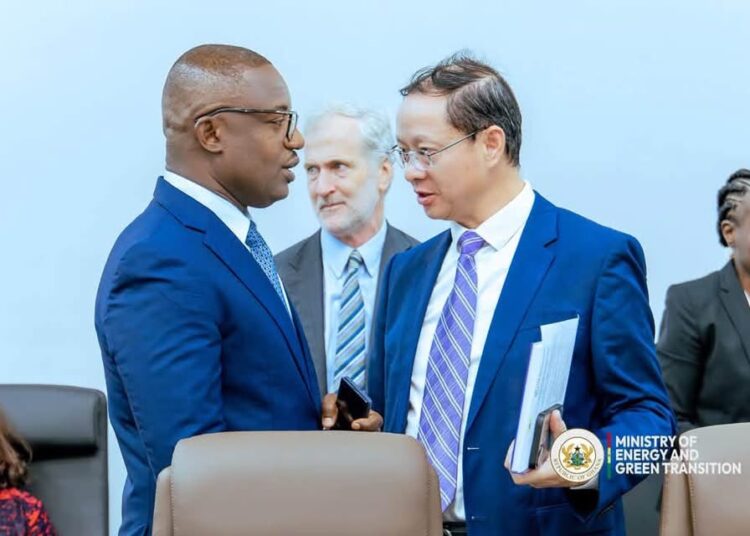
Ghana is seeking to deepen its engagement with the World Bank Group by placing power-sector reforms, grid modernisation and energy-system resilience among the priorities expected to shape the country’s Country Partnership Framework (CPF) for 2027–2032.
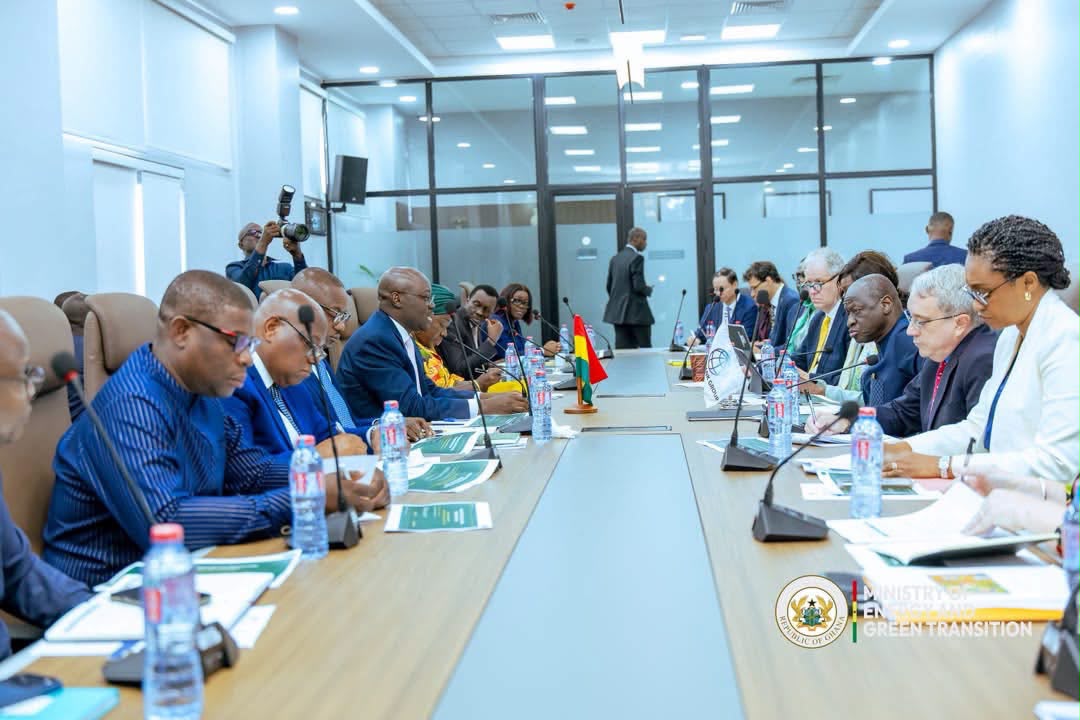
The priorities were outlined by the Minister for Energy and Green Transition, John Abdulai Jinapor, during a national consultation on the proposed six-year framework, which is intended to align World Bank Group support with Ghana’s development priorities.
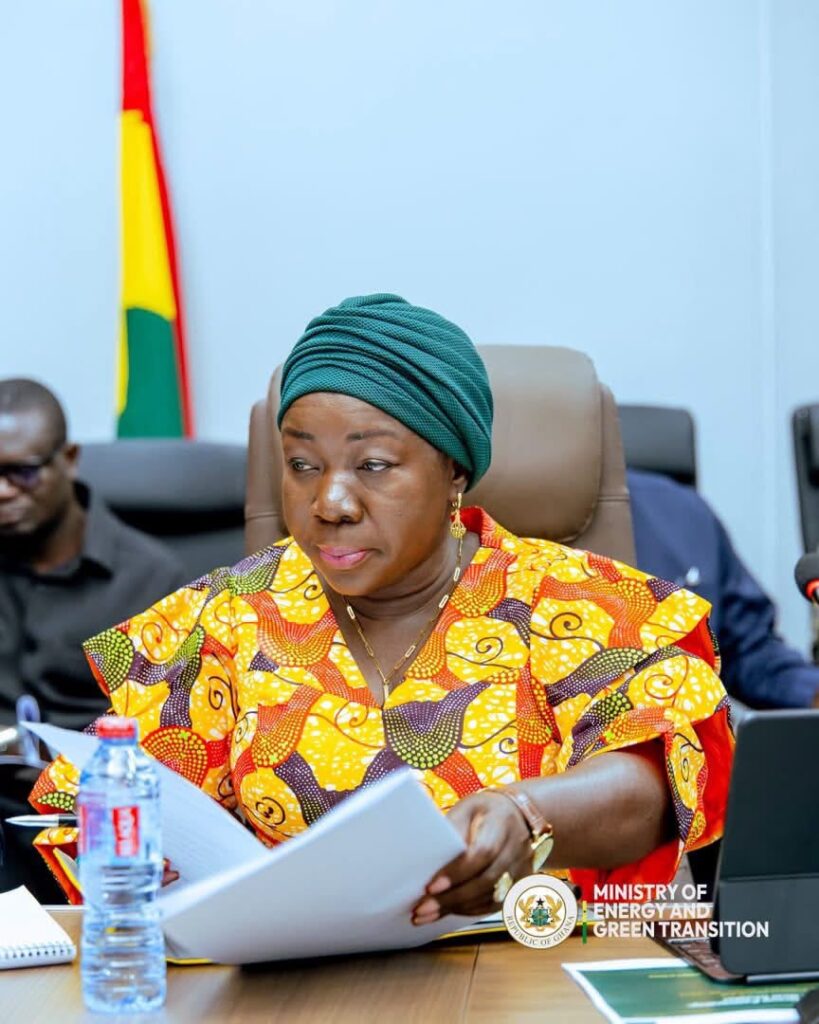
The consultation brought together the Ministers for Finance, Trade and Industry, and Roads and Highways, alongside other stakeholders, to assess Ghana’s development trajectory and identify areas where stronger development-partner support could accelerate economic transformation.
Energy Reforms Take Centre Stage
For Ghana’s energy sector, the proposed partnership comes at a critical point as government seeks to address long-standing financial and infrastructure constraints within the electricity industry.
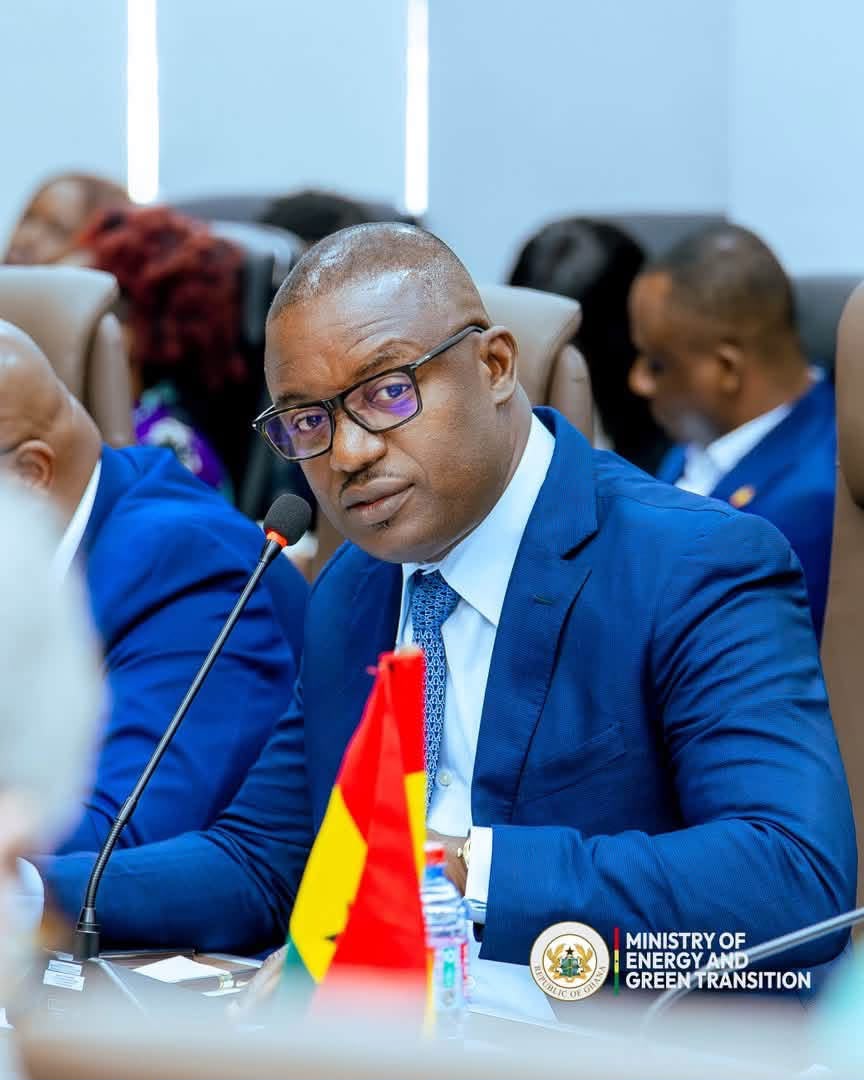
Mr Jinapor highlighted what he described as significant reforms undertaken since the government assumed office, pointing particularly to the management of the cash waterfall mechanism, reforms within the electricity distribution sector and investments to strengthen the national transmission network.
The emphasis is significant because Ghana’s power-sector challenges have increasingly extended beyond generation capacity.
Financial weaknesses across the electricity value chain have historically affected the ability of sector institutions to pay for power supplied, maintain infrastructure and undertake timely investments.
Strengthening the financial flows within the sector is therefore closely connected to the reliability of electricity supply.
The Minister said prudent management of the cash waterfall mechanism formed part of the reforms being implemented to improve the sector’s financial position.
While the statement did not provide specific financial figures on the mechanism, its inclusion in Ghana’s discussions with the World Bank signals the importance of resolving the financial constraints that have affected the electricity value chain.
Distribution And Transmission Under Reform
Mr Jinapor also pointed to reforms in the distribution sector and ongoing investments in transmission infrastructure.
The two areas are strategically important because improvements in generation capacity do not automatically translate into reliable electricity for consumers.
A power system can have sufficient generation but still experience constraints if electricity cannot be transmitted efficiently across the network or distributed reliably to homes and businesses.
The government’s focus on transmission modernisation therefore reflects an effort to strengthen the physical backbone of Ghana’s electricity system.
The Minister said investments were being made to strengthen and modernise the transmission network, positioning grid infrastructure as an important component of Ghana’s broader economic transformation agenda.
This is particularly relevant as electricity demand grows alongside industrial activity, urbanisation and the expansion of new energy technologies.
Battery Storage Adds New Dimension
One of the more forward-looking elements highlighted by Mr Jinapor was Ghana’s rollout of Battery Energy Storage Systems (BESS).
The technology is expected to support peak electricity demand while improving the reliability and resilience of the national power system.
“I also highlighted the rollout of Battery Energy Storage Systems (BESS) to support peak demand and enhance the reliability and resilience of our power system.”
John Abdulai Jinapor, Minister for Energy and Green Transition
BESS could become increasingly important as Ghana diversifies its generation mix and integrates more variable renewable energy into the national grid.
Unlike conventional generation plants, solar and some other renewable sources do not produce electricity continuously.
Battery systems can store electricity when supply is available and release it when demand increases or generation falls.
For Ghana, this creates the potential to use storage not only as a renewable-energy support mechanism but also as a tool for managing peak demand and reducing pressure on the wider power system.
The technology could consequently become part of a broader strategy to improve grid flexibility rather than simply an additional generation resource.
World Bank Partnership And Energy Transformation
The CPF consultation provides an opportunity for Ghana to connect these domestic reforms with development financing and technical assistance.
The World Bank Group has historically been an important development partner in Ghana’s infrastructure and energy sectors.
A new framework covering 2027–2032 could therefore influence the type of projects, reforms and technical programmes that receive development-partner support over the next several years.
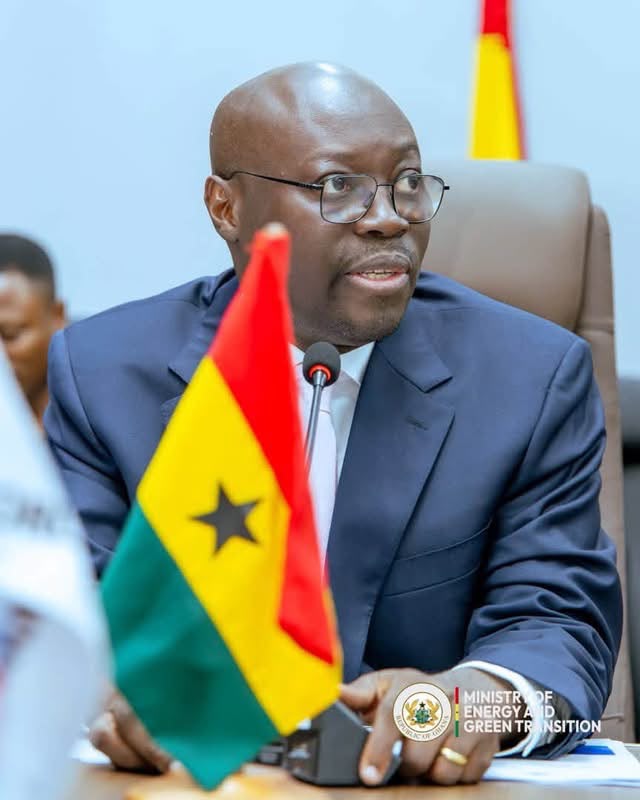
Mr Jinapor said the consultation provided an opportunity to reflect on Ghana’s progress and determine the type of economy the country wants to build.
He also said it was encouraging that the World Bank Group had recognised progress made in restoring economic stability and advancing economic transformation under President John Dramani Mahama.
For the energy sector, the implications are broader than securing financing for individual projects.
A stronger partnership could support investments in transmission and distribution infrastructure, energy-storage deployment and institutional reforms aimed at improving the financial sustainability of the electricity market.
It could also help Ghana address the intersection between energy reliability and economic growth.
Reliable Power Remains Central To Growth
Electricity reliability has direct implications for Ghana’s industrial ambitions.
Manufacturers, mines, businesses and households all depend on predictable electricity supply.
Where reliability deteriorates, businesses can face additional costs from backup generation, while interruptions can reduce productivity.
That makes grid investment an economic-development issue rather than solely an energy-sector concern.
The same applies to financial reform.
If electricity-sector revenues do not adequately support the cost of supplying and maintaining the system, infrastructure can deteriorate even where generation capacity is available.
Ghana’s attempt to combine financial reforms with physical investment therefore represents an important shift towards treating the electricity sector as an interconnected system.
The proposed CPF could provide an external platform for supporting that approach.
A Six-Year Window For Structural Reform
The 2027–2032 framework is particularly significant because energy infrastructure requires long investment horizons.
Transmission lines, substations, distribution networks and battery-storage facilities cannot be planned and delivered effectively through short-term interventions alone.
A six-year partnership framework could give Ghana and its development partners an opportunity to coordinate financing, institutional reforms and infrastructure development around longer-term objectives.
The challenge will be ensuring that external support complements, rather than substitutes for, domestic reforms.
For Ghana’s electricity sector, development financing can help build infrastructure, provide technical expertise and support institutional strengthening.
But the sustainability of those investments will ultimately depend on whether the underlying financial and operational systems remain strong.
Mr Jinapor expressed confidence that collaboration with development partners could help Ghana build on the progress already made and unlock new opportunities.
The proposed partnership therefore places Ghana at an important point in its energy-sector transformation: moving simultaneously to strengthen the finances of the electricity value chain, modernise its physical infrastructure and introduce technologies capable of making the grid more flexible and resilient.
If these strands are successfully implemented together, the CPF 2027–2032 could become more than a financing framework.
It could provide a platform for addressing some of the structural weaknesses that have constrained Ghana’s electricity sector while preparing the system for a more diversified and technology-driven energy future.
READ ALSO: Ghana Repatriates Nearly 5,000 Citizens From Crises Worldwide Since 2025