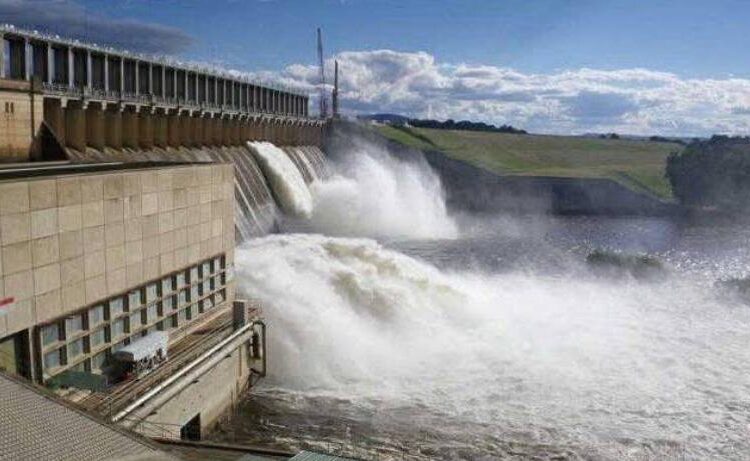
The Ghana Water Company Limited (GWCL) has commenced controlled spillage from the Weija Dam amid rising inflows, warning that residents living downstream remain exposed to potential danger.
The Head of PR and Communications at Ghana Water Company Limited, Stanley Martey, explained that the duration of the exercise cannot yet be determined because it depends largely on the volume of water entering the dam from upstream. Mr Martey indicated that the company began actual spillage at 6:00am, initially releasing excess water through one gate at a controlled opening of six inches.
He noted that the number of gates used could change depending on the water level and the rate at which inflows increase, making it difficult for the company to provide a definite estimate of the volume that could eventually be discharged.
“It’s difficult for me to be certain on whether we’re going to stop in a day, or in a few weeks, or in a few months. It all depends on the inflows from upstream.”
Stanley Martey
Meanwhile, Mr Martey explained that releasing excess water remains necessary to safeguard the structural integrity of the dam, even though the exercise could result in flooding and damage to properties in surrounding communities. He described the impact on affected residents as “disheartening” but cautioned that allowing the water level to rise beyond safe limits could create a far greater disaster.
According to him, dams are designed with spill gates to allow operators to release excess water once inflows reach levels that become difficult to manage. He therefore stressed that controlled discharge forms part of measures to prevent excessive pressure on the structure.
However, the Head of PR stressed that the safety situation downstream should not be assessed only by whether spillage is taking place at a particular time. He explained that conditions could deteriorate rapidly if the water level rises beyond a manageable threshold, meaning the company must remain prepared to release water when necessary to protect the dam.
Expanding on this matter, GWCL cannot wait until residents are formally told to evacuate before opening the gates because delaying the process could expose the dam itself to structural risks. He therefore cautioned people living within the buffer zone and along the natural course of the waterway against remaining in those areas.
Additionally, Stanley Martey placed responsibility for evacuation arrangements primarily on the National Disaster Management Organisation (NADMO) and the District Assembly. He indicated that GWCL would continue working with those institutions to support measures aimed at protecting residents in vulnerable communities.
The warning comes as authorities intensify preparations in areas downstream of the Weija Dam, with earlier notices identifying communities including Tetegu, Oblogo, Pambros Salt, Lower McCarthy Hill, Lower Weija, Bojo Beach and Ada Kopey as potentially affected. Stanley Martey consequently urged residents to take the situation seriously, particularly those occupying areas close to the river course.
Weija Spillage Began After Gate Tests, GWCL Explains
The Ghana Water Company Limited (GWCL) also clarified that the opening of the Weija Dam gates observed earlier did not constitute the start of the actual spillage, explaining that the initial activity involved testing the spill gates.
The Head of PR and Communications at GWCL, Stanley Martey, explained that hydraulic gates require testing before they are deployed for actual water release to ensure they function properly when required.
Stanley Martey disclosed that the gates were tested a day before the controlled spillage began, accounting for reports that water had already been released from the dam. He stressed that the technical distinction was important because the company only commenced actual controlled spillage at 6:00am on Tuesday.

However, the latest rise in upstream inflows brought the exercise forward, with reports indicating that one gate was opened on Tuesday as a precautionary measure to avoid releasing a larger volume of water at once. Stanley Martey explained that testing the gates before actual operations forms part of preparations because mechanical components can sometimes develop faults or fail to respond as expected.
He noted that the exercise therefore enables technical teams to establish whether the equipment is ready for use before the need for significant water discharge arises.
The current situation also recalls the flooding experienced during the May spillage, when downstream communities including Tetegu and other low lying areas were affected after excess water was released from the dam. The earlier episode demonstrated the potential consequences of rising water levels for homes, roads and other infrastructure in vulnerable locations.
READ ALSO: Minority Leader Demands Critical National Conversation On Education