The Bank of Ghana (BoG) has raised fresh concerns over the growing sophistication of financial criminals, warning that fraudsters are increasingly moving faster than authorities as Ghana’s digital financial ecosystem expands.
The Central Bank disclosed that fraud incidents in the digital space increased by a staggering 98% between 2022 and 2025, reflecting the growing risks associated with the rapid adoption of electronic payments, mobile money, fintech platforms and other digital financial services.
The development has triggered calls for a major shift in the way financial institutions, regulators and law enforcement agencies approach financial crime.
Fraudsters Move Faster Than Authorities
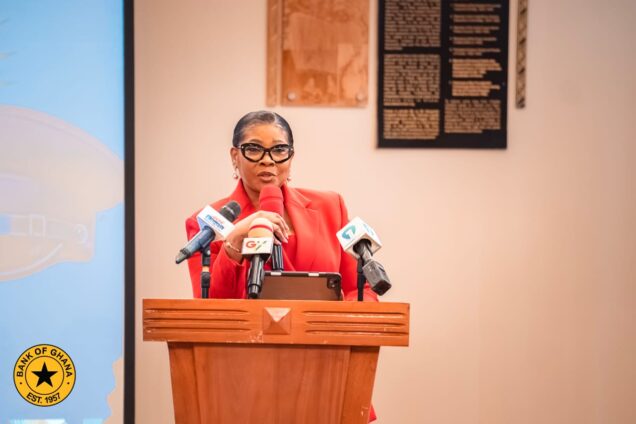
Second Deputy Governor of the Bank of Ghana, Matilda Asante Asiedu, said the increase in digital fraud represents more than a rise in reported cases.
According to her, the statistics point to a fundamental transformation in Ghana’s financial crime environment, requiring institutions responsible for combating fraud to rethink their strategies.
“It is not just a shift in the statistics or the data, but it’s also a shift in the financial crime landscape itself. And that means that as entities that are responsible for combating that, we also have to have a shift in our strategy and our mindset.”
Matilda Asante Asiedu
Mrs Asante Asiedu made the remarks at the opening of the 2026 Technical Committee Workshop of the Committee for Cooperation Between Law Enforcement Agencies and the Banking Community (COCLAB).
Her warning comes at a time when millions of Ghanaians are increasingly depending on digital channels to transfer money, pay bills, receive funds and conduct everyday financial transactions.
The greater convenience has also created new opportunities for criminals seeking to exploit weaknesses in the digital financial system.
Overall Fraud Cases Surge 48%
The Bank of Ghana further revealed that overall fraud incidents across Ghana’s financial ecosystem rose sharply from 16,733 cases in 2024 to 24,778 cases in 2025.
This represents a 48% increase in just one year.
Interestingly, the traditional banking sector recorded a decline in fraud incidents during the period. However, the broader financial ecosystem experienced a significant increase, with digital transactions emerging as a major driver of the surge.
The development highlights how Ghana’s financial system is becoming increasingly interconnected.
Mrs Asante Asiedu explained that fraud involving one institution can quickly spread across the wider financial ecosystem because banks, payment service providers, fintech companies and mobile money platforms are closely linked.
“This is not just a challenge for a PSP…because think about it, a PSP’s account sits with a bank. And so if that fraud incident happens, it transcends one institution, and it affects the entire financial ecosystem.”
Matilda Asante Asiedu
She stressed that the interconnected nature of financial services makes it increasingly difficult to treat fraud as an isolated problem affecting only one institution.
“So, whether it’s a mobile money transaction or it’s a fintech transaction on a fintech platform, it’s all interwoven and intertwined,” she said.
BoG Says Criminals Are Six Times Ahead
The most striking warning from the Second Deputy Governor was her assessment of the pace at which financial criminals are developing new methods.
“Fraudsters are sometimes six times ahead of us. They’re always thinking of new ways,” she said.
The comment underscores the growing challenge facing regulators and financial institutions as criminals exploit technological developments, digital platforms and interconnected payment systems.
With digital transactions expanding rapidly, fraudsters can potentially identify vulnerabilities, develop new schemes and target customers across multiple platforms before institutions have fully responded to emerging threats.
For the Bank of Ghana, this means traditional approaches to financial crime prevention can no longer be sufficient.
Authorities Step Up Intelligence Sharing
Mrs Asante Asiedu pointed to previous collaboration between financial institutions and law enforcement agencies as evidence that coordinated action can produce meaningful results.
She cited an intelligence-led operation against illegal online operators in parts of Accra in 2023, which resulted in the arrest of 430 people, including three foreign nationals.
She noted that collaboration between authorities and financial institutions has also helped disrupt fraud syndicates, recover illicitly transferred funds and support investigations and prosecutions.
One notable case involved a bank employee who was convicted and sentenced to 10 years after embezzling GH¢1.2 million.
These outcomes, according to the Second Deputy Governor, demonstrate the potential impact of stronger cooperation between institutions responsible for protecting Ghana’s financial system.
COCLAB Restructured for Stronger Action
Against the backdrop of rising digital fraud, COCLAB is being restructured to strengthen its response to financial crime.
Mrs Asante Asiedu said the new structure will establish dedicated working groups focused on public sensitisation, information sharing and investigations.
A steering committee comprising heads of member institutions will also provide strategic direction.
She stressed that the effectiveness of COCLAB should not be judged by the number of meetings held or reports produced.
“It should be measured by the outcomes of stronger intelligence sharing, successful investigations that lead to successful prosecutions, asset recovery, improved regulatory compliance, greater customer awareness, and a measurable reduction in financial crimes,” she said.
Building a Stronger Deterrent
For the Bank of Ghana, the ultimate objective is to create an environment where financial criminals think twice before attempting to exploit Ghana’s financial system.
“We should be so efficient that when the fraudster begins to think through their next move, they’ll also think, ‘gosh, what if these people arrest me?’ So that is a deterrent to them,” she said.
The sharp rise in digital fraud therefore presents Ghana with a pressing challenge. As digital finance continues to expand, authorities face the difficult task of ensuring that innovation and convenience do not come at the cost of financial security.
With fraudsters constantly developing new tactics, the Bank of Ghana’s latest warning signals a growing need for faster intelligence sharing, stronger investigations, improved customer awareness and closer cooperation across the entire financial ecosystem.
READ ALSO: AfDB Approves $5bn Framework to Cushion Africa’s Energy Shocks