Deputy Youth Organiser for the New Patriotic Party (NPP), Isaac Jay Hyde has described Salam Mustapha’s withdrawal from the National Organiser race as a strategic decision taken in the collective interest of the party.
Mr Hyde explained that the withdrawal came as a disappointment to the campaign team, especially after strong support received during their engagements across the country. He, however, urged party supporters to view the decision within the wider dynamics surrounding the NPP’s upcoming national executive elections.

According to the Deputy Youth Organiser, Salam’s campaign received significant backing in Greater Accra and other parts of the country. He disclosed that about 21 organisers followed the campaign during its engagements across the Greater Accra Region, describing the reception as evidence of the support behind the candidature.
Mr Hyde consequently dismissed suggestions that Salam withdrew because he anticipated defeat. He reiterated that the campaign’s internal assessments, surveys and research gave the team confidence that the incumbent National Youth Organiser could have won the contest.
“Based on our analysis, based on our surveys, and based on the researches that we have done, I have no doubt that if Salam had run this election, irrespective of the tough contest from other opponents, he was going to win.”
Isaac Jay Hyde
Nonetheless, the Deputy Youth Organiser acknowledged that internal party elections involve several considerations beyond a candidate’s popularity. He pointed to regional dynamics, the balancing of national officers and other strategic factors that could influence decisions surrounding the composition of the party’s leadership.
Referencing these considerations, Mr Hyde argued that winning an election cannot always serve as the sole basis for determining whether a candidate should remain in a contest. He therefore urged NPP supporters to understand Salam’s withdrawal as part of a calculated decision that could serve the party’s collective interest.

The development follows Salam Mustapha’s formal withdrawal from the National Organiser contest on September 9, with the NPP’s national executive elections scheduled for October 3, 2026. His exit has reduced the field for the National Organiser position as the party prepares to elect its next crop of national officers.
Furthermore, Mr Hyde insisted that the decision should not be interpreted as a loss of confidence in Salam’s political standing. He emphasised that the former candidate remains committed to the NPP and its future electoral objectives.
Youth Wing Record Strengthens Salam Mustapha’s NPP Legacy
Deputy Youth Organiser Isaac Jay Hyde also defended Salam Mustapha’s record as National Youth Organiser, arguing that his tenure produced significant organisational gains despite the NPP’s defeat in the 2024 general elections.
Mr Hyde acknowledged that Salam entered the National Organiser contest knowing he would face questions about the party’s previous electoral performance. However, he argued that accountability for the 2024 outcome should be considered alongside the responsibilities and achievements recorded by the Youth Wing during his tenure.
The Deputy Youth Organiser highlighted the transformation of the Tertiary Students Confederacy Network (TESCON) as one of Salam’s notable achievements. He recalled that the University of Ghana, for instance, secured a TESCON leadership structure within the first month of Salam assuming office, at a time when the organisation had experienced significant difficulties.
Additionally, Mr Hyde pointed to Salam’s nationwide mobilisation activities ahead of the 2024 elections. He explained that the National Youth Organiser visited constituencies across the country while coordinating youth participation in campaign activities.
The Youth Wing also played a central role in the NPP’s youth campaign platform under then presidential candidate Dr Mahamudu Bawumia. According to Mr Hyde, the initiative brought together youth campaign activities across all 16 regions under the National Youth Wing.
“All 16 regions across the country, the youth campaign was anchored under the National Youth Wing, and this was an initiative of Salam Mustapha.”
Isaac Jay Hyde
Furthermore, Mr Hyde credited Salam with personally supporting youth structures in the party, including the provision of motorbikes. He argued that the financial commitment demonstrated a willingness to strengthen grassroots mobilisation even while the NPP was in government.
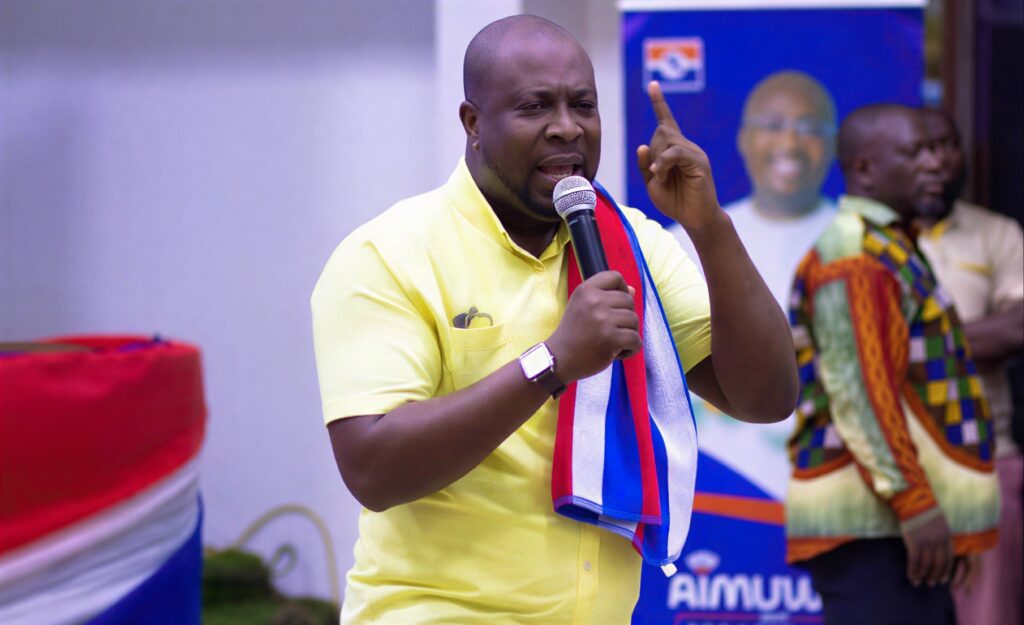
Against this backdrop, the Deputy Youth Organiser rejected suggestions that Salam’s decision to withdraw reflected internal persecution within the party. He explained that Salam has served as Deputy National Youth Organiser before becoming National Youth Organiser and has always been involved in the NPP’s political activities during its period in opposition.
Mr Hyde also dismissed the suggestion that Salam’s use of Psalm 23 in his withdrawal statement signalled a dispute with party figures. He described Salam as an experienced politician who understood that senior party officials would face scrutiny following the 2024 defeat and that it was not because he was in a disagreement.
Importantly, he argued that Salam has contributed his quota and is prepared to support Dr Mahamudu Bawumia’s presidential ambitions. Mr Hyde added that Salam would speak publicly about his decision and his future direction at an appropriate time.
READ ALSO: GSE Loses GH¢3bn as Financial Stocks Suffer Sharp Decline