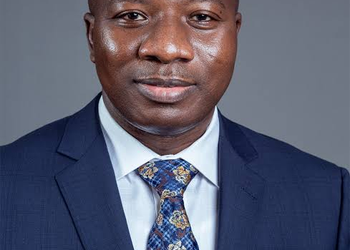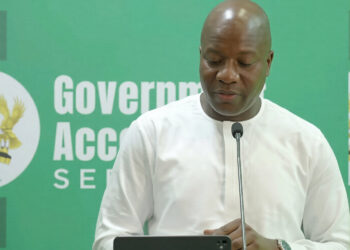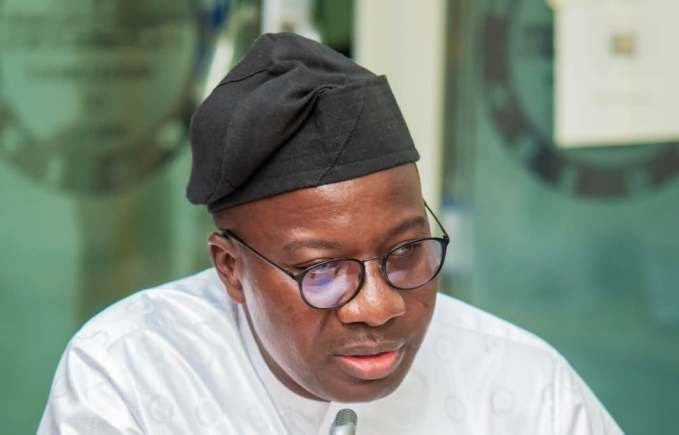
The Minister for Local Government, Chieftaincy and Religious Affairs, Hon. Mahama Ayariga, has disclosed that government has released GH¢106 million in consolidated monthly allowances to all assembly members for 2026, as part of a broader account of the District Assembly Common Fund (DACF) disbursement over the past year.
Speaking during the Government’s Accountability Series, Hon. Ayariga provided a detailed breakdown of how DACF resources have been disbursed to Metropolitan, Municipal and District Assemblies (MMDAs), and the development outcomes these funds have supported nationwide.
Hon. Ayariga framed the disbursement of funds to assemblies as central to effective decentralisation, arguing that withholding funds from local government structures undermines their ability to function.
He explained that these funds are meant to create jobs, stimulate local economies, and promote growth poles in various parts of the country.
“We are discussing the capacity of assemblies to build more schools, develop more health facilities, implement water supply systems, and establish sanitation infrastructure.”
Hon. Ayariga
He stressed that the figures under discussion were not merely abstract statistics, but represented tangible capacity for assemblies to deliver essential services and development projects to their communities.
Exceeding The 80 Percent Disbursement Target
Hon. Ayariga confirmed that government, under President Mahama, remains committed to disbursing not less than 88 percent of the District Assembly Common Fund to MMDAs.
He explained that while the President had initially directed that 80 percent of the funds must reach assembly accounts, calculations following the completed allocations showed that approximately 88 percent of the total Common Fund sum was actually transferred directly to MMDAs.
Hon. Ayariga shared statistics reflecting ongoing development activity across the country, noting that assemblies continue to award new contracts daily. In the health sector, he reported 397 completed Community-based Health Planning and Services (CHPS) compounds out of 5,606 planned. In education, 502 out of 761 classroom blocks had been completed within a year and a half.
On water infrastructure, he disclosed that 3,018 out of 4,029 mechanised and hand-pump boreholes had been completed, alongside 97 out of 134 small-town water projects. He added that several sanitation-related facilities were either completed or ongoing across the MMDAs.
Performance-Based Incentives For Assemblies
Hon. Ayariga highlighted the successful conduct of the latest cycle of the District Assemblies Performance Assessment, a system under which assemblies are evaluated against specific criteria.
He explained that assemblies meeting these criteria qualify for a responsiveness factor grant, a supplementary funding element typically provided by development partners in addition to the standard Common Fund allocation.
He said this arrangement serves as motivation for assemblies to perform well with the resources already allocated to them, disclosing that approximately GH¢840 million has been transferred to all MMDAs this year to implement activities under their annual action plans as a result of this performance-based programme.
Historic Disbursement Of Assembly Member Allowances
On support for assembly members themselves, Hon. Ayariga announced that the Ministry, for the first time in the history of local governance and decentralisation in Ghana, has facilitated the release and disbursement of four tranches totalling GH¢107 million in consolidated monthly allowances for 2025, and a further GH¢106 million for 2026.
“The Controller and Accountant-General has transferred this year’s allocation, and very soon assembly members will be receiving their funds in their various accounts.”
Hon. Ayariga
Turning to market infrastructure policy, Hon. Ayariga addressed the redesigned Metropolitan, Municipal and District Economy Markets Policy, deliberately clarifying his terminology to distinguish it from the broader 24-Hour Economy Markets concept, signalling a precise policy distinction between the two initiatives going forward.
Broader Implications For Local Governance
Taken together, Hon. Ayariga’s disclosures point to a significant scale-up in both direct development financing and personal remuneration support for Ghana’s local government structures.
The combination of exceeding the mandated 80 percent Common Fund disbursement target, performance-based responsiveness grants, and the unprecedented release of assembly member allowances suggests a deliberate strategy to strengthen the operational capacity and motivation of MMDAs nationwide.
As assembly members await the disbursement of their 2026 allowances, attention will likely turn to how effectively MMDAs translate the reported GH¢840 million in annual action plan funding into completed projects, and whether the pace of CHPS compound, classroom block and water infrastructure completion accelerates in the coming months.
READ MORE: Kejetia Market Phase 2 Set for Completion in Weeks – Hon. Ayariga