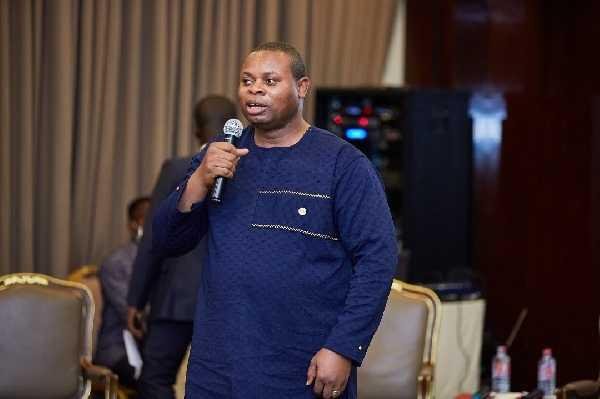
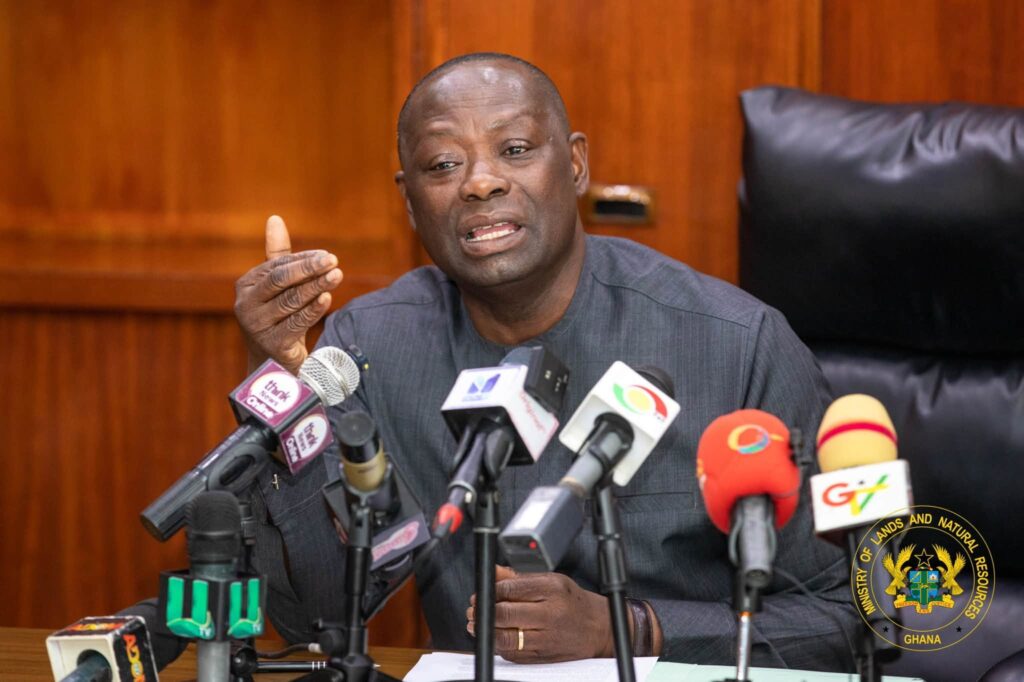
Franklin Cudjoe, the Founding President of the IMANI Centre for Policy and Education, has urged the Minister of Lands and Natural Resources, Emmanuel Armah-Kofi Buah, to immediately direct a portion of Ghana’s record gold revenues toward financing the full-scale recruitment and deployment of forest guards to safeguard the Atewa Range Forest Reserve from illegal mining activities.
Addressing the acute personnel deficit currently compromising environmental protection efforts, the policy analyst emphasized that the state must allocate financial resources generated from the booming extractive industry to build a robust defense mechanism across vulnerable ecological zones.
“We must ensure that there is adequate financial resources to recruit the optimum number of guards to protect the Reserve 24/7! After all aren’t we making billions out of gold already? Please let us ask for more resources.”
Franklin Cudjoe,
Alarming Guard Deficit Threatens Atewa Ecological Integrity
The call for immediate fiscal re-allocation stems from revelations that the primary security apparatus tasked with safeguarding one of West Africa’s most biodiversity-rich ecosystems is operating at a fraction of its required strength.
Currently, the combined force of frontline forest guards and officers from the National Anti-Illegal Mining Operations Squad (NAIMOS) covers only a third of the critical capacity necessary to patrol the extensive boundaries of the reserve.
This severe operational constraint has created massive surveillance blind spots, allowing illicit mining networks locally known as galamsey to infiltrate core forest zones, pollute major river headwaters, and destroy critical habitats unimpeded.
Environmental scientists and forestry management experts have long identified the Atewa Range as a critical national asset, serving as the primary source for three major rivers the Densu, Birim, and Ayensu which collectively provide drinking water to over five million residents across the Greater Accra, Eastern, and Central regions.
The ongoing degradation driven by heavy machinery, chemical contamination from mercury, and siltation not only threatens the water security of major urban centers but also compromises Ghana’s international biodiversity commitments.
According to environmental policy assessments, the failure to maintain a continuous physical security presence along the reserve’s perimeter leaves vast forest compartments entirely exposed to organized illegal mining syndicates.
Without an immediate surge in manpower, institutional oversight remains largely reactive rather than preventive.
Field reports indicate that existing patrol teams are frequently overwhelmed by the sheer scale and technical sophistication of illegal operations, which often utilize heavy earth-moving equipment under the cover of night.
Bridging the current two-thirds operational deficit requires sustained payroll allocation, modern tactical gear, remote surveillance technology, and dedicated logistics, all of which demand an uninterrupted funding stream anchored in mainstream national resource budgeting.
Leveraging Extractive Windfalls for Long-Term Environmental Protection
Ghana’s recent surge in mineral earnings provides a timely fiscal window to institutionalize sustainable funding mechanisms for forest conservation.
With global gold prices reaching historical highs and domestic production expanding through formalized marketing channels, civil society stakeholders argue that a dedicated percentage of statutory mineral royalties and export taxes should be statutory earmarked for ecological security.
Redirecting a fraction of these extractive windfalls into forestry protection directly links resource exploitation with environmental remediation, ensuring that wealth generated from non-renewable minerals actively preserves renewable natural capital.

Policy analysts argue that utilizing gold revenues to fund environmental defense aligns with international best practices in natural resource governance.
Establishing a dedicated security funding stream under the Ministry of Lands and Natural Resources would allow the Forestry Commission to execute targeted recruitment drives, systematically training hundreds of young Ghanaians as professional eco-guards.
This approach addresses two critical national imperatives simultaneously: mitigating youth unemployment in mining-fringe communities and establishing an authoritative, state-backed deterrent against illegal encroachment in protected reserves.
Furthermore, equipping forest personnel with competitive remuneration, specialized law enforcement training, and field support would significantly elevate operational morale and reduce vulnerability to local compromise.
Strengthening the enforcement framework through sustainable mineral-funded capital expenditure transforms forest protection from an ad-hoc emergency intervention into a permanent, well-resourced state function capable of responding dynamically to illegal mining threats.
Defining Institutional Legacy Through decisive Galamsey Reduction
For leadership within the sector, the current crisis presents a defining benchmark for administrative performance and environmental stewardship.
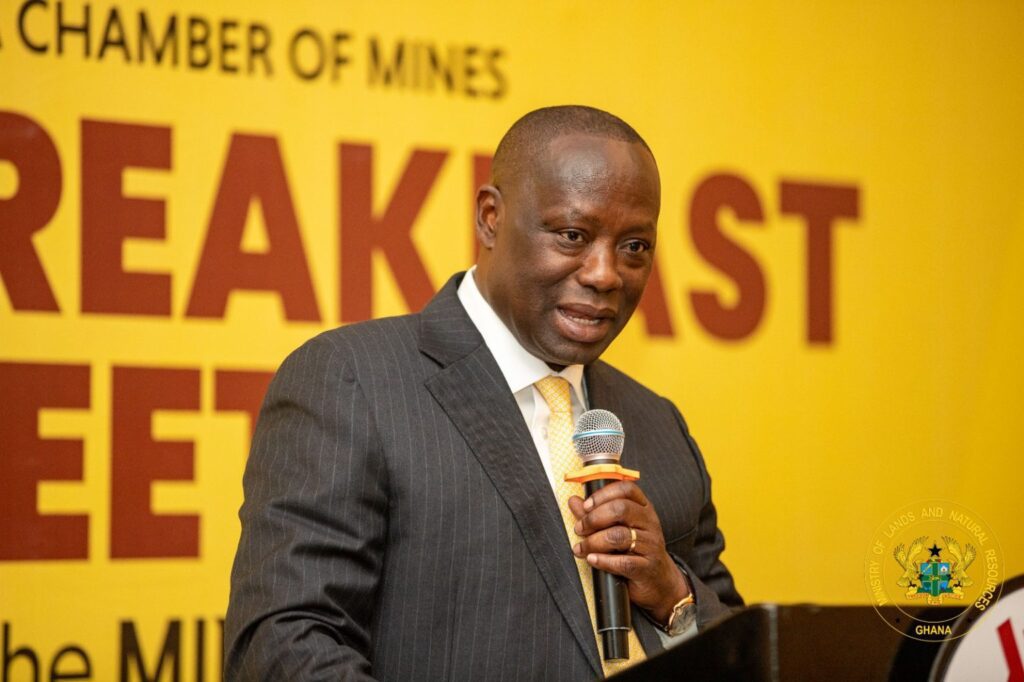
Observing that the sector leadership is “half way there” in executing its policy mandate, Cudjoe urged the minister to “rededicate all your strength to end at least 80% of galamsey” during his tenure.
Achieving such a substantial reduction requires moving beyond temporary military sweeps toward permanent, community-anchored enforcement structures backed by adequate state financing.
The push to secure Atewa underscores a broader paradigm shift demanded by policy watchers across Ghana’s extractive sector: ensuring that national resource wealth directly protects the foundational ecosystems that sustain human life.
By leveraging current gold revenues to permanently resolve security manpower shortages, the government can establish a resilient precedent for environmental governance, ensuring that Ghana’s vital forest reserves are preserved for future generations.
READ ALSO: FAO Calls for Forests to Be Integrated Into Agrifood Systems