President John Dramani Mahama has backed the local manufacture of essential medicines as part of Ghana’s effort to cut maternal mortality, arguing that the country can no longer build health facilities and wait on foreign donors to stock them.
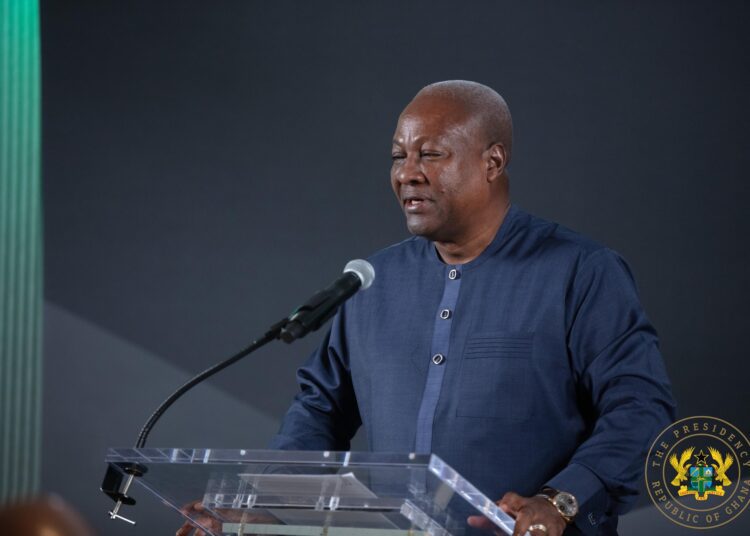
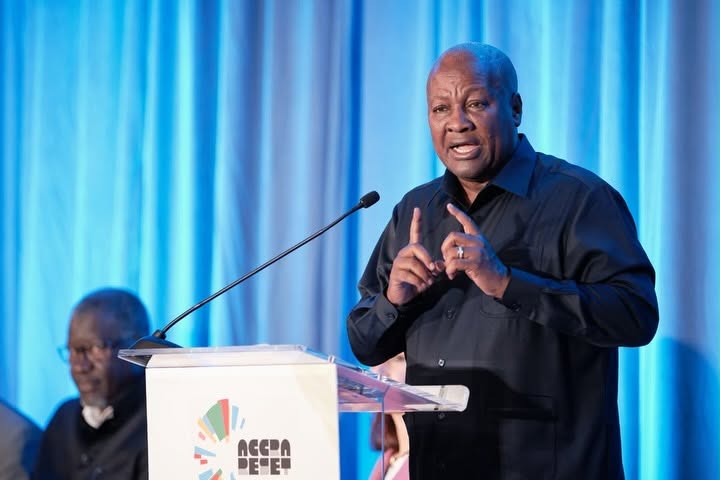
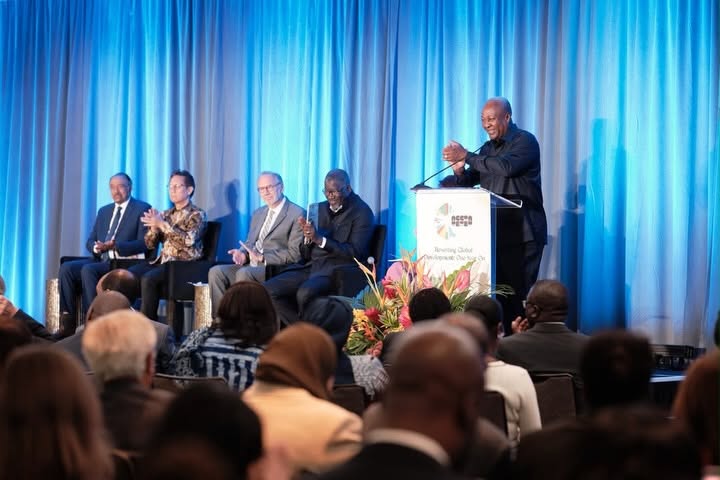
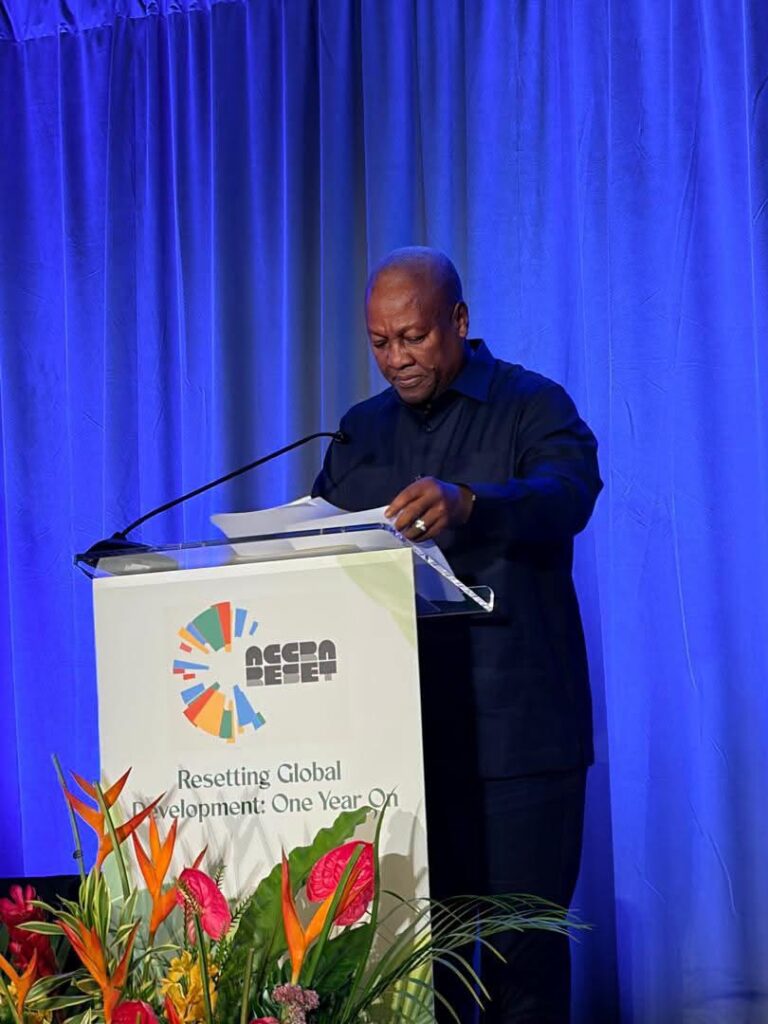
The President set out the approach on Monday, 21 September 2026, at a high-level Accra Reset event in New York on the sidelines of the 81st United Nations General Assembly.
The President made maternal and child health one of the first critical tests of the Accra Reset, the initiative through which Ghana is pushing to reform how global health is financed and governed.
He framed domestic production of medicines as the practical side of that health sovereignty agenda, working alongside regional campaigns that bring governments and businesses together to protect mothers and children.
Medicines Made At Home
The President described the resetting of Ghana’s health sector as a strategy of “building local industry capacity, encouraging our domestic pharmaceutical companies in Ghana to manufacture the essential medicines locally, backed by guaranteed state purchasing and regional market access.”
Guaranteed state purchasing gives local manufacturers a predictable buyer, while regional market access offers the scale needed to make production viable. Both address long-standing obstacles that have left African countries importing most of their medicines, from vaccines to intravenous fluids.
The link to maternal care is direct. Obstetric emergencies such as severe bleeding depend on timely access to fluids and essential drugs, which makes a reliable domestic supply a matter of survival rather than industrial policy alone.
Health As The First Battleground
President Mahama explained why the initiative began with health rather than trade, finance or any other sector. “Health is any human being’s most precious possession,” he said, describing the sector as the first battleground for the global reset.
The choice follows from the diagnosis the initiative made at its launch a year ago. It identified three burdens weighing on the Global South, namely geostrategic marginalisation, geopolitical vulnerability and donor dependence, the last describing a situation in which life-saving services for citizens rest on funding levers entirely outside national control.
Few areas expose that dependence more starkly than maternal care. Choosing maternal and child health as an early test gives the agenda a measurable outcome. Deaths of mothers in childbirth are counted, reported and compared across countries, which means progress or failure will be visible in a way that broader governance reforms often are not.
Three Times Above The SDG Target
The President set out the scale of the problem across the region before turning to his own country. Nearly seven in every ten maternal deaths worldwide occur in sub-Saharan Africa each year, he said, and Ghana is not an exception.
“We are still three times above the recommended SDG target in maternal mortality. This is unacceptable,” he said. The Sustainable Development Goals set a global target of reducing maternal mortality to fewer than 70 deaths per 100,000 live births by 2030.
A candid acknowledgement that Ghana sits well above that line, delivered on an international stage, raises the stakes for the government’s domestic health programmes.
Mother Africa And The Private Sector
President Mahama pointed to two initiatives meant to carry the effort. The Mother Africa initiative is championed by Tanzania’s President Samia Suluhu Hassan, while the Business United for Mothers, Babies and Youth campaign draws in corporate partners.
Together, he said, they bring public policy and corporate responsibility together to safeguard the lives of mothers and children. The initiatives will also stress test the new financial and governance architecture the Accra Reset proposes, delivering results in real time where they matter most.
That framing makes maternal health a proving ground for the entire reform agenda. If the new arrangements cannot reduce deaths in childbirth, the wider argument for shifting control and financing to Southern governments will be harder to sustain.
WHO Support For Reform
President Mahama thanked World Health Organization Director-General Dr Tedros Adhanom Ghebreyesus for his steady support for global health reform. WHO backing lends the initiative technical credibility as it moves toward implementation.
He closed his address by bringing the agenda down to a single life. Cooperation, he said, must be defined by human dignity and by promises that become real protection for a baby girl born tonight, whether in Kathmandu, in Arusha or in Damongo in Ghana’s Savannah Region.
The image sets a demanding standard. Ghana’s own maternal mortality figures will now serve as a public measure of whether the Accra Reset delivers at home what it asks of the world, and the country that launched the initiative will be the first place its critics look.
READ ALSO: New Debt Rules Put Ghana’s Fiscal Space Under Scrutiny