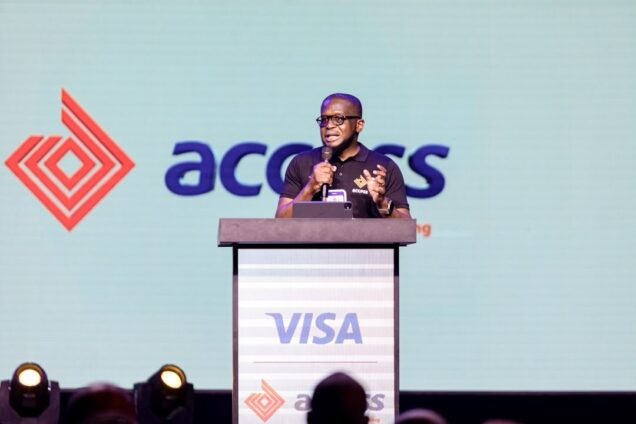
Ghana’s small business payment ecosystem is taking a major step toward greater digital inclusion as Access Bank (Ghana) Plc. and Visa unveil a new solution designed to turn ordinary smartphones into payment acceptance tools.
The partnership has introduced Visa Accept, a solution that allows micro, nano and small merchants to accept contactless card payments directly on their smartphones without investing in additional point-of-sale (POS) hardware.
The move targets one of the biggest barriers confronting smaller businesses as Ghana’s digital payment ecosystem expands. While consumers are increasingly embracing electronic payments, many of the country’s smallest merchants have remained dependent on cash because traditional card acceptance infrastructure can be expensive and complicated.
Smartphone Turns Into Payment Terminal
Visa Accept seeks to change that equation by allowing eligible Access Bank Ghana customers to create a seller profile through the bank’s mobile banking app and begin accepting payments within minutes.
Instead of purchasing a dedicated POS terminal, merchants can use smartphones they already own to receive digital payments. Consumers can make payments using contactless cards or mobile wallets, while the solution also supports QR code payments and secure payment links.
The approach could significantly lower the entry barrier for small businesses that want to participate in the digital economy but have previously viewed card acceptance as costly or difficult to set up.
Funds are settled into the merchant’s existing bank account in near real-time, giving business owners quicker access to proceeds from their transactions.
The transactions also benefit from Visa’s security standards and consumer protections, including support for disputes and refunds.
Visa Targets Ghana’s Digital Payment Gap
The launch comes at a time when digital payments are becoming increasingly important to commercial activity across Ghana. Yet the expansion of digital payment usage has not necessarily meant that every business has equal access to payment acceptance infrastructure.
Fabrice Konan, Country Manager, Visa Ghana, said the new solution is intended to address that gap by making digital acceptance more accessible to smaller merchants.
“Consumer demand for digital payments in Ghana continues to grow, but acceptance among smaller merchants continues to face challenges. Visa Accept is helping close that gap by making it easier and more affordable for micro and small businesses to accept digital payments using the smartphones they already own. By expanding access to digital acceptance, we are helping more merchants participate in the digital economy while providing consumers with more ways to pay easily and securely.”
Fabrice Konan
The ability to use existing smartphones is particularly significant for businesses operating on a small scale, where every additional operating expense can affect margins.
Rather than requiring merchants to acquire new payment infrastructure, Visa Accept builds on technology and devices that are already widely available.
Access Bank Eyes Informal Business Sector
Access Bank sees the initiative as more than a payment convenience. The bank believes the transaction data generated through digital payments could help bring informal businesses closer to the formal financial system.
Eugene Ocansey, Executive Director, Retail and SME Banking, Access Bank (Ghana) Plc, said “Access Bank is proud to be the first bank in Ghana to partner Visa on this solution”.
“The bulk of businesses in our country are SMEs, and Visa Accept gives us an opportunity to start transitioning those who are informal into the formal economy. When a merchant has a tool that brings in their money and makes their cash flow visible, we can understand what the business does, and that is what makes the average SME bankable. Visa brings the technology; Access Bank brings the reach to put it in the hands of every merchant who needs it.”
Eugene Ocansey
The emphasis on transaction visibility could have broader implications for small businesses seeking financial services.
Businesses that predominantly operate in cash can often have limited documented transaction histories. Digital payment records can provide a clearer picture of sales activity and cash flow, potentially giving financial institutions more information when assessing businesses for banking and credit services.
Digital Payments Move Deeper Into Informal Economy
Ghana’s informal sector includes a vast number of micro and small businesses, many of which serve customers daily but operate outside conventional formal financial structures.
Bringing these businesses into digital payment networks could create a stronger connection between everyday commerce and the formal banking system.
Visa Accept also gives merchants multiple ways to receive payments. Customers can tap a contactless card or mobile wallet, scan a QR code, or use a secure payment link.
That flexibility could be useful in an environment where customers increasingly expect businesses to accept different forms of digital payment rather than relying exclusively on physical cash.
Visa Accept Now Available Nationwide
Visa Accept is now available to eligible Access Bank Ghana customers nationwide.
Merchants interested in the service can enroll through the Access Bank mobile banking app or visit an Access Bank branch for assistance.
The nationwide rollout places smartphone-based payment acceptance within reach of merchants who may previously have considered card acceptance beyond their scale or financial capacity.
As Ghana’s payment ecosystem continues to evolve, the ability to turn a smartphone into a merchant acceptance device could alter how small businesses receive money, track sales and interact with formal financial institutions.
The partnership between Access Bank and Visa therefore extends beyond the introduction of another payment tool. It places greater emphasis on bringing smaller merchants into the expanding digital financial ecosystem, while giving consumers more options to pay for everyday goods and services.
READ ALSO: Ato Forson Opens 2027 Budget Debate to Public Input