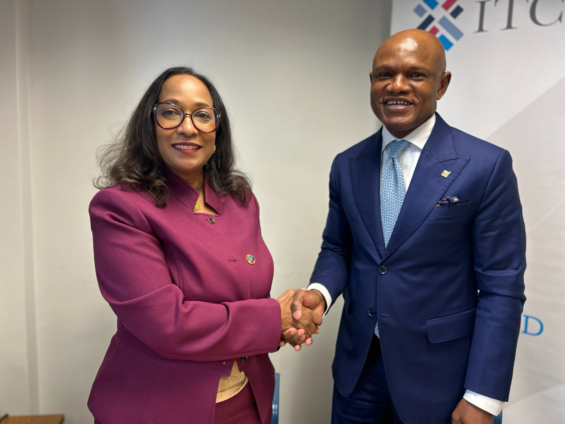
Access Bank has joined forces with the International Trade Centre (ITC) in a major partnership aimed at unlocking the growth potential of small and medium-sized enterprises across Africa.
The partnership brings together Access Africa Office, the coordinating office for the African subsidiaries of Access Bank Plc, and the United Nations small business agency to expand access to finance, markets and skills for SMEs across 14 African countries.
The programme will begin with a pilot phase in Ghana, placing local small businesses at the centre of an initiative designed to tackle some of the biggest obstacles limiting SME expansion.
The participating countries are Angola, Botswana, Cameroon, the Democratic Republic of the Congo, The Gambia, Ghana, Guinea, Kenya, Mozambique, Rwanda, Sierra Leone, South Africa, United Republic of Tanzania and Zambia.
African SMEs account for a significant share of employment across the continent, yet many continue to struggle to secure the capital, market connections and technical capabilities required to expand.
The new partnership seeks to tackle these challenges through a broader approach that goes beyond simply providing loans.
Ghana Pilot Puts Women-led Businesses in Focus
The first stage of the initiative will run from September 2026 to June 2027, with a selected group of small businesses in Ghana participating in the pilot.
Women-led enterprises will receive priority under the programme, reflecting the partnership’s focus on widening economic opportunities for women and strengthening financial inclusion.
The pilot will draw on ITC’s existing digital learning tools and training-of-trainers programmes, with delivery coordinated alongside Access Africa Office staff.
Participants are expected to gain access to knowledge, networks and practical capabilities that can help them compete more effectively in domestic and international markets.
Pamela Coke-Hamilton, Executive Director of the International Trade Centre, said “Access to finance is the biggest barrier to trade faced by small businesses across Africa”.
“We’re working with Access Bank to tackle this challenge and accompany the enterprises as we equip them with the knowledge, networks and market connections they need to grow.”
Pamela Coke-Hamilton
Her comments highlight the scale of the financing challenge confronting small businesses that may have viable products and services but lack the resources or connections needed to reach larger markets.
Finance Alone No Longer Enough
The partnership is built around the recognition that capital by itself may not be sufficient to transform a small enterprise into a sustainable and competitive business.
Seyi Kumapayi, Executive Director, African Subsidiaries at Access Bank, remarked, “We see every day that finance alone does not get a small business to scale. It is the combination of capital, market access and trade-ready skills that makes the difference”.
“Which is why this partnership pairs our reach across African markets with ITC’s expertise in knowledge, networks and market connections. Together, we are starting with women-led enterprises and small businesses in Ghana, with the ambition to scale intra-African trade and deepen financial inclusion across Africa.”
Seyi Kumapayi
The five priority areas under the three-year partnership reflect this broader strategy.
They include job creation through SMEs, access to finance with particular attention to women- and youth-owned businesses, business sustainability, capacity building and digital trade skills, as well as access to markets.
Support for intra-African trade under the African Continental Free Trade Area will also form part of the initiative.
Building Businesses that Can Compete Across Borders
The partnership could become particularly significant as African businesses seek to take advantage of expanding opportunities under AfCFTA.
Market access remains a major hurdle for smaller companies that often lack the information, networks and digital capabilities required to sell beyond their immediate markets.
The initiative is therefore expected to support SMEs with tools that can help them become more trade-ready while building their ability to engage with customers and opportunities across borders.
From 2027 onwards, the programme is expected to expand into additional countries and programmes. Advanced training on sustainability standards and digital marketplace tools is also planned as the initiative grows.
That expansion could provide participating businesses with more sophisticated capabilities as they move from survival and small-scale operations towards sustainable growth.
A Wider Push for Financial Inclusion
The partnership also fits into Access Bank’s broader strategy of strengthening SME finance through what it describes as inclusive, sustainable ecosystem banking.
Access Bank operates across Africa through more than 700 branches in 25 countries on three continents and serves more than 63 million customers.
That footprint gives the banking group an extensive platform through which the partnership could eventually reach businesses beyond the initial Ghana pilot.
The agreement was formalised through the signing of a memorandum of understanding on the sidelines of the United Nations General Assembly in New York.
Its objectives also align with Sustainable Development Goals 5, 8 and 9, covering gender equality, decent work and economic growth, and industry, innovation and infrastructure.
Ghana at the Centre of a Continental Ambition
The Ghana pilot gives the initiative an immediate local dimension while setting the stage for a wider continental programme.
Small businesses participating in the first phase will not only be exposed to financing opportunities but also training, market connections and digital trade capabilities.
If successfully expanded, the initiative could create a broader support ecosystem in which African SMEs have greater access to the financial resources and practical tools required to grow.
The focus on women-led businesses also places entrepreneurship and financial inclusion at the heart of the pilot as the partners prepare to extend the programme across more African markets.
Ultimately, the collaboration represents an attempt to bring finance, knowledge and market access closer together, giving small businesses a stronger platform to pursue growth and participate more actively in intra-African trade.