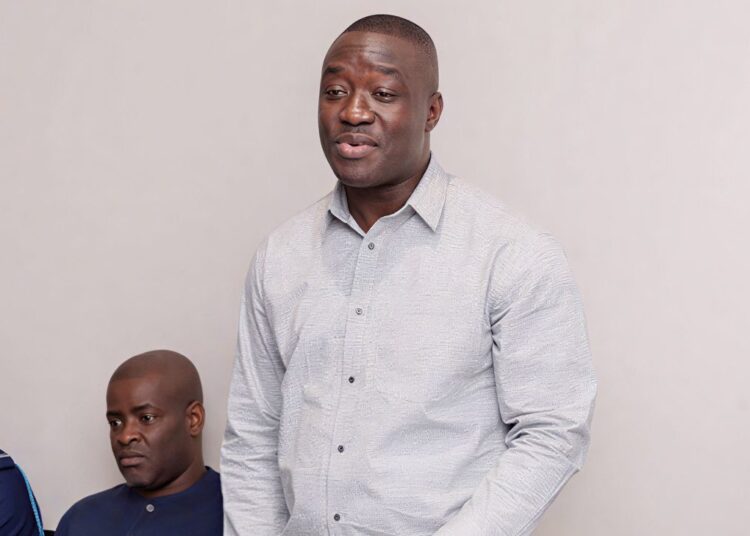
The Narcotics Control Commission has demanded for greater involvement in the Ghana’s port inspections.
The Deputy Director, Alexander Twum-Barimah called attention to institutional gaps that have affected NACOC’s participation in Ghana’s port inspection and security arrangements. He argued that the agency’s specialised mandate makes its involvement important whenever systems are being designed to prevent narcotics from leaving the country.
The NACOC Deputy Director explained that port inspection arrangements were streamlined under the paperless port system, reducing the number of agencies directly involved in routine inspections. He noted that while the reform was intended to facilitate trade, narcotics control should have been a central consideration.

“Even if you are going to limit it to one, that one should have been NACOC,” Mr Twum-Barimah argued. He explained that Customs primarily has a revenue mandate, while other agencies involved in inspections do not have narcotics control as their principal responsibility.
Furthermore, he disclosed that NACOC has previously been excluded from some national security structures. According to him, the agency was not included in certain arrangements created under the Security and Intelligence Agencies Act, 2020, Act 1030.
In addition, the Deputy Director indicated that steps have been taken to address the institutional deficiencies. He explained that NACOC has worked to strengthen its position within the national security architecture and improve its capacity to contribute to narcotics investigations.
Mr Twum-Barimah also argued that the history of drug trafficking incidents should have informed decisions about port inspection arrangements. He pointed to previous cases involving cocaine entering or passing through Ghana as evidence of the need for specialised narcotics expertise within port control systems.
The NACOC official stressed that the objective is not necessarily to restore every agency that previously participated in inspections. Instead, he believes agencies should be selected according to the specific risks they are mandated to detect.
Port Scanning Gaps Require NACOC Role
The Deputy Director of the Narcotics Control Commission, Alexander Twum-Barimah also highlighted the importance of effective scanning procedures at Ghana’s ports following the interception of a 3.9-tonne cocaine consignment in Dunkirk. He explained that containers leaving Ghana undergo scanning at the Meridian Port Services facility, where Customs officers are responsible for analysing the images and identifying abnormalities that may require further examination.
The NACOC Deputy Director noted that the key issue is not simply whether the consignment passed through the port; however, the focus is on the established procedures responded appropriately to whatever the scanning process revealed. He stressed that an abnormal image should ordinarily prompt physical examination before a container leaves the country.
“If it sees anything abnormal, it will prompt you, as in prompt those who are seeing or viewing it at the back end.”
Alexander Twum-Barimah
According to the Deputy Director, the investigation has already resulted in the arrest of Customs officers linked to the process. He explained that their interrogation would help determine how the containers passed through the scanning stage without the consignment being intercepted in Ghana.

The NACOC official cautioned against prematurely concluding that officers deliberately facilitated the shipment. He emphasised that the investigation must establish what happened at each stage before responsibility can properly be assigned.
“Until investigation is done, we can’t say that indeed they were compromised,” he noted. The position places the focus on establishing the facts surrounding the scanning process and the conduct of officers responsible for assessing the images.
Physical examination, Mr Tum-Barimah said, is an important step when scanning produces an abnormal indication. He noted that the Dunkirk interception, according to information available to investigators, resulted from physical examination rather than the scanning process.
The distinction has become significant because the Ghanaian consignment passed through the port before being intercepted abroad. The NACOC Deputy Director therefore believes investigators must determine whether the scanning system detected anything unusual and whether the prescribed follow-up procedures were undertaken.
Cocaine Investigation Expands As Ten Suspects Remain In Custody
The Deputy Director of the Narcotics Control Commission, Alexander Twum-Barimah, also disclosed that ten suspects are currently being investigated in connection with the alleged exportation of about 3.9 tonnes of cocaine from Ghana. He explained that the group includes four Customs officers, two freight forwarders and four other individuals suspected of facilitating aspects of the shipment.
While stressing that the investigation is active and could lead to further arrests as investigators examine the wider network, he disclosed that some individuals are still being traced based on information obtained during the inquiry.
“We don’t have to rush, because the minute you rush, with these kinds of investigations, you may either accuse somebody wrongly or you may lose certain evidence.”
Alexander Twum-Barimah
He explained that cocaine investigations require extensive intelligence gathering and forensic examination before investigators can disclose all the information available to them. The four initial suspects are facing charges connected to conspiracy to export narcotic drugs without a licence and the alleged exportation of narcotic drugs. The remaining six suspects are being investigated in connection with alleged facilitation and related offences.

Mr Twum-Barimah disclosed that steps are being taken to consolidate the cases because different investigative agencies initially handled separate groups of suspects. He explained that bringing the matters together would allow the authorities to proceed with the cases as one investigation because they relate to the same alleged shipment.
The Deputy Director also noted that the investigation does not end with identifying the persons allegedly involved in moving the consignment. He explained that narcotics cases require investigators to trace assets and financial interests that may become subject to confiscation if a person is ultimately convicted.
NACOC is therefore continuing its intelligence work while the suspects remain before the courts. Mr Twum-Barimah stressed that additional persons may be identified as investigators examine the evidence and trace the alleged network.
READ ALSO: GoldBod Signals Commitment to Mahama’s End to Raw Minerals Export Agenda