

President John Dramani Mahama’s recent assertion at the 81st Session of the United Nations General Assembly in New York regarding value addition has received a swift operational validation from Ghana’s primary precious minerals regulator.
The Ghana Gold Board (GoldBod) has aligned its national operational framework directly with the President’s vision to dismantle the longstanding post-colonial framework of exporting raw, unprocessed natural resources out of Africa.
Through enforced local refining regimes, the board is demonstrating that the continent’s quest for economic self-determination can transition seamlessly from high-level global diplomatic rhetoric into actionable domestic policy.
“In Ghana, this commitment is already being implemented in the gold sector. Since 1 September 2026, all gold doré must be refined in Ghana before export, and nearly nine tonnes of gold aggregated by the Ghana Gold Board (GoldBod) has been refined locally this year. This is retaining greater value within the national economy and creating skills and employment opportunities for Ghanaians.”
Ghana Gold Board (GoldBod)
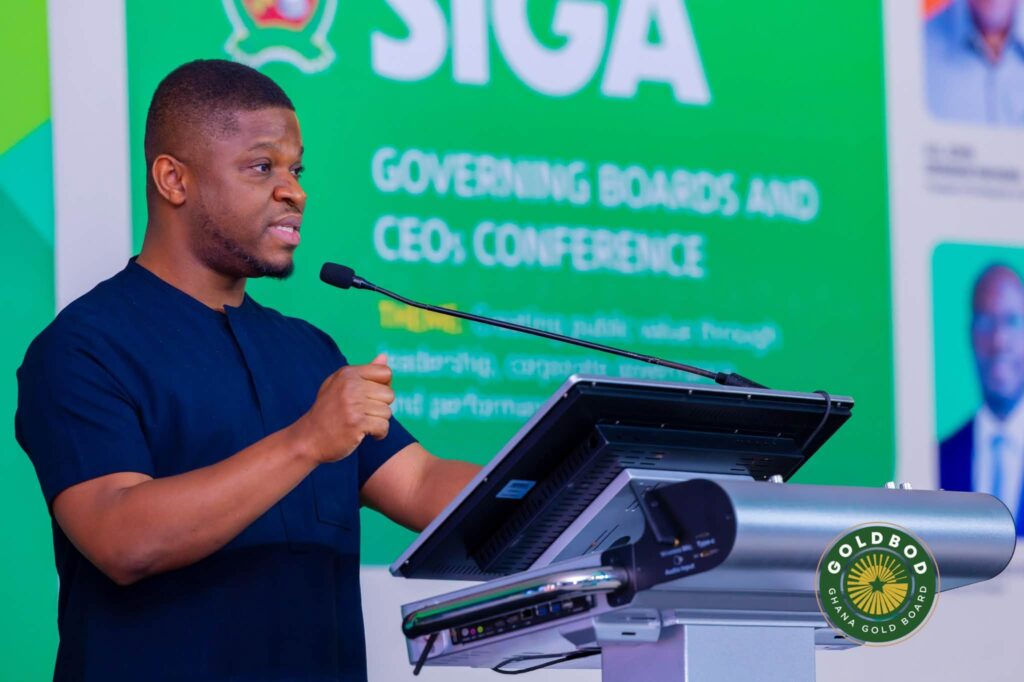
This institutional alignment manifests through a statutory mandate enacted on 1 September 2026, which makes it illegal to export unrefined gold doré from Ghana.
Under this regulatory framework, all gold doré aggregated across the country must undergo local processing before receiving export certification. Nearly nine tonnes of gold aggregated directly by GoldBod have already been successfully processed inside domestic refineries this year.
This structural pivot effectively retains substantial financial value within the local economy while simultaneously building industrial capacity, transferring specialized technical skills, and generating sustainable, high-dignity employment opportunities for Ghanaian youths.
The Imperative for In-Country Processing
For decades, the sub-Saharan extractive sector has suffered under the burden of value destruction caused by the unrefined export model.
Exporting unrefined gold doré deprives producer nations of massive revenues associated with downstream industrialization, including assaying, refining, bullion manufacturing, and jewelry production.
By shipping raw minerals abroad, African economies effectively export local employment and industrial potential to overseas refining hubs while importing finished products at highly inflated prices.

This cycle of resource exploitation leaves national banks vulnerable to exchange rate volatility and foreign reserve depletion. Shifted foreign exchange inflows remain trapped in international markets, depriving national treasuries of crucial liquidity needed to stabilize local currencies.
The decision to enforce local refining fundamentally reverses this dynamic, guaranteeing that physical mineral reserves serve as a direct catalyst for national wealth accumulation, economic resilience, and long-term monetary stability.
GoldBod Enforcement Mechanics and Regulatory Oversight
GoldBod’s mandatory directive applies across the board to all Self-Financing Aggregators (SFAs) and approved Offtakers operating within the country’s borders.
The compliance mechanism mandates that every existing supply contract and commercial agreement must incorporate local refining clauses, with refining costs settled upfront before export permits are validated.

Export applications now undergo a multi-layered verification check to confirm that assaying standards, local processing requirements, and administrative fees are fully satisfied.
To maintain institutional integrity, GoldBod has instituted strict penalties for non-compliance or illicit export attempts.
Aggregators caught attempting to bypass local facilities face administrative fines, instant revocation of operating licenses, and immediate seizure of shipments under the Ghana Gold Board Act.
This regulatory enforcement creates a secure, predictable climate for private investment in local state-of-the-art refining infrastructure.
Broader Socio-Economic Impact on the Extractive Sector
Enforcing local value addition yields far-reaching socio-economic benefits that extend well beyond immediate revenue retention.
Establishing a robust refining network incentivizes technology transfer and upgrades the country’s broader industrial ecosystem.
Local processing demands advanced metallurgy, laboratory assaying, secure logistics, and specialized financial services, creating a diverse spectrum of high-skilled professional opportunities.

Furthermore, this industrial shift aligns Ghana with the objectives of the African Continental Free Trade Area (AfCFTA) by positioning the country as a regional hub for refined precious metals trading.
By retaining critical supply chains on the continent, Ghana sets a benchmark for resource governance across Africa, proving that sovereign nations can successfully break free from historical resource exploitation and build self-sustaining economic frameworks.
READ ALSO: Mahama Outlines Ghana’s Ambitious Healthcare Reforms to Meet SDG Targets