
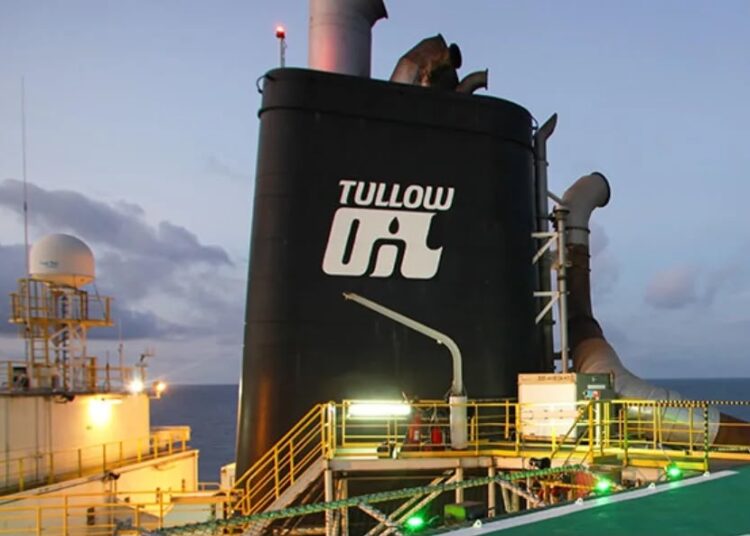
Tullow Oil has reported stronger-than-expected production from its Ghanaian assets in the first half of 2026, with improved well performance, high FPSO uptime and the completion of its latest drilling campaign strengthening the outlook for Jubilee and TEN.
The company’s latest half-year results show group working-interest production of 43.7 thousand barrels of oil equivalent per day (kboepd), up from 40.6 kboepd in the first half of 2025. Ghana remained central to that performance, with the Jubilee and TEN fields delivering above expectations.
Tullow said the stronger operational performance has also supported an upgrade to its full-year free cash flow guidance, while its Ghana portfolio is being positioned for another drilling campaign and additional projects aimed at extending production from existing resources.
“We have delivered outstanding operational performance in the first half of 2026 and expect production for the year to be at the top end of guidance,”
Tullow Chief Executive Officer Ian Perks
Jubilee Performance Strengthens Ghana Outlook
Jubilee was the main contributor to the improved Ghana performance.
Gross production from the field averaged about 70.8 thousand barrels per day during the first half, equivalent to approximately 27.6 thousand barrels per day net to Tullow. Production from TEN averaged about 14.8 thousand barrels per day gross, or 8.1 thousand barrels per day net to the company.
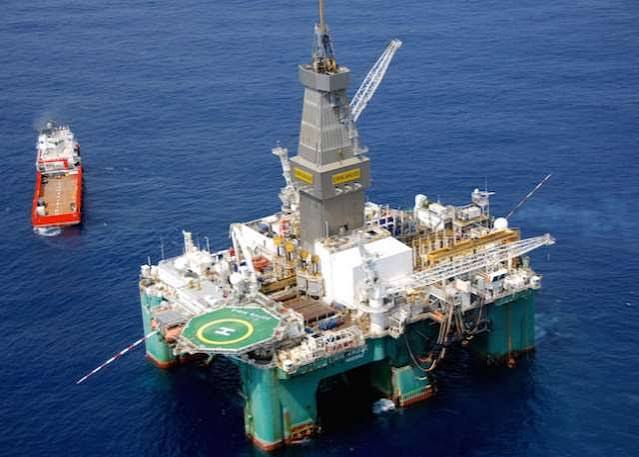
The results follow an active drilling programme designed to counter production decline and improve recovery from Ghana’s mature offshore fields.
Tullow said the 2025–26 campaign has delivered six Jubilee producer wells and one water injector. The company attributed the stronger performance partly to new wells coming on stream and to production optimisation measures.
It also reported average FPSO uptime of more than 99% at Jubilee and TEN during the first half, helping maintain consistent production.
The company said the interpretation of 4D seismic data provided additional reservoir information that supported target selection during the drilling campaign.
That matters for Ghana because the ability to identify productive zones within mature fields increasingly determines how much additional output can be extracted without relying solely on new discoveries.
New Wells And Further Drilling
Tullow’s Ghana strategy is moving beyond the completed campaign.
The company said it has signed a rig contract for its 2027–28 Ghana drilling programme, known as Campaign 2, covering up to 10 wells.
The rig is expected to arrive around the middle of 2027, with target selection supported by 4D seismic data and additional information from an Ocean Bottom Node survey.
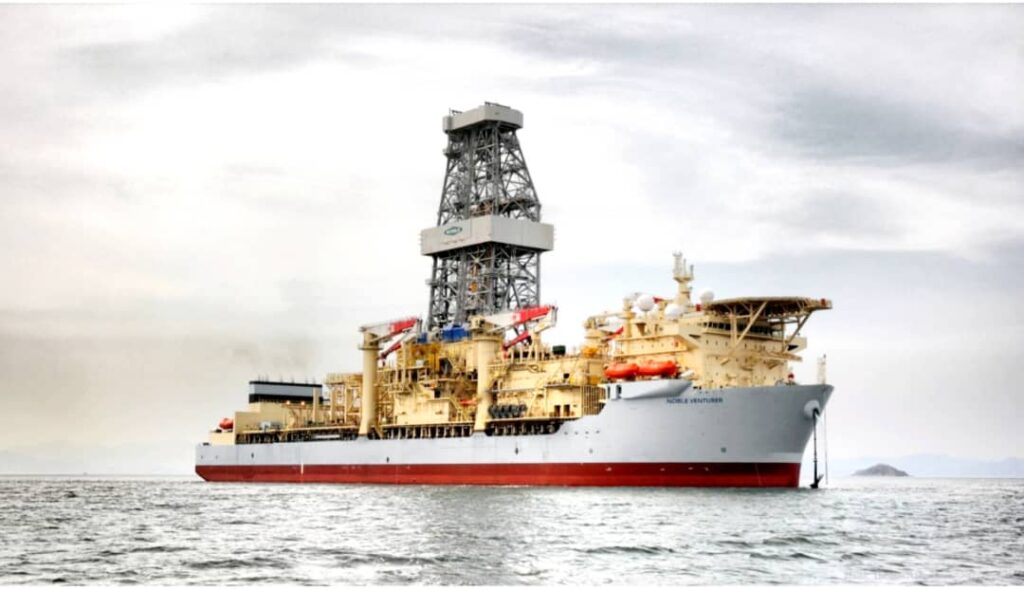
The planned programme provides a further indication that Tullow intends to sustain investment in the Jubilee and TEN fields rather than treat their existing production profile as a terminal decline story.
The company is also progressing subsea pumps, additional Jubilee and TEN development drilling, well intervention activities and gas monetisation opportunities.
Together, these projects are intended to mature more of the fields’ resources into reserves.
Tullow reported that its 2P reserves increased to 121.7 million barrels of oil equivalent at the end of June, supported by licence extensions, project maturation and well performance. The company reported a reserves replacement ratio of more than 380% in the first half.
Ghana Agreements Provide Longer Investment Horizon
The investment outlook is also supported by the extension of the petroleum agreements covering Jubilee and TEN to December 2040.
The agreements were ratified by Parliament earlier in 2026, giving the joint venture partners a longer contractual horizon over the assets. Under the revised arrangements, GNPC’s interest is scheduled to increase by a further 10% from July 2036, with the interests of the joint venture partners reducing proportionately.
Tullow has also secured revised terms for the supply of Jubilee gas through the extended period, with an escalating price reaching $2.50 per million British thermal units.
A gas payment security mechanism and heads of terms for potential TEN gas supply have also been agreed with the Government of Ghana.
That creates an important link between upstream oil production and Ghana’s wider energy system, as associated gas from the fields contributes to domestic energy supply.
Higher Oil Prices Improve Cash Flow Position
The operational gains came alongside stronger oil price realisations.
Tullow reported first-half revenue of $496 million, compared with $411 million in the same period of 2025.

Its average realised oil price before hedging was $95 per barrel, up from $71.40 per barrel a year earlier, while the post-hedging realisation was $86.30 per barrel.
Gross profit increased to $276 million from $165 million.
However, the company still recorded a $101 million loss after tax, compared with an $80 million loss in the first half of 2025. Tullow attributed the 2026 result partly to one-off refinancing transaction fees.
Free cash flow improved substantially, reaching $4 million compared with a negative $188 million in the first half of 2025.
The company also reduced net debt to $1.4 billion at June 30, from $1.6 billion a year earlier, while liquidity headroom stood at about $300 million.
Government Receivables Provide Additional Relief
A significant Ghana-related financial development was the recovery of outstanding gas receivables owed by the Government of Ghana.

Tullow said it recovered $73 million in pre-2026 gas receivables during the first half. It subsequently reported that the remaining historic gas receivable had been recovered by September 28.
The recovery is particularly relevant because payment delays along Ghana’s energy value chain have historically affected the cash position of companies operating across the sector.
For Tullow, recovering the outstanding amounts strengthens liquidity and reduces one source of financial pressure as the company prepares to commit capital to further Ghana drilling and development.
Production Target Moves Towards Upper End
For the full year, Tullow expects group working-interest production to reach the upper end of its 34–42 kboepd guidance range.
The company expects to lift 14 cargoes during 2026, comprising 11 from Jubilee and three from TEN. Six cargoes had been delivered in the first half, with another eight planned for the remainder of the year.
Tullow has also maintained its full-year capital expenditure guidance at about $200 million while reducing its decommissioning expenditure forecast from approximately $25 million to $15 million due to expected deferrals in contributions to the TEN decommissioning fund.
Its free cash flow guidance remains upgraded at $170 million to $250 million, based on an assumed oil price range of $70 to $100 per barrel.
For Ghana, the immediate significance of the results lies less in the headline financial numbers than in what they indicate about the productive life of the country’s existing petroleum assets.

Tullow’s stronger well performance, additional reserves, extended licences and planned drilling campaign point to continued investment in Jubilee and TEN, while the recovery of historic gas receivables removes part of the financial friction surrounding the portfolio.
The results therefore provide a stronger near-term production outlook for Ghana’s mature offshore fields, while also placing renewed emphasis on how effectively further investment can convert remaining resources into sustained oil and gas output.
READ ALSO: Ghana’s Debt Climbs to GH¢733.9bn as Ratio Hits 45.9%