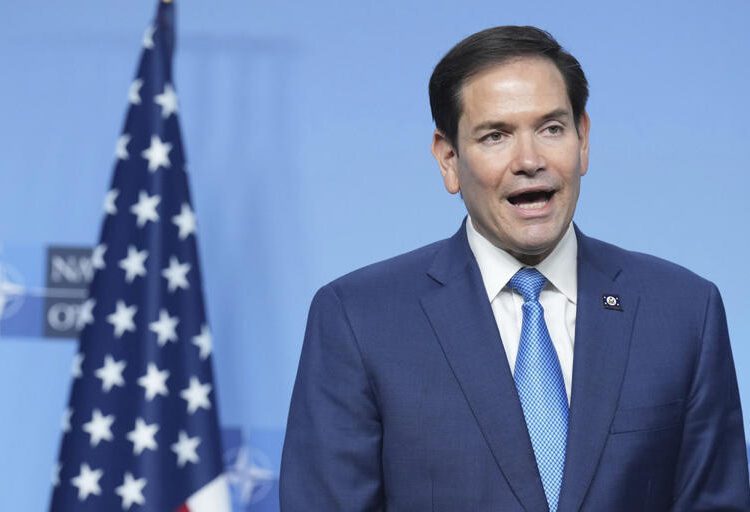
US Secretary of State, Marco Rubio has met with Lebanese Prime Minister, Nawaf Salam in Washington as the Trump administration intensifies efforts to advance a US-brokered framework aimed at ending hostilities between Israel and Lebanon.
The meeting, held at the State Department, focused on developments in Lebanon and the region, as well as efforts to implement the agreement signed by Israel and Lebanon in June.
The framework, brokered by Washington, outlines measures to end the fighting, secure an Israeli withdrawal from Lebanese territory and restore the Lebanese government’s authority over the country’s territory, including through the disarmament of non-state armed groups.
However, implementation has encountered significant challenges, with fighting continuing in southern Lebanon and the agreement yet to deliver a comprehensive end to hostilities.
Following his meeting with Rubio, Salam called for a clear timetable to translate the framework’s provisions into concrete measures, including a complete Israeli withdrawal and the establishment of state authority over weapons throughout Lebanon.
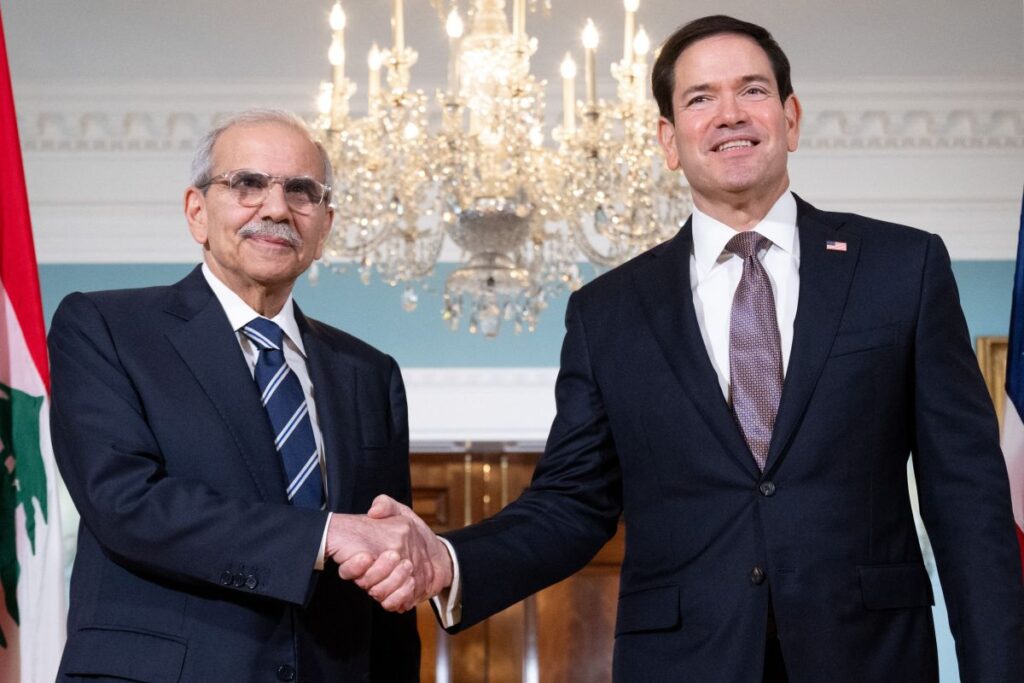
The Lebanese Prime Minister also emphasised the importance of a credible mechanism to monitor implementation, arguing that delays by either party should not become grounds for obstructing the process.
The meeting formed part of Washington’s broader diplomatic efforts to advance the agreement and encourage both countries to fulfil their commitments.
Although the framework was intended to provide a basis for ending the conflict and restoring stability, persistent hostilities have complicated efforts to put its provisions into effect.
The continuing violence in southern Lebanon has also contributed to displacement and humanitarian difficulties, with communities facing the consequences of prolonged insecurity.
The June agreement provides for a phased process involving Israeli withdrawal and the disarmament of armed groups, alongside efforts to strengthen the Lebanese state’s control over its territory.
The United States has sought to support the implementation process through diplomatic engagement with both countries, with further discussions between Israeli, Lebanese and American representatives scheduled to take place in Rome in October.
The planned talks are expected to provide another opportunity to address outstanding disagreements and establish a way forward for implementing the framework.
Meanwhile, Washington has continued to emphasise the importance of strengthening Lebanon’s state institutions, particularly its security and financial sectors, as part of broader efforts to restore stability.
Rubio’s meeting with Salam was followed by further discussions at the State Department, underscoring the administration’s continued engagement with the Lebanese government.
The diplomatic efforts come as Lebanon faces the combined challenges of persistent insecurity, economic difficulties and the need to restore confidence in its institutions.
The implementation of the framework remains central to efforts to reduce tensions along the Israeli-Lebanese border, facilitate the return of displaced residents and strengthen the Lebanese state’s authority.
However, the continuation of hostilities and the difficulties surrounding the withdrawal and disarmament provisions remain significant obstacles to achieving those objectives.
Bessent Urges Lebanon To Disrupt Iranian, Hezbollah Financial Networks
US Treasury Secretary, Scott Bessent has urged the Lebanese government to take decisive action against Iranian and Hezbollah financial networks, linking the measures to broader efforts to restore confidence in Lebanon’s banking system.
Bessent made the call during a meeting with Lebanese Prime Minister, Nawaf Salam and Finance Minister, Yassine Jaber in Washington.
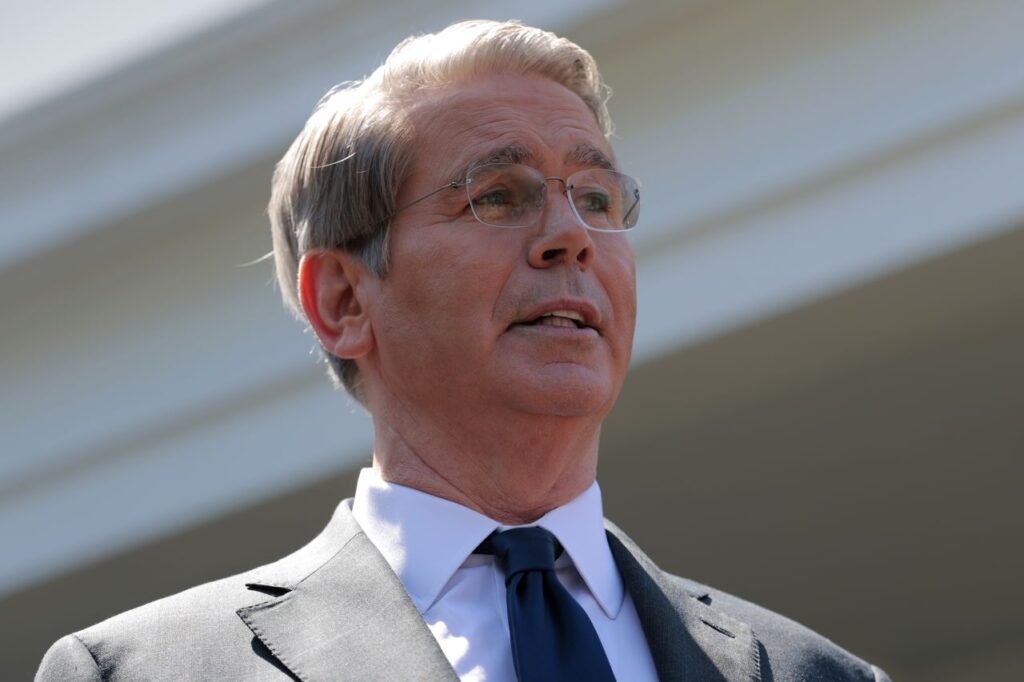
According to a statement from the US Treasury Department, Bessent encouraged the Lebanese government to take proactive steps to disrupt financial networks associated with Iran and Hezbollah.
He also stressed the importance of advancing key financial sector reforms to restore confidence in Lebanon’s banking system, which has faced prolonged difficulties.
The discussions form part of Washington’s broader engagement with Beirut on financial stability, institutional reforms and efforts to address networks that the US government considers a threat to regional security.
Bessent’s remarks add a financial dimension to the diplomatic discussions surrounding the June framework, as Washington continues to press Lebanon on security commitments and institutional reforms.
The Lebanese government’s ability to strengthen financial oversight and restore confidence in its banking sector remains an important part of its broader efforts to address the country’s economic and political challenges.
READ ALSO: Sánchez Rules Out Moroccan Role In Ceuta Migrant Surge