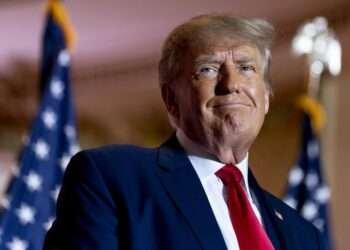
An Analyst at the Kofi Annan International Peacekeeping Training Centre (KAIPTC) has said that U.S. President Donald Trump’s declaration that Iran is now “the bully no more” in the Middle East should be understood as an assessment of weakened economic and military capacity rather than evidence that Tehran has lost its total ability to project power.
Speaking to The Vaultz News about Trump’s address to the United Nations General Assembly, Dr. Victor Doke noted that the extent of Iran’s decline should be measured through its ability to sustain military operations, finance defence spending, maintain regional relationships and withstand economic pressure.
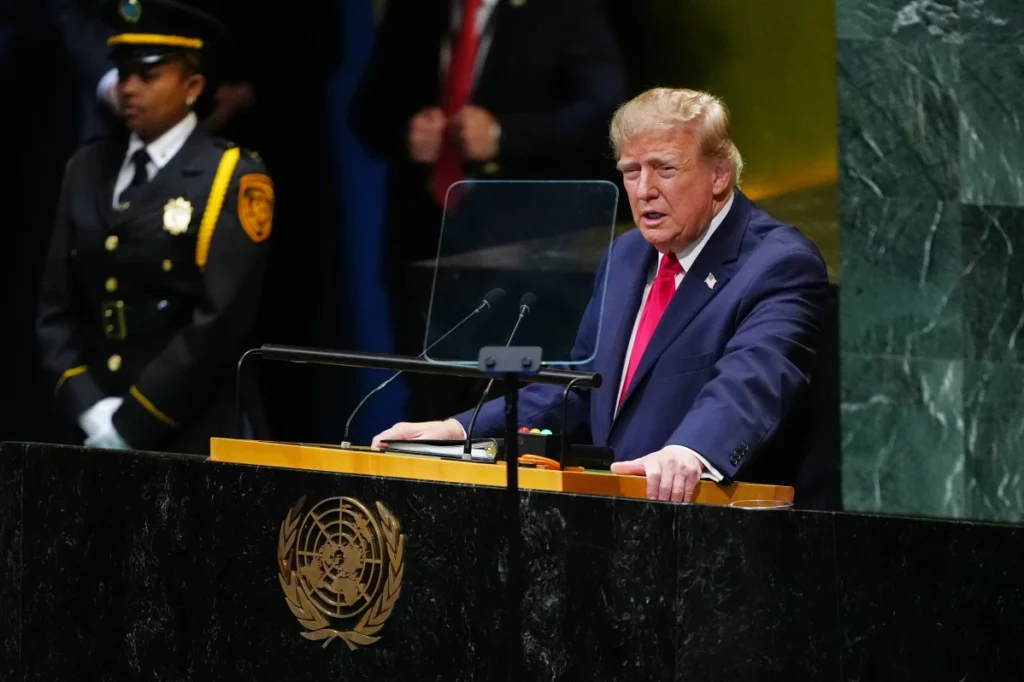
Trump told world leaders that U.S. military action had significantly degraded Iran’s military capabilities and economy. In his address, he stated that Iran had previously been “the bully of the Middle East” but was “the bully no more.” He also said that U.S. operations had severely damaged Iran’s military infrastructure and claimed Washington had the capacity to continue replenishing its weapons stockpiles.
The KAIPTC Analyst, however, cautioned against interpreting those claims as meaning Iran had been completely neutralised.
“I think Mr. Trump was talking about weakness in the sense of economic aspects and then militarily wise. But that doesn’t mean Iran is down totally because for a regime such as this definitely you still have some element of military operations still intact.”
Dr. Victor Doke
The distinction, Dr. Doke argued, is important because economic strength is closely linked to a state’s ability to sustain military power.
“If trade is good, if you are getting more inflows of funds through your production means and all of that then it means you can increase your defence spending. And if you don’t have the fund, if your economy is weak you won’t have the funds to spend on the defence. So I’m sure that’s the weakness he’s talking about.”
Dr. Victor Doke
Iran’s Remaining Capacity Remains A Key Indicator
Dr. Doke opined that one of the clearest ways to test Trump’s assessment would be to examine what military capabilities Iran retains and whether it can replenish equipment lost during the conflict.
He also pointed to Iran’s regional relationships as another factor that could influence its ability to recover. “Iran’s allies may decide to help them bolster their military,” he said, while adding that those allies could also be cautious about becoming exposed to sanctions imposed by the United States or the wider international community.
That means Iran’s regional position cannot be assessed solely by measuring the damage caused by U.S. military operations, according to the KAIPTC Analyst. The more significant question is whether Tehran can rebuild its military capacity and continue exercising influence despite economic restrictions.
Trump’s own speech highlighted the economic and military dimensions of the conflict. He argued that Iran’s economy and military capabilities had been severely weakened, while also rejecting claims that the United States was running short of munitions. He said that U.S. weapons production and stockpiles were expanding at unprecedented rates.

Sustaining Prolonged War Comes At High Cost
Moreover, Dr. Doke opined that Trump’s claim about increased U.S. weapons production should not necessarily be interpreted as evidence that a prolonged military campaign is inexpensive or unlimited.
He stated, “Now when you talk about munitions production, it’s very expensive,” explaining that weapons used or lost during combat have to be replaced.
He added that increased production could therefore reflect the need to replenish U.S. stockpiles after sustained military operations rather than simply an indication of expanding offensive capacity. “It is very expensive to maintain or keep fighting or engaging in armed confrontations,” the Analyst said.
The cost, according to Dr. Doke, extends beyond weapons. Military operations require fuel, ships, aircraft, personnel and other resources, while prolonged conflict can also place pressure on government finances.
He noted that this creates a potential constraint even for a country with substantial military and economic resources. “At some point all the two parties could reach a level where they call a mutually hurting stalemate,” the Analyst said, adding, “At that level resources has been exhausted. People are tired.”
Such a situation can create pressure for mediation or, alternatively, provide an opportunity for the parties to replenish their military resources before resuming fighting.
The sustainability of U.S. operations would also depend on Washington’s ability to continue funding military operations and replacing weapons while managing domestic political pressure.
Dr. Doke noted that prolonged conflict ultimately draws on public resources and can generate criticism when taxpayers see funds being directed toward war rather than domestic priorities.
“And if the people are against it, they criticize the government. Criticizing the government means civil society, the people who go on demonstrations and all of that. And it will affect President Trump’s rating. So when that happens, it means that they have to slow things down or entirely stop it…
“And largely it’s from the US, the taxpayers’ funds. And so sometimes it is not realistic to continue the war because it is costly. Because money you’re supposed to push into the economy, create jobs, build infrastructure. You’re using it for the war…”
Dr. Victor Doke
For Dr. Doke, determining whether Iran has truly ceased to be a major regional power will depend on what it can retain, rebuild and sustain in the period ahead.
READ ALSO: Jack Smith Defends Trump Prosecutions At Senate Committee Hearing