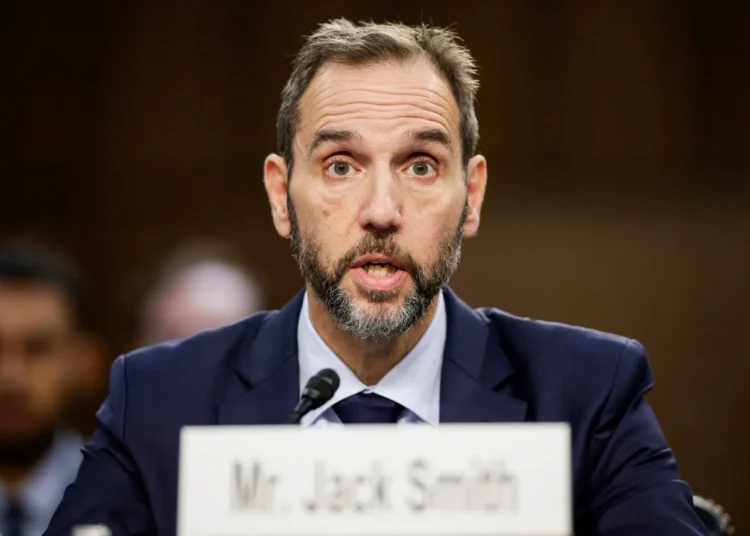
Former US special counsel, Jack Smith has defended his criminal investigations into President Donald Trump, telling the Senate Judiciary Committee that the cases were based on evidence and the law rather than political considerations.
Testifying before the committee, Smith stood by his investigations into Trump’s retention of classified documents at his Mar-a-Lago residence and his efforts to overturn the results of the 2020 presidential election, both of which ended before trial.
Smith’s appearance came amid sustained criticism from Republican lawmakers, who have accused him of abusing his authority, pursuing politically motivated investigations and improperly targeting Republican officials and organisations.
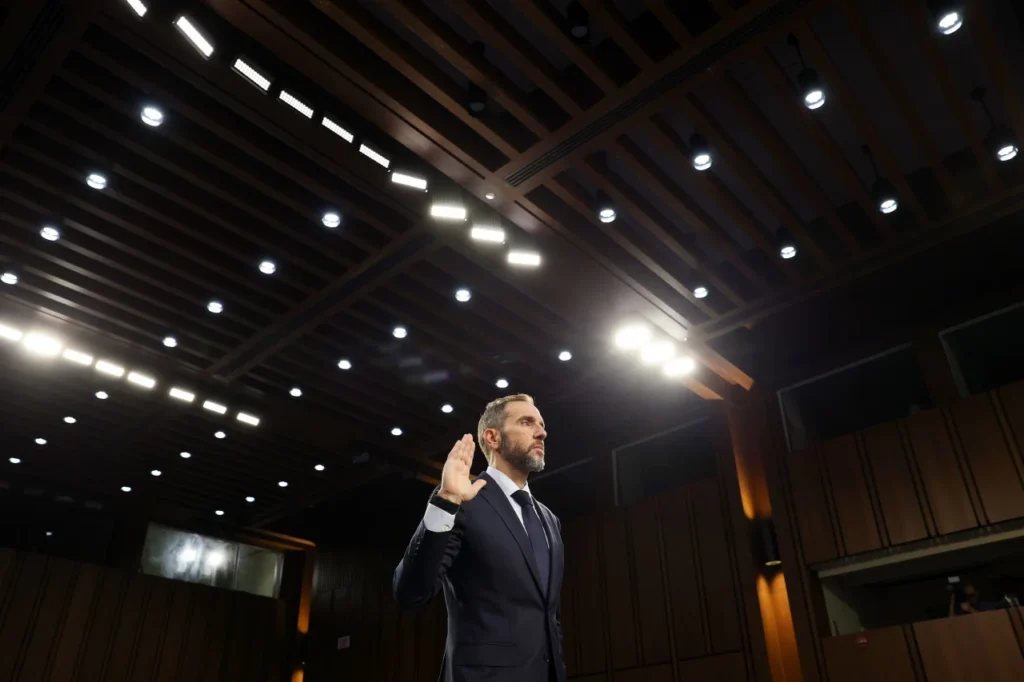
In his opening statement, the former special counsel said his investigations had uncovered substantial evidence of criminal conduct by Trump and maintained that the decisions to prosecute were guided by the same legal standards that apply to other defendants. “Our investigation developed proof beyond a reasonable doubt that Trump engaged in serious crimes against our nation,” Smith told lawmakers.
He rejected allegations of political bias, emphasising that his work was driven by legal obligations rather than partisan considerations. He said that he is “not a politician,” adding that he had no “partisan loyalty.”
“If asked whether to prosecute a former President today based on the same facts, I would do so regardless of whether the President was a Republican or Democrat.”
Jack Smith
Smith further rejected the possibility of being intimidated by threats of legal action arising from his investigations, amid continued criticism from Trump and his allies. “I will not be silenced by the continued threats of prosecution from the President or others,” he said.
Smith was appointed to investigate Trump’s alleged efforts to overturn the 2020 presidential election and his retention of classified government documents after leaving office. The election interference case centred on Trump’s efforts to challenge the results of the 2020 election and the events surrounding the January 6 attack on the Capitol. The classified documents case concerned the handling and retention of sensitive government materials at his Mar-a-Lago residence in Florida.
Both cases ended before reaching trial following Trump’s 2024 election victory and subsequent legal developments. Trump has consistently denied wrongdoing and described the investigations as politically motivated, while his allies have continued to challenge Smith’s conduct and the legitimacy of his prosecutions.
Republican lawmakers have argued that the investigations exceeded the boundaries of legitimate prosecutorial authority and subjected political opponents of the former special counsel’s investigations to unnecessary scrutiny.
Smith, however, defended the investigative decisions, arguing that they were necessary to establish the extent of Trump’s alleged efforts to overturn the 2020 election.
He also defended the prosecutors and FBI agents who worked on the investigations, expressing concern over their treatment following Trump’s return to the White House.
Several members of Smith’s investigative team were dismissed by the Justice Department after Trump’s 2024 election victory, prompting criticism from the former special counsel.
Smith said the decisions made by his team were based on evidence and applicable legal standards, without consideration of Trump’s political beliefs. “I’m extremely proud to have worked with them,” he said.
He described the dismissal of members of his team and the personal consequences they had experienced as an outrage, arguing that investigators had faced repercussions for carrying out their responsibilities.
Smith Defends Subpoenas for Republican Senators’ Phone Records
The former special counsel also addressed the controversy surrounding subpoenas for congressional telephone records, which have become a major focus of Republican scrutiny.
Smith said that the subpoenas were intended to establish communications between Trump and individuals he described as his alleged co-conspirators in the effort to obstruct the certification of the 2020 election.
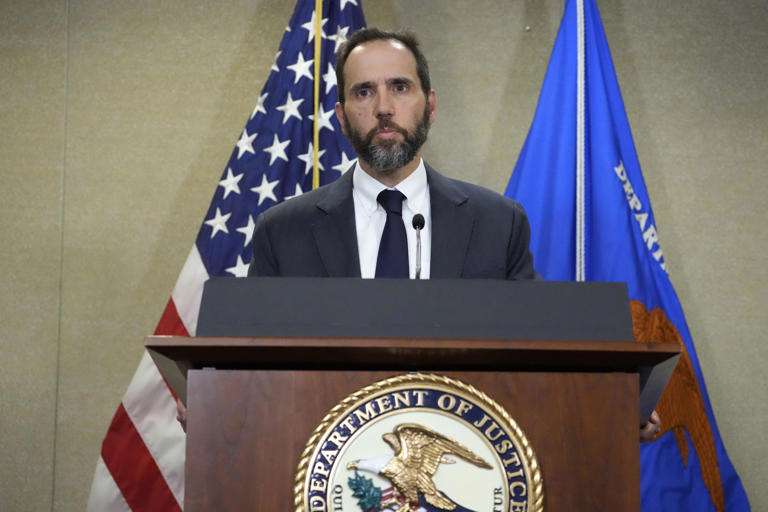
He explained that investigators sought telephone toll records, which identify calls made and their duration but do not reveal the contents of conversations.
According to Smith, the records were relevant to determining whether Trump and his associates had attempted to enlist members of Congress in efforts to delay or obstruct the certification of the election results following the January 6, 2021, attack on the US Capitol. “We consulted with the public integrity section regarding whether those toll records subpoenas were appropriate,” Smith said, adding that he had approved the requests because the records were materially relevant to the investigation.
He said that the information corroborated other evidence gathered by investigators concerning the alleged efforts to exploit the violence at the Capitol to advance Trump’s objectives.
The subpoenas have drawn particular criticism from Republican lawmakers, who argue that obtaining congressional telephone records without adequate safeguards threatened legislative independence and constitutional protections.
Senate Judiciary Committee Chairman, Chuck Grassley accused Smith of undermining the rule of law and using his position to pursue political opponents.
In his opening remarks, Grassley described the investigation as a partisan exercise. “His operation was a partisan weapon that broke the rules, lied to the court and engaged in bad faith throughout,” Grassley said.
The Chairman’s remarks reflected broader Republican efforts to scrutinise the former special counsel’s investigative methods, particularly the collection of telephone records belonging to Republican lawmakers and other individuals.
However, Senator Dick Durbin, the committee’s ranking Democrat, accused Republicans of spending months promoting conspiracy theories about the investigations rather than examining the underlying allegations against Trump.
The competing arguments underscored the political divisions surrounding the investigations and the extent to which the former special counsel’s work continues to shape congressional debates over prosecutorial independence and accountability.
READ ALSO: Sánchez Rules Out Moroccan Role In Ceuta Migrant Surge