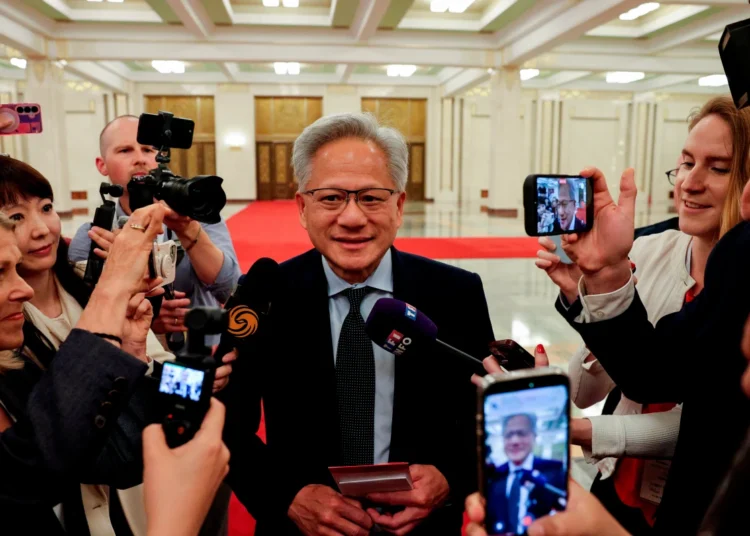
Former Nvidia Chief Executive Jensen Huang has agreed to appear before US House lawmakers for a transcribed interview on December 1, as congressional scrutiny intensifies over the company’s sales of advanced artificial intelligence chips and potential national security risks.
Huang, who stepped down as Nvidia’s Chief Executive last week, will appear before three House committees investigating the company’s export controls, its relationship with a former Executive of Singapore-based data centre company Megaspeed and allegations involving a possible Chinese intelligence asset.
Nvidia General Counsel Tim Teter has also voluntarily agreed to appear before the committees on December 2, according to a joint statement from the lawmakers leading the inquiry.
The announcement followed negotiations that continued beyond a November 13 deadline set by the committee chairmen. Lawmakers had initially requested that Huang participate in a closed-door interview after the Thanksgiving holiday, warning that they could use congressional subpoenas to compel his testimony if he failed to cooperate.
House Foreign Affairs Committee Chairman Brian Mast, a Republican from Florida, announced the interview dates alongside Representative John Moolenaar of Michigan, who chairs the House Select Committee on China, and House Intelligence Committee Chairman Rick Crawford of Arkansas. “The American people need answers on Mr. Huang and Nvidia’s role in allowing dangerous [People’s Republic of China] actors to access our most advanced chips, as well as the role of a potential Chinese intelligence asset in this scandal,” the lawmakers said.
They added that they looked forward to hearing from Huang and Teter about their respective roles in addressing potential threats to US national security.
Lawmakers Warned Of Possible Subpoena
The agreement to appear followed a series of letters from the Committee Chairmen seeking information about Nvidia’s security practices and Huang’s relationship with Alice Huang, a former Megaspeed executive who is not related to him.
In an initial letter dated November 4, the lawmakers requested a briefing on Nvidia’s safeguards against espionage by foreign adversaries and sought information about the relationship between the two executives.
They argued that the company’s advanced chips could pose significant security risks if obtained by entities in China in violation of US export restrictions. “It is vital that Congress determines the extent to which U.S. national security has been placed at risk,” the lawmakers wrote.
In a subsequent letter dated November 12, the Chairmen warned that failure to cooperate could lead to compulsory testimony. “Failure to cooperate with this request will result in the House Foreign Affairs Committee issuing a subpoena to compel your testimony in a format of the committee’s choosing,” they wrote.
The lawmakers also said the other committees reserved the right to issue separate subpoenas.
Although the November 13 deadline passed, negotiations continued into the following week, eventually resulting in the voluntary interview arrangements announced on Tuesday.
The congressional inquiry also centres on Megaspeed, a Singapore-based data centre company that gained access to Nvidia’s advanced chips, some of which are restricted from export to China under US law.
Megaspeed is being investigated in the United States and Singapore over allegations that it smuggled restricted chips into China. The company has denied the allegations.
Alice Huang, the former Megaspeed executive whose relationship with Jensen Huang has attracted congressional attention, has also been linked in reports to allegations of connections with Chinese intelligence. Those allegations have not been established as fact.
The lawmakers are seeking to determine whether any national security risks arose from the relationship or from Nvidia’s business dealings with Megaspeed.
Nvidia Establishes New National Security Oversight Committee
Separately, Nvidia has announced the creation of a new board committee to strengthen oversight of national security and global trade compliance.
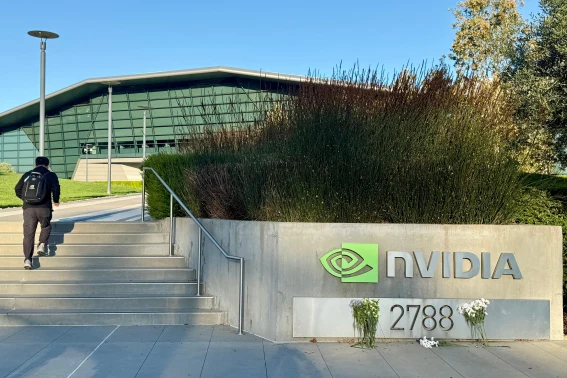
The company said that its National Security and Export Control Oversight Committee would supervise policies relating to national security and compliance with export control regulations.
The committee will comprise three members of Nvidia’s Board of Directors and meet at least once every quarter. It will also work with independent third-party experts as part of efforts to strengthen the company’s existing national security and global trade compliance team.
The move comes as Nvidia faces increased scrutiny over its export controls and the allegations surrounding its former chief executive’s relationship with the former Megaspeed executive.
The committee is expected to provide additional board-level oversight of the company’s approach to national security risks and international trade regulations.
Huang’s scheduled appearance and Teter’s subsequent interview will give lawmakers an opportunity to question Nvidia’s leadership about its compliance procedures, business relationships and safeguards against the unauthorised transfer of advanced chips.
The congressional inquiry is unfolding amid wider US efforts to restrict China’s access to advanced semiconductor technology. Its findings could have implications for Nvidia’s export practices and the broader relationship between technology companies, national security and international trade.
READ ALSO: Trump Announces $85m Quad Investment In AI