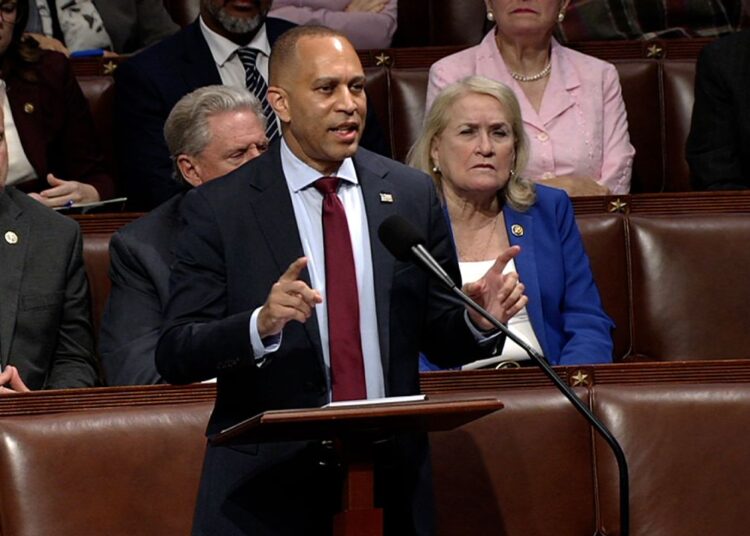
House Democrats have nominated Minority Leader Hakeem Jeffries as their candidate for Speaker of the House in the next Congress, positioning him to become the first Black person to hold the office in US history.
Jeffries secured 251 votes out of 262 cast during the party’s leadership election, while 11 members voted against his nomination. The result came roughly two weeks after Democrats’ victory in the midterm elections and followed calls from some progressive lawmakers for changes in the party’s leadership and policy direction.
Although Jeffries was widely expected to secure the nomination, a small bloc of newly elected Democratic socialists had withheld their public support, seeking commitments on issues including Medicare for All and restrictions on arms sales to Israel.

Ahead of the vote, Jeffries received a significant endorsement from Representative Jim Clyburn, a longtime ally and one of the most senior members of the Congressional Black Caucus.
The nomination marks a major step towards Jeffries assuming the speakership when the new Congress convenes in January. However, he must still secure a majority in a formal vote by the full House, scheduled for January 3.
Progressive Lawmakers Withhold Support
Seven incoming Democratic lawmakers who voted against Jeffries’ nomination said they had engaged in discussions with the minority leader but wanted further assurances that the party’s priorities would reflect the demands of their constituents.
The members-elect; Darializa Avila Chevalier, Adam Hamawy, Frederick Haynes, Melat Kiros, Donavan McKinney, Chris Rabb and Claire Valdez, explained their decision in a joint statement.
“We have worked to secure commitments from Leader Jeffries in good-faith conversations. While we have seen meaningful progress, there is still work to be done to ensure that the direction our party takes this coming Congress reflects what our constituents are demanding of leadership. Those conversations are ongoing. As such, our vote in caucus today was a no.”
Progressive lawmakers
Their position reflects pressure from the party’s progressive wing for more explicit commitments on healthcare and foreign policy, particularly the demand for universal healthcare through Medicare for All and a ban on arms sales to Israel.
Despite the opposition, Jeffries secured an overwhelming majority of the votes cast, suggesting that the dissenting bloc was not large enough to prevent him from becoming the party’s nominee.
Although his nomination was widely anticipated, Jeffries and his team reportedly worked to secure support across the party’s different ideological groups.
Ahead of the leadership election, he held face-to-face discussions with incoming Democrats who had not publicly committed to supporting him, many of whom were aligned with the Democratic Socialists of America.
He also met representatives of major caucuses within the party, including the centrist New Democrat Coalition, the Blue Dog Coalition and the Congressional Progressive Caucus.
The discussions were conducted privately, with limited information released about the specific commitments exchanged. However, Democrats have pointed to changes in some of Jeffries’ public statements, particularly on healthcare, as an indication of his efforts to address progressive concerns.
On Friday, Jeffries expressed support for key elements of a universal healthcare system. His proposals included lowering the eligibility age for Medicare, establishing a programme to guarantee healthcare coverage for children and expanding Medicare benefits to include hearing, dental and vision care.
Although these proposals address some priorities of the progressive wing, they do not amount to an endorsement of Medicare for All, the broader policy demand raised by some of the lawmakers who opposed his nomination.
Formal House Vote Remains
Jeffries is now positioned to lead House Democrats into the next Congress, where the party is expected to hold its largest majority in years.
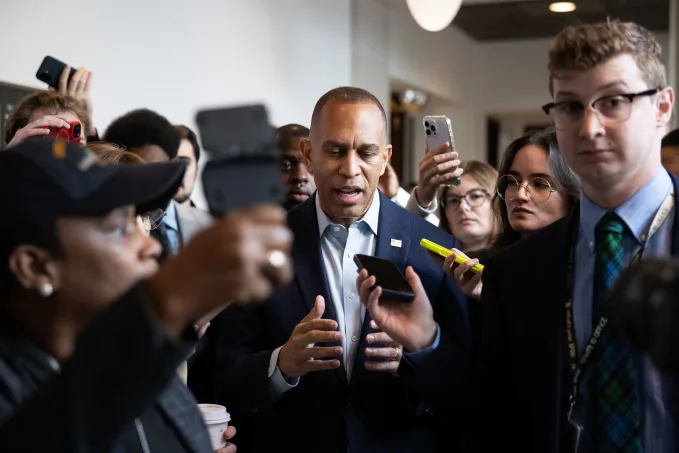
His allies reportedly expect him to secure the speakership in the full House vote on January 3, when the new Congress begins.
The Speaker is responsible for presiding over the House, overseeing its legislative proceedings and exercising considerable influence over the chamber’s agenda.
Jeffries’ nomination therefore represents a significant political milestone, particularly given the historical importance of his potential election as the first Black Speaker.
However, the opposition from some incoming progressive members highlights the internal negotiations likely to shape the party’s legislative priorities. While Jeffries has secured the backing of the wider Democratic caucus, the demands for commitments on healthcare and foreign policy remain part of the discussion over the party’s direction.
READ ALSO: EU Proposes €45bn Loan To Ukraine Amid Funding Crisis