US President, Donald Trump has cancelled plans to livestream the execution of former US Army psychiatrist Nidal Hasan, who killed 13 soldiers at Fort Hood in Texas in 2009, following widespread criticism of the proposed broadcast.
Trump said that Hasan would still be executed by firing squad as scheduled on December 3, 2026, but the event would not be shown live to the public.
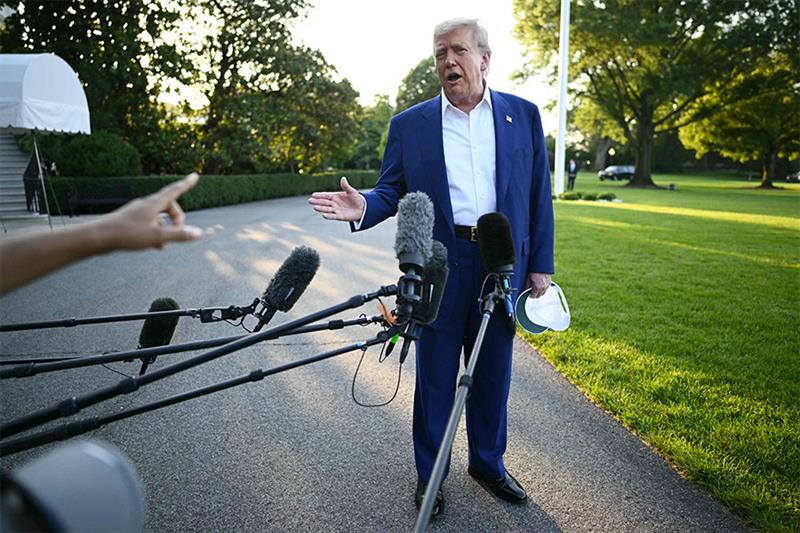
The US President had previously expressed support for broadcasting the execution, arguing that the images could serve as a deterrent against terrorism. However, he acknowledged in a social media post that many people opposed the idea of watching Hasan’s death.
“I think streaming the execution for all to see might have been a strong deterrent for the World to witness how America deals with Terrorists and SCUM like Hasan.
“Many very good and well meaning people would rather not watch him die, through streaming, or through any other visual device. He will die, as scheduled, by firing squad, but this event will not be streamed.”
Donald Trump
Trump also said the families of Hasan’s victims would be allowed to witness the execution in person if they wished. “They deserve to witness JUSTICE!” he added.
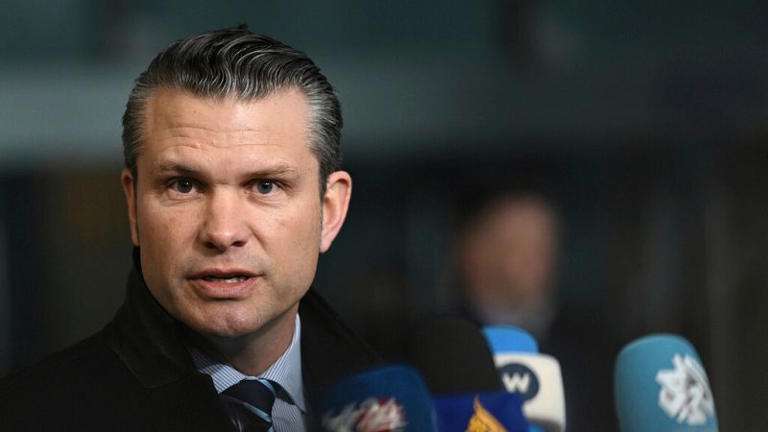
US Defence Secretary, Pete Hegseth had defended the proposal, arguing that a public broadcast would demonstrate the consequences of carrying out such an attack. “People need to understand that there’s serious consequences for these types of things,” Hegseth said.
Trump had also reaffirmed his support for the livestream as recently as Friday, although he indicated that the Pentagon was still considering whether to proceed. “Well, they’re making a determination about that,” he said when asked about the proposal.
Regarding Hasan’s execution, Trump said that he did not care which method was used as long as the sentence was carried out, adding that he considered the death penalty appropriate in the case.
Fort Hood Attack Killed 13 Soldiers
Hasan, a former Army Major and psychiatrist, fatally shot 13 unarmed US soldiers and wounded another 32 during an attack at Fort Hood on November 5, 2009.
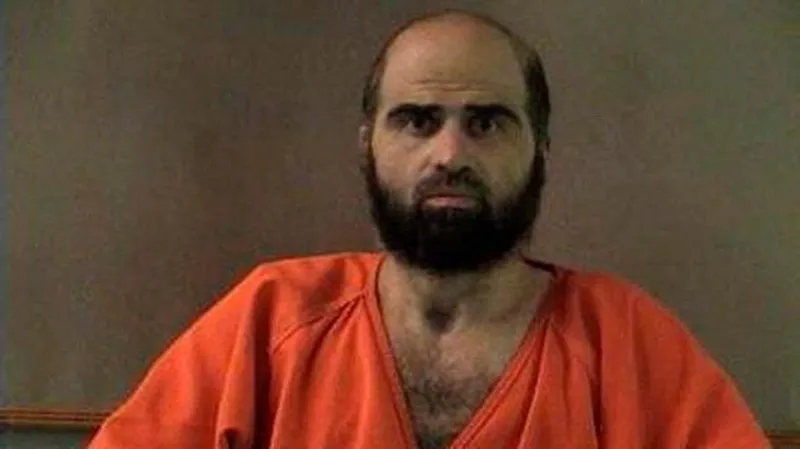
The shooting occurred inside a crowded medical building where soldiers were waiting for medical examinations, immunisations and clearance before deployment.
Hasan entered the facility and opened fire with a laser-sighted handgun. He shouted “Allahu akbar”, an Arabic phrase meaning “God is great”, before shooting soldiers inside the building and targeting others fleeing towards the parking lot.
He later admitted in court that he was responsible for the attack and apologised for what he described as “any mistakes.”
During his 2013 court-martial, Hasan said that he believed that he was protecting Muslims and the Taliban in Afghanistan from the US military. He argued that his actions were intended to prevent soldiers from deploying to Afghanistan and killing fellow Muslims.
A military judge barred him from presenting that argument as a defence during the trial. Hasan was shot in the back by law enforcement officers during the attack and was left paralysed from the waist down. He now uses a wheelchair.
The killings remain the deadliest non-combat attack on an American military base. Hasan’s planned execution by firing squad would be the first US military execution in more than 60 years.
The Pentagon announced the execution date and proposed livestream last week, following an earlier announcement by Hegseth that the execution would be made public.
The plan prompted criticism from both Republicans and Democrats, with opponents warning that broadcasting the execution could have consequences beyond the immediate event.
Livestream Plan Draws Political And Human Rights Criticism
Trump’s decision follows mounting criticism from human rights organisations, political figures and members of the public after the Pentagon announced plans to broadcast the execution online. The United Nations described the proposed livestream as “abhorrent” while critics raised concerns that broadcasting a state execution could be exploited for propaganda or contribute to radicalisation.
The proposed broadcast attracted international scrutiny, particularly from human rights advocates concerned about the public display of an execution.
The United Nations condemned the plan, while critics in the United States questioned whether livestreaming Hasan’s death would deter future attacks or risk turning the execution into material for extremist propaganda.
Vice-President JD Vance had also expressed uncertainty about whether the livestream would proceed and said he would not watch it.
The debate unfolded against a wider international backdrop of continued use of capital punishment. Amnesty International reported more than 2,700 executions across 17 countries in 2025, with public executions recorded in only two countries.
According to the organisation, 11 public executions were known to have taken place in Iran in 2025 and another six in Afghanistan.
Under US military law, an execution must be approved by the president. The process also requires appellate review, during which a higher court examines the decision and determines whether it can legally proceed.
Although the livestream has been cancelled, the planned execution remains scheduled for December 3, 2026, subject to the applicable legal requirements.
Trump’s decision ends the immediate dispute over whether the execution will be broadcast to a global audience, but it leaves the wider debate over capital punishment, public executions and the use of state punishment as a deterrent unresolved.
READ ALSO: School Roof Collapse In Pakistan Kills 29