Russian energy-service group RDS Group is exploring plans to establish a network of service companies across Africa, while Gazprom Neft is pursuing mature oilfield opportunities on the continent, signalling potential competition and partnership opportunities for African petroleum businesses seeking technology, investment and operational expertise.
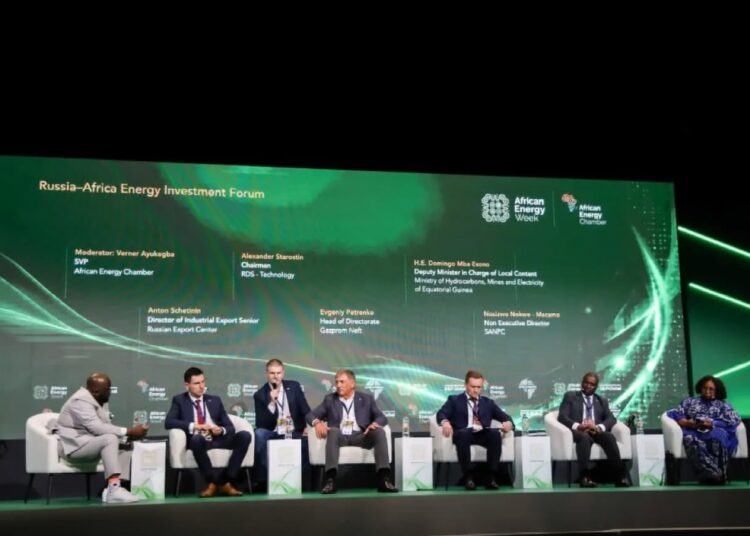
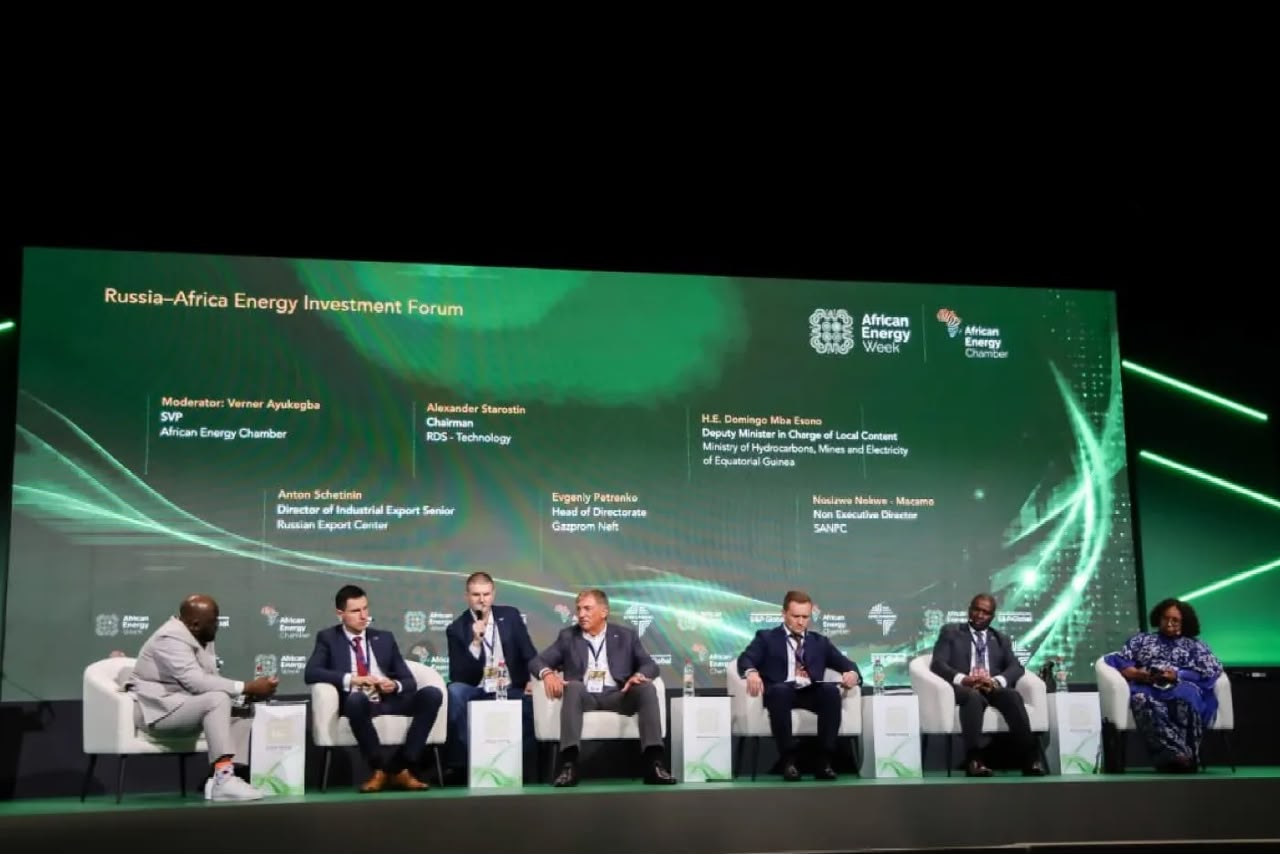
The plans were outlined at the Russia-Africa Energy Investment Forum during African Energy Week (AEW) 2026 in Cape Town, where Russian companies presented opportunities spanning oilfield services, production optimisation, industrial infrastructure and technology transfer.
For Ghana, the developments come as policymakers seek to reverse declining crude oil production, attract upstream investment and expand the capacity of indigenous companies.
Russian participation could create opportunities for technical cooperation and local service providers, but the commercial value will depend on whether proposed partnerships translate into actual projects, skills development and sustained participation by Ghanaian businesses.
Alexander Starostin, Chairman of RDS Group, said the company was considering a network designed to train African companies and entrepreneurs, with several potential projects already under discussion.
“We are looking at creating a network of service companies that will train African companies and entrepreneurs. We have already discussed a few projects and we believe we are positioned for success,”
The proposal suggests a model that could extend beyond the direct supply of equipment or technical services. If implemented through substantive local partnerships, such a network could help African businesses develop the skills and capabilities needed to compete for a wider range of energy-sector contracts.
However, the company has not identified Ghana as a confirmed location for the planned network, and the discussions described at the forum do not amount to a commitment to establish operations in the country.
Mature Fields Could Create Opportunities for Ghana
Gazprom Neft is targeting mature onshore oilfields across Africa, focusing on brownfield assets where operational improvements could increase production.
The company said it had established a dedicated team focused on the continent and was pursuing long-term partnerships tailored to individual markets.

Evgeniy Petrenko, Head for International Business at Gazprom Neft, outlined the company’s approach:
“Our strategy is onshore mature assets. We are looking for brownfield assets, bringing operational efficiency to increase production and breathe new life into these fields.”
Petrenko added that the company viewed Africa as a long-term market rather than a short-term opportunity, emphasising the need to understand local conditions and build lasting commercial relationships.
“We don’t want to sell solutions to Africa; we want to develop solutions with Africa,” he said.
The focus on mature assets is relevant to Ghana, where production from established offshore fields has declined and operators face the challenge of improving recovery while sustaining investment.
Although Gazprom Neft’s stated strategy centres on onshore assets, its emphasis on operational efficiency highlights a broader area of potential interest for Ghana’s upstream industry.
Improved reservoir management, well intervention, equipment maintenance and production optimisation can help extend the productive life of oilfields.
Yet the commercial case depends on the geology, remaining recoverable resources, infrastructure, operating costs and contractual arrangements of each asset.
Ghana should therefore distinguish between general interest in African brownfield opportunities and any specific proposal involving its petroleum fields. No Ghanaian asset, licence or transaction was identified in the announcement.
Local Content Will Determine the Domestic Value
The prospect of foreign service companies entering African markets raises a central question for Ghana: will their presence strengthen indigenous capacity or simply create another channel for importing services and expertise?
Ghana already has a regulatory framework designed to promote local participation in upstream petroleum activities.
The Petroleum (Local Content and Local Participation) Regulations, 2013 (L.I. 2204), as amended by L.I. 2435, provide mechanisms intended to deepen Ghanaian participation, including strategic alliances and channel partnerships.
The Petroleum Commission has also identified technical service areas in which indigenous companies can build capacity, including equipment maintenance and repair, wellbore clean-up, slickline and wireline services, environmental services, calibration, engineering and fabrication.
That creates a possible point of alignment with RDS Group’s proposed service-company network. If the company pursues partnerships in Ghana, cooperation with qualified indigenous firms could help transfer technical knowledge, develop specialist skills and expand the range of services delivered locally.
But training alone would not be enough. Ghanaian companies would need meaningful opportunities to participate in contracts, access suitable technology, meet industry qualification requirements and build a record of performance that allows them to compete for more complex work.
The Petroleum Commission has stressed the importance of protecting and strengthening indigenous participation in the upstream sector. Its local-content framework is therefore relevant to any future engagement with Russian service providers.
For Ghana, the objective should be to ensure that foreign technical expertise complements domestic capacity rather than displacing companies that have invested in developing their own capabilities.
Russian Export Support Could Expand Commercial Links
Anton Schetinin, Director of Industrial Export Senior at the Russian Export Center, said the organisation was seeking to connect Russian technology suppliers with African institutions and businesses.
He identified limited awareness of Russian industrial technologies as a challenge and said the centre had tools available to support companies pursuing export and investment opportunities.
“African regions are one of our main priorities which is why we’re trying to develop our relationships with local institutions,” Schetinin said.
He added: “We have the tools ready to support Russian companies that are willing to invest.”
The Russian delegation also included KSI and AquaRhyme, which presented infrastructure projects and sought opportunities in African markets.
These efforts indicate an attempt to build commercial relationships beyond individual petroleum contracts.
For Ghana, potential areas of interest could include industrial equipment, oilfield services and infrastructure solutions, provided that proposed technologies meet local technical requirements and offer competitive lifecycle costs.
However, the forum announcement did not identify specific Ghanaian counterparties, project values or financing agreements involving these companies.
Their participation should therefore be understood as part of a broader effort to explore opportunities, not evidence that investment has already been secured.
Energy Security and Industrial Development Shape the Opportunity
South Africa’s experience also featured in the discussions. Nosizwe Nokwe-Macamo, a non-executive director of the South African National Petroleum Company, highlighted the country’s refining-capacity constraints and the importance of securing reliable fuel supplies.

“Given the inefficient refining capacity that we have in this country and the fact that we require security of supply, we need all the help we can get,” she said.
She added that South Africa would be open to discussions with companies willing to support its needs.
Although the comments concerned South Africa rather than Ghana, they illustrate the wider commercial pressures facing African energy systems: governments must secure reliable supplies while developing domestic industrial capacity and reducing vulnerability to disruptions.
For Ghana, those priorities include sustaining crude production, improving the reliability of petroleum infrastructure and ensuring that investments in refining and associated services are commercially viable.
Any prospective Russian partnership would need to be assessed against these priorities, rather than accepted solely because it offers an alternative source of technology or capital.
The forum also featured Equatorial Guinea’s plans to strengthen its mining framework and attract investment beyond its established hydrocarbons industry, demonstrating the breadth of the commercial opportunities being presented to Russian companies across Africa.
Commercial Interest Must Translate Into Deliverable Projects
At the government level, Roman Ambarov, Russia’s ambassador to South Africa and Lesotho, said Russia wanted practical energy partnerships that deliver long-term benefits.
“Russia believes that energy cooperation must be practical, mutual and bring long-term beneficiation,” Ambarov said.
He added: “Our message to our African partners is simple: tell us where there is real economic need and we are ready to discuss a practical solution.”
For Ghana, the message aligns with the need to attract investment that addresses identifiable industry requirements, whether through field optimisation, technical services, equipment supply or training.
The next step would be to establish whether Russian companies intend to pursue specific opportunities in Ghana, which local businesses or institutions they might partner with, and how proposed arrangements would meet the country’s regulatory and local-content requirements.
Until such details emerge, the plans remain prospective. Nevertheless, the discussions highlight a wider contest for commercial positions in Africa’s energy industry, with service companies and technology providers seeking long-term relationships rather than isolated contracts.
Ghana could benefit if that competition brings credible technical solutions, stronger local enterprises and improved production performance.
The decisive measure, however, will not be the number of foreign companies expressing interest in the continent, but the extent to which their projects deliver investment, technical capability and lasting economic value within Ghana.
READ ALSO: Minority Submits A Petition To OSP Over Visa Scandal