Africa’s oil demand is projected to rise by about 88% by 2050, reaching 9.2 million barrels per day from 4.9 million barrels per day in 2025, as population growth, urbanisation and industrial expansion reshape the continent’s energy requirements, according to the Organization of the Petroleum Exporting Countries (OPEC).
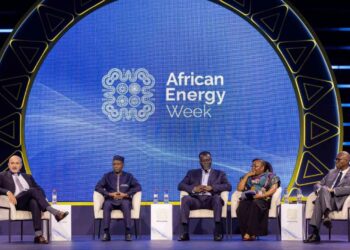
The forecast, presented by Dr Abderrezak Benyoucef, Head of OPEC’s Energy Studies Department, at African Energy Week (AEW) 2026 in Cape Town, points to a growing market for crude oil and petroleum products.
It also raises questions about whether Africa can expand production, refining and distribution capacity quickly enough to meet demand while reducing its exposure to supply disruptions and imported fuel costs.
OPEC’s 20th edition of the World Oil Outlook, released in 2026, projects global primary energy demand to increase by approximately 23%, from 312 million barrels of oil equivalent per day to nearly 383 million barrels of oil equivalent per day by 2050. Developing economies, including those in Africa, are expected to account for almost all the growth.
Africa’s population is projected to increase from just over 1.5 billion in 2025 to nearly 2.5 billion by 2050, creating additional demand for transport, industrial activity, electricity and other energy services.
For Ghana, the outlook presents a dual challenge: how to benefit from rising petroleum demand through domestic production and value addition, while managing the economic and energy-security risks associated with continued reliance on oil.
Transport Expected To Drive Most Of Africa’s Oil Growth
Transport is expected to account for nearly 60% of Africa’s projected increase in oil demand between 2025 and 2050, with petrochemicals, other industrial activities and electricity generation contributing to the remainder.
The projection reflects the relationship between population growth, expanding cities, rising mobility needs and industrial development. As more people and goods move across the continent, demand for petrol, diesel, aviation fuel and other petroleum products is likely to increase.
The scale of that growth will put pressure on governments to ensure that supply chains, storage facilities, refineries and distribution networks can accommodate expanding consumption.
OPEC expects African natural gas demand to double over the same period. Demand for renewables, including hydro, wind, solar and biomass, is also projected to increase, with biomass accounting for much of the anticipated growth. Coal demand is expected to rise only marginally, while nuclear energy is projected to remain limited.
The forecast therefore points to an expanding energy system in which oil remains important even as other sources grow.
For policymakers, the challenge will be to provide sufficient energy to support economic development without allowing rising demand to deepen supply vulnerabilities or undermine longer-term emissions objectives.
Ghana Faces A Growing Demand And Refining Challenge
Ghana is already exposed to many of the pressures highlighted in OPEC’s outlook. Petroleum products are central to road transport, industry and commercial activity, making reliable fuel supplies important to the cost of doing business and household expenditure.
Energy Commission data show that petroleum products accounted for 55.9% of Ghana’s total final energy consumption in 2024. Transport was the largest petroleum-consuming sector, reinforcing the importance of fuel availability and pricing to the wider economy.
Rising demand could create opportunities for Ghana’s petroleum industry, including refineries, storage operators, fuel distributors and companies providing engineering and logistics services.
However, those opportunities will depend on whether domestic infrastructure can expand efficiently and compete with imported products.
The government has been pursuing greater domestic refining capacity through investments at the Tema Oil Refinery (TOR) and Sentuo Oil Refinery.
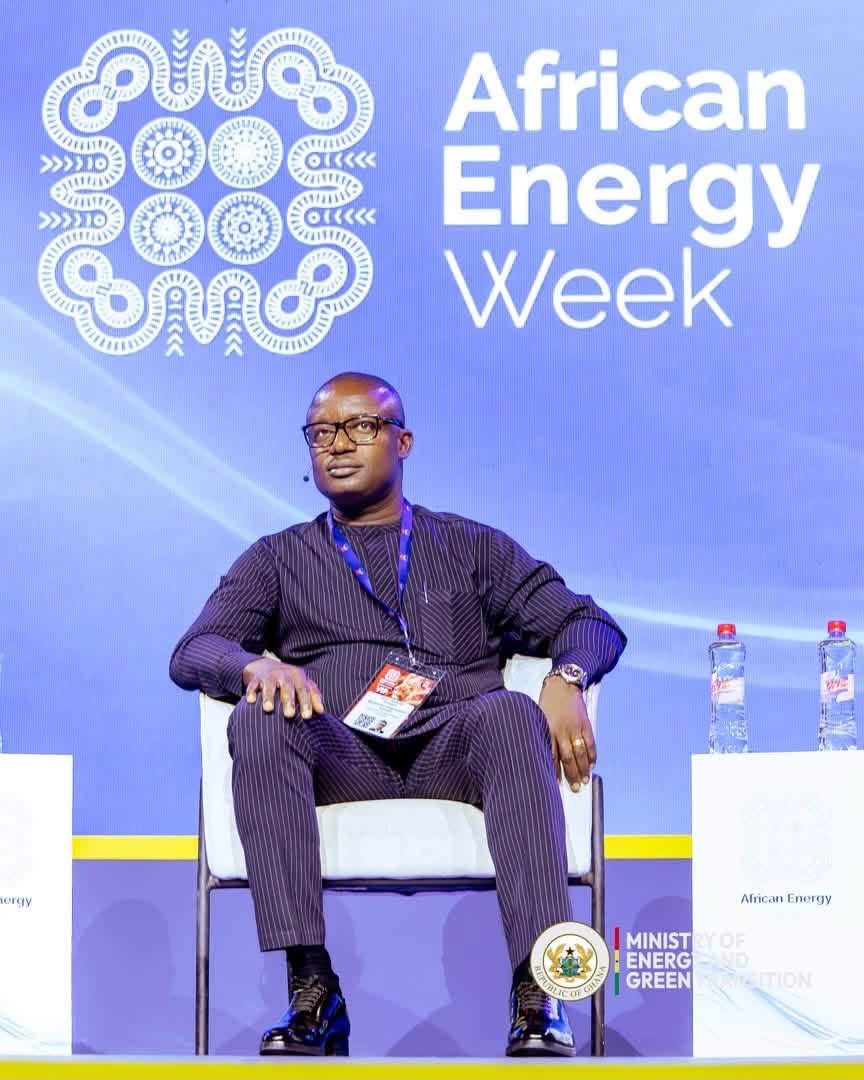
In July 2026, the Energy Minister said expansion projects at the two facilities were expected to enable them to meet about 70% of Ghana’s domestic refined petroleum-product demand when completed.
That ambition could reduce reliance on imported finished fuels, retain more value within the domestic economy and improve supply resilience.
But expanded refining capacity alone will not guarantee lower fuel prices, particularly when crude oil, financing, freight, exchange-rate movements and other input costs remain important determinants of domestic prices.
The broader implication is that Ghana must plan for both rising consumption and the economics of supplying it.
Refinery expansion will need to be matched by reliable crude supply, efficient operations, adequate storage and distribution infrastructure, and a market capable of absorbing output competitively.
Rising Consumption Could Strengthen Ghana’s Upstream Case
The projected expansion in African oil demand also has implications for Ghana’s upstream petroleum industry, which has been working to reverse declining crude production.
A larger regional market could support demand for African crude and petroleum products, potentially improving commercial opportunities for producers and investors.
Yet the forecast should not be interpreted as a guarantee that Ghanaian production will increase or that domestic crude will automatically find more profitable markets.
Ghana will still need investment in exploration, field development and production maintenance to sustain output. It must also assess how much of its crude should be exported, processed domestically or used to support other parts of the energy value chain.
The government announced approximately US$3.5 billion in upstream investment commitments in 2026, including commitments associated with development of the Jubilee and TEN fields and the Offshore Cape Three Points project.
These plans could support production and gas supply, but their impact will depend on the conversion of commitments into completed work programmes and actual output.
The demand outlook strengthens the case for coordinated planning across production, refining and distribution. However, a larger market does not remove the need for commercially viable projects, competitive fiscal terms and effective regulation.
Global Electricity Demand Adds To Investment Pressures
OPEC’s outlook also projects a substantial expansion in global electricity generation, from approximately 32,000 terawatt-hours in 2025 to around 59,500 terawatt-hours by 2050.
The growth is expected to be supported by residential and commercial consumption, industry, transport and data centres. Wind and solar are projected to record the largest increase in electricity generation, rising from approximately 5,400 terawatt-hours in 2025 to around 26,000 terawatt-hours by 2050.
That trend is significant for African countries seeking to expand electricity access and industrial capacity. While the oil-demand forecast highlights the continuing role of petroleum, the electricity projections underline the need for investment across multiple energy sources and technologies.
OPEC Secretary-General Haitham Al Ghais has emphasised the scale of the investment challenge in the organisation’s outlook:
“The scale of humanity’s energy needs requires sustained investment today across all energies and technologies.”
For Ghana, the implication is that petroleum-sector planning cannot be separated from the wider task of ensuring affordable and reliable energy.
Oil will remain important to transport and industry, while electricity demand will require sufficient generation, transmission and distribution capacity.
Investment decisions must account for these interconnected needs rather than treating each segment as an isolated market.
Demand Growth Does Not Guarantee Energy Security
Africa’s projected oil-demand expansion could attract investment into production, refining and petroleum infrastructure.
But it also presents risks if consumption grows faster than supply capacity, leaving countries more exposed to imported fuels and external market shocks.
For Ghana, the central question is not simply whether petroleum demand will rise, but whether the country can capture more value from that demand while protecting consumers and strengthening supply security.

That will require efficient refineries, dependable crude supplies, investment in infrastructure and a clear strategy for balancing domestic processing with exports and imports.
It will also require policies that recognise the long-term uncertainty surrounding energy demand, technology and the pace of the transition towards lower-emissions systems.
OPEC’s forecast offers a long-term view of the market that African governments and companies will need to prepare for. But the projected growth remains an outlook, not a certainty.
Ghana’s opportunity lies in converting expanding regional demand into investment, jobs and greater domestic value addition.
Whether it achieves that will depend on the competitiveness of its petroleum industry, the reliability of its infrastructure and its ability to plan for a future in which oil demand grows alongside electricity consumption and alternative energy sources.
READ ALSO: Ghana’s Economy Surges 7.4% as Services Sector Leads Growth