
The Africa Sustainable Energy Centre (ASEC) has called for the complete removal of Ghana’s GH¢1 per litre fuel levy, arguing that immediate relief at the pump must be accompanied by deeper reforms to reduce the country’s exposure to volatile petroleum prices.
In a statement issued on October 1, 2026, the energy policy organisation said scrapping the levy could provide consumers with some immediate relief, but cautioned that the measure alone would not address the structural weaknesses behind Ghana’s vulnerability to changes in petroleum prices.
ASEC’s position places the current fuel-price debate within a broader question of energy security: how can Ghana reduce its dependence on imported refined petroleum products while creating a downstream market that delivers competitive prices and retains greater value domestically?
The organisation has therefore proposed a package of reforms spanning petroleum pricing, domestic refining, strategic fuel storage, upstream fiscal arrangements, gas infrastructure and the transition towards electric mobility and renewable energy.
Competition At The Pump Remains Central
One of ASEC’s immediate concerns is the operation of Ghana’s petroleum pricing system, particularly the extent to which Oil Marketing Companies (OMCs) can compete on price.
The organisation argues that where an OMC can operate efficiently enough to sell below the prescribed price floor while meeting product-quality, safety, tax and other regulatory obligations, consumers should be allowed to benefit from those efficiencies.
ASEC believes the regulatory framework should distinguish between legitimate price competition and practices that could undermine market standards.
“Competition should ultimately work in the interest of the Ghanaian consumer,” ASEC said.
The argument effectively shifts part of the fuel-price discussion from the level of international petroleum prices to the structure of Ghana’s domestic market.
Even where international prices remain outside Ghana’s control, the extent to which domestic regulation allows efficient businesses to pass savings through to consumers can influence the final price paid at the pump.
ASEC is consequently urging the National Petroleum Authority (NPA) to ensure that the pricing framework does not unnecessarily restrict OMCs that are capable of offering lower prices while maintaining the required standards.
Import Dependence Keeps Ghana Exposed
Beyond pricing regulation, ASEC identifies Ghana’s reliance on imported refined petroleum products as a more fundamental vulnerability.
The organisation argues that repeated exposure to international refined-product prices makes domestic consumers susceptible to movements in global markets, leaving limited room for Ghana to insulate households and businesses from external price shocks.
Its proposed response is greater investment in domestic refining capacity.
“Ghana cannot sustainably address petroleum price volatility while remaining heavily dependent on imported refined products,” ASEC stated.
The call comes with a focus not simply on having refineries, but on developing capacity that is efficient, reliable and commercially sustainable.
For ASEC, that means strengthening existing refining infrastructure while also creating conditions capable of attracting additional investment into domestic processing.
The broader implication is that Ghana’s petroleum strategy would need to move beyond securing supplies from international markets towards increasing the country’s ability to process crude domestically.
That could potentially create a stronger connection between Ghana’s upstream petroleum resources and its downstream fuel market, although the organisation’s statement does not quantify the additional refining capacity it considers necessary.
Storage Seen As A Buffer Against External Shocks
ASEC also wants Ghana to expand its strategic petroleum storage capacity, placing particular emphasis on the role of the Bulk Oil Storage and Transportation Company (BOST).
The organisation argues that larger strategic reserves could give Ghana greater flexibility when international markets become volatile or supply disruptions occur.
Strategic storage, in this context, is not simply a question of having additional tanks. It forms part of a wider energy-security system designed to give the country greater room to manage periods of supply stress.
ASEC is therefore calling for greater support and appropriate incentives for BOST to expand its storage infrastructure.
The organisation’s position reflects a broader distinction between price control and supply resilience.
Government may have limited ability to determine international petroleum prices, but stronger storage capacity could improve the country’s ability to manage short-term disruptions and reduce the vulnerability created by relying heavily on continuous external supply.
ASEC argues that strategic petroleum storage should consequently be treated as a long-term component of Ghana’s energy-security architecture rather than solely as commercial infrastructure.
Petroleum Revenue And National Value
The organisation’s recommendations also extend upstream, with ASEC calling for a review of Ghana’s petroleum fiscal arrangements.
It wants the country to examine royalty structures and related agreements to determine whether Ghana is receiving an appropriate share of the value generated from its petroleum resources.

However, ASEC also recognises the need to balance this objective against Ghana’s ability to attract investment into the petroleum sector.
“Any review should balance Ghana’s need to remain an attractive and competitive investment destination with the equally important responsibility of ensuring that the country’s petroleum resources deliver meaningful and sustainable benefits to its citizens.”
ASEC
The proposed approach is therefore not framed simply around increasing government revenue. ASEC says any potential renegotiation or improvement in petroleum terms should be undertaken transparently and with Ghana’s long-term interests in view.
This introduces another dimension to the fuel-price question.
The price consumers ultimately pay for petroleum products is influenced by factors extending beyond the retail market, including the country’s relationship with upstream resource development and the value Ghana captures from its own petroleum resources.
ASEC’s argument is that strengthening that value capture should form part of a broader effort to improve the country’s energy position.
Gas Infrastructure Requires Greater Transparency
ASEC has separately raised concerns about the level of public information surrounding Ghana’s proposed second gas processing plant.
The organisation says the strategic importance and potential financial implications of the project make transparency particularly important.
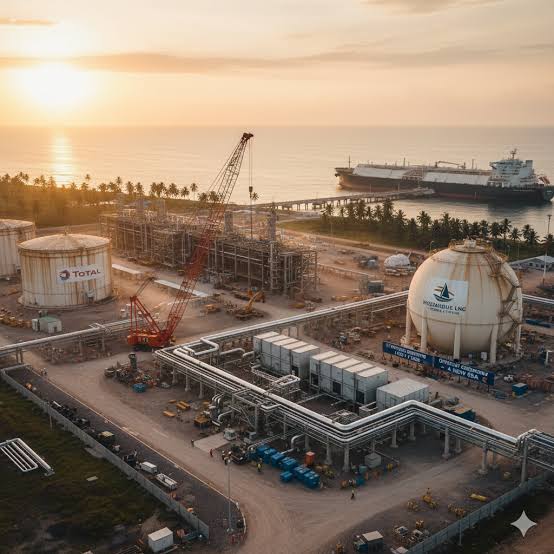
It is calling for information on the project’s financing arrangements, ownership structure, procurement process, implementation schedule, expected processing capacity and projected economic benefits.
The demand reflects the organisation’s broader emphasis on ensuring that major energy infrastructure decisions are assessed not only according to their strategic importance but also according to their financial and economic value.
ASEC said:
“Major national energy infrastructure must be developed with transparency, accountability and a clear demonstration of value for money.”
For Ghana’s energy sector, the issue extends beyond the gas-processing facility itself. Infrastructure decisions can create long-term financial commitments, making the commercial structure of major projects important to their eventual contribution to energy security.
ASEC’s call for greater disclosure therefore places project governance alongside physical infrastructure as part of the country’s energy-security strategy.
Fuel Prices Cannot Be Addressed By Oil Alone
ASEC’s final argument is that Ghana’s response to high petroleum prices should ultimately extend beyond the petroleum sector.
The organisation is calling for clear roadmaps for electric vehicles and renewable energy, pointing to the need to reduce the economy’s dependence on petroleum over the longer term.
That approach would shift the conversation from managing the price of petroleum to reducing the amount of petroleum required by households, businesses and the transport sector.
Electric mobility could gradually alter transport fuel demand, while renewable energy could reduce dependence on conventional fuels in parts of the wider energy system. However, the statement does not provide specific targets or timelines for the proposed EV and renewable-energy roadmaps.
The significance of the recommendation lies in its longer-term logic: if Ghana remains structurally dependent on petroleum for transport and imported refined products for domestic consumption, external price movements will continue to have an important influence on consumers and businesses.
ASEC’s proposed measures consequently operate on two timelines.
In the immediate term, the organisation wants the GH¢1 per litre levy removed and greater room for legitimate competition among OMCs.
Over the longer term, it is calling for greater domestic refining capacity, expanded strategic storage, stronger value capture from petroleum resources, greater transparency around energy infrastructure and a clearer shift towards electric mobility and renewable energy.
The common thread is reducing exposure.
“Competition should ultimately work in the interest of the Ghanaian consumer.”
For ASEC, however, protecting consumers from rising fuel prices cannot depend on one intervention at the pump. The organisation’s proposals point instead towards a restructuring of the energy system itself, one that gives Ghana greater control over supply, strengthens domestic processing and storage, improves the value derived from its petroleum resources and gradually reduces dependence on petroleum.
The challenge will be translating those recommendations into commercially viable investments and policies that can deliver measurable benefits without creating new financial or regulatory pressures.
For a country exposed to movements in international petroleum markets, ASEC’s argument is ultimately that short-term price relief and long-term energy resilience need to be pursued together.
READ ALSO: Health Minister Orders Deployment of 40 Health Workers to Weija Children’s Hospital