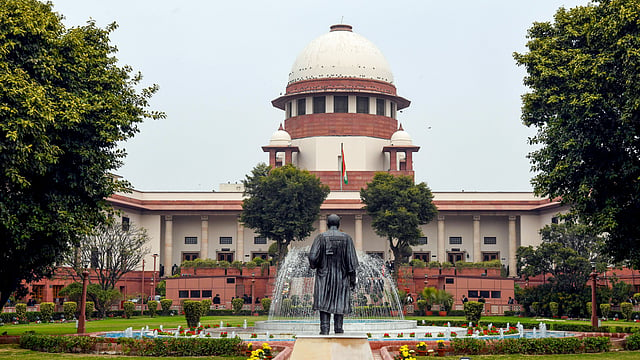
India’s Supreme Court has demanded answers from the government and the Election Commission of India (ECI) over a controversial voter-roll revision that has resulted in about 130 million names being excluded from draft electoral rolls and triggered protests across the country.
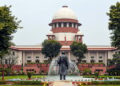
The court issued notices to Prime Minister Narendra Modi’s government, the ECI and Chief Election Commissioner Gyanesh Kumar, seeking clear responses to petitions challenging the manner in which the Special Intensive Revision (SIR) of electoral rolls has been conducted. The court did not immediately suspend Kumar or halt the exercise.
The petitions have raised questions over the credibility of the election commission and called for an independent examination of decisions taken during the voter-verification process. The court said that it expected the authorities to respond in a “clear, transparent manner,” with another hearing scheduled for next week.
The SIR exercise began in Bihar in 2025 before being expanded across much of India. The Election Commission has said that the process is intended to remove duplicate, deceased and otherwise ineligible voters while ensuring that legitimate voters remain on the rolls.
However, the scale of the deletions has generated widespread concern, with more than 13 crore names struck from draft electoral rolls across 30 states and Union territories, according to an investigation by an Indian news agency.
Opposition parties, civil society groups and activists have accused the election commission of potentially disenfranchising eligible voters and have questioned whether the process is being applied fairly. The allegations have been rejected by the ECI and the ruling Bharatiya Janata Party (BJP), which maintain that the revision is intended to improve the accuracy of electoral rolls.
Concerns intensified after the news agency reported that two of the ECI’s three commissioners had formally raised objections at least 14 times over a 10-month period regarding aspects of the voter-roll revision, registration procedures and the commission’s digital systems. The commission has said differences of opinion are normal within the institution.
Opposition parties have nevertheless demanded Kumar’s resignation, accusing him of presiding over a process that they say threatens electoral integrity. Some opposition leaders have also alleged that the exercise disproportionately affects minority communities, particularly Muslims, although the ECI and BJP deny that the revision is politically motivated.
The controversy has also brought renewed scrutiny to Kumar’s appointment. He was selected as Chief Election Commissioner by a panel headed by Prime Minister Modi, a fact opposition leaders have cited while questioning the commission’s independence.
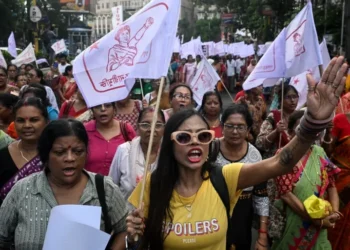
The Supreme Court’s intervention followed days of demonstrations in several parts of India. Opposition parties, student organisations and the youth-led Cockroach Janta Party (CJP) have mobilised supporters around demands for greater transparency and Kumar’s resignation.
The CJP, led by Abhijeet Dipke, gained national attention earlier this year after leading protests over examination-related controversies that contributed to the resignation of India’s Education Minister. The movement has now turned its focus to the electoral-roll controversy, with demonstrations held in Mumbai and Delhi and further protests planned in other cities.
In Delhi, authorities detained hundreds of protesters during demonstrations against the election commission. Police also restricted access to protest locations and deployed large numbers of officers around central areas of the capital. Reports of the detentions have intensified criticism from opposition groups and civil society organisations.
The demonstrations have also generated allegations of misconduct by police officers. Three women journalists accused Delhi Police personnel of sexual harassment during the October 3 protests. Delhi Police said the complaints had been transferred to its Crime Branch for investigation. The allegations remain unproven.
The dispute has consequently expanded beyond the question of individual voter deletions into a wider debate over the independence of India’s election machinery and access to the ballot.
Cockroach Janta Party Leads Fresh Protests Against Election Chief
The Cockroach Janta Party has emerged as one of the most visible groups demanding Kumar’s resignation, joining opposition parties and student organisations in protests against the SIR exercise.
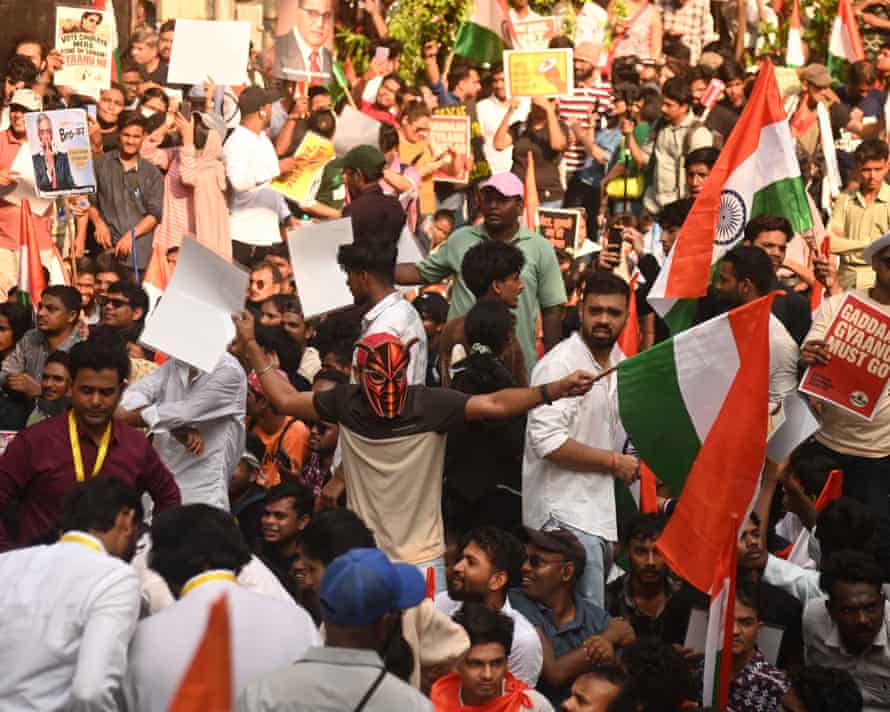
Hundreds of CJP supporters demonstrated in Mumbai on Friday, with protesters accusing the election commission of removing legitimate voters from electoral rolls. The group has said its campaign will continue across India until Kumar resigns.
The movement has announced further demonstrations in cities including Goa, Kolkata and Bengaluru, while opposition lawmakers have also planned a march to the Election Commission’s offices in Delhi.
The protests have added to pressure on the ECI as the Supreme Court considers the petitions challenging the voter-roll revision. With the court now seeking responses from the government and election authorities, the dispute over the SIR process is set to remain a major political and constitutional issue in India.