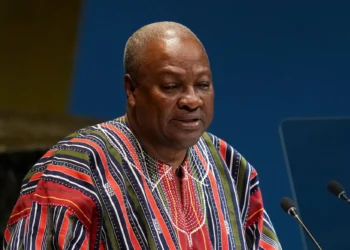
The Minister for Education, Hon. Haruna Iddrisu, opened a stakeholder dialogue on the implementation of the No-Fees-Stress Initiative, a flagship intervention introduced by President John Dramani Mahama under his Resetting Ghana Agenda to ease the financial burden of tertiary education on students and their families.
The Initiative seeks to progressively remove the cost barrier that has long accompanied admission into tertiary institutions, ensuring that no qualified student is shut out of higher education for lack of money.
Opening the engagement, Hon. Iddrisu spoke of the mixed emotions that admission to a tertiary institution has historically produced in Ghanaian homes. Families celebrate the academic achievement of a child, he noted, but are soon confronted with the difficult matter of how the fees will be paid.
The dialogue brings together government, tertiary institutions, students, parents, student financing institutions and development partners to assess progress, examine challenges and strengthen the interventions where necessary.
From manifesto to action
“For many Ghanaian families, gaining admission to a tertiary institution has historically brought both joy and anxiety.”
Minister for Education, Hon. Haruna Iddrisu

It is this financial barrier, the Minister said, that the No-Fees-Stress Initiative is designed to dismantle step by step, so that the cost of tertiary education does not become an insurmountable obstacle to the aspirations of young Ghanaians.
Mr Iddrisu recalled that President Mahama made the commitment in the 2024 NDC Resetting Ghana Manifesto, where he pledged to reduce the financial burden of tertiary education on students and their families.
That promise was translated into policy on July 4, 2025, with the formal launch of the No-Fees-Stress Initiative.
Four interventions under one initiative
According to the Minister, the Initiative combines four complementary interventions. The first is the No Academic Fees Policy for first-year students, which is intended to remove the immediate burden of academic fees for newly admitted students.
The second is Free Tertiary Education for Persons with Disabilities, which seeks to ensure that disability does not stand in the way of access to higher education.
The third is the Students Loan Plus, which provides additional financial support to help students meet the broader costs associated with tertiary education beyond academic fees.
Purpose of the dialogue
The fourth is the enhanced Traditional Student Loan, which carries increased loan amounts and significantly reduced interest rates, with the aim of making student financing more accessible and affordable.
Together, the Minister explained, the measures are meant to address both the entry cost of tertiary education, and the wider expenses students face as they progress through their studies.
Mr Iddrisu described the stakeholder dialogue as an important opportunity to take stock of how the Initiative is being implemented on the ground.
He said the engagement would allow government to listen directly to the experiences of students and institutions, identify the challenges encountered so far, and make adjustments where necessary.

By bringing implementers and beneficiaries into the same room, the Ministry hopes to ensure that the interventions respond to real needs and are not shaped solely from the top.
A shared responsibility
The Minister stressed that the Initiative cannot succeed through government effort alone. Its success, he said, will depend on the collective commitment of government, tertiary institutions, students, parents, student financing institutions, development partners and other stakeholders.
He called on all parties to keep their eyes on the central goal of the programme.
“Our shared objective must remain clear: to ensure that no Ghanaian student is denied the opportunity to pursue tertiary education simply because of financial constraints.”
Minister for Education, Hon. Haruna Iddrisu
Significance of the Initiative
The No-Fees-Stress Initiative is one of the government’s most visible social interventions in education. Cost has been among the most persistent obstacles to tertiary access in Ghana, with many qualified applicants deferring admission or abandoning their studies because they could not raise fees and related expenses.

By targeting first-year students, persons with disabilities and those who depend on loans, the Initiative addresses several of the points at which financial pressure tends to bite hardest. The dialogue is expected to provide an early picture of how well the measures are working and where improvements are needed.
Stakeholders are expected to use the engagement to raise implementation concerns, which the Ministry says will inform how the Initiative is strengthened in the months ahead.
READ MORE: Government to Invest GH¢500 Million in Health Sector