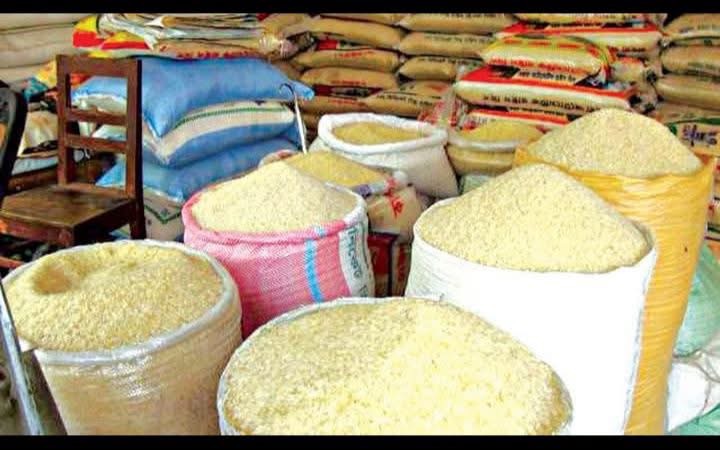
Ghana is targeting full rice self-sufficiency by 2028 as the government steps up efforts to increase domestic production, reduce import dependence and retain more foreign exchange within the economy, Minister for Food and Agriculture Eric Opoku has announced.
Hon. Opoku says the government is using the Feed Ghana Programme to drive a major expansion of the country’s rice value chain, with support from development partners, including an US$18.8 million grant from the African Development Bank (AfDB) under the West Africa Resilient Rice Value Chain Development Project (REWARD).
The intervention is expected to increase rice yields from 3.5 tonnes to 4.5 tonnes per hectare, develop 3,200 hectares in the Northern Savannah Ecological Zone and provide specialised agricultural machinery to more than 20,000 smallholder farmers across nine areas.
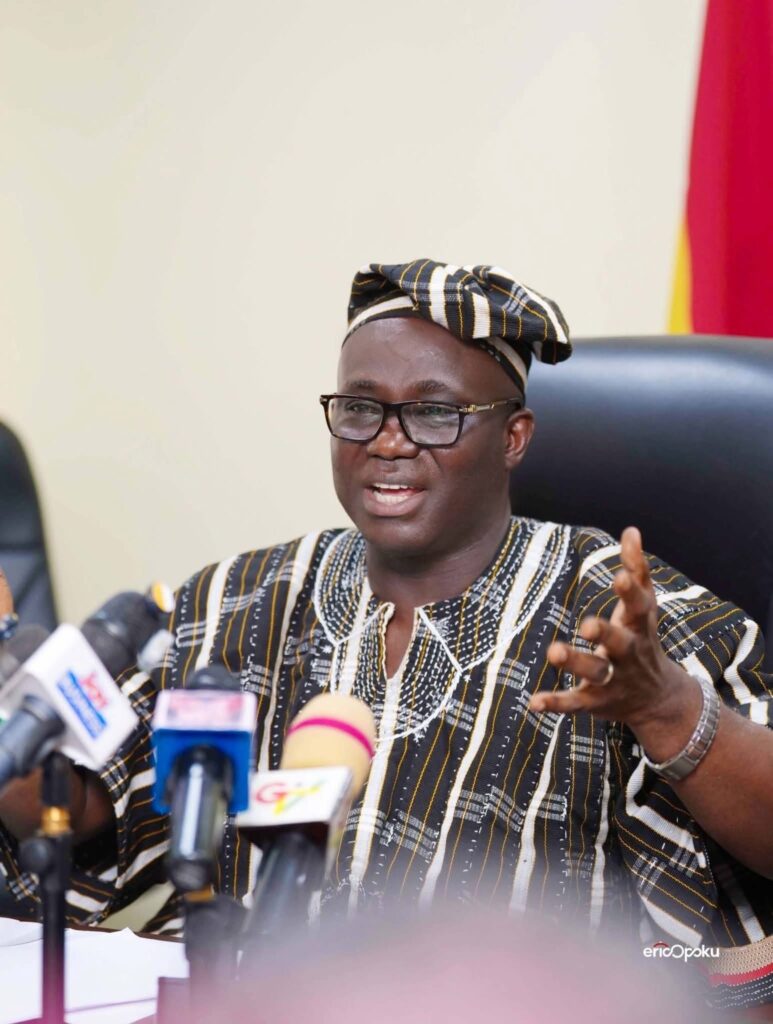
“Rice is now Ghana’s second most important area after maize. Population growth, urbanization, and changing consumer preferences have pushed demand well ahead of what we produce.”
Minister for Food and Agriculture, Hon. Eric Opoku
Ghana currently produces only about 56 percent of the rice it consumes, leaving approximately 44 percent of national demand to be met through imports. The situation has created a substantial foreign exchange burden for the country while limiting the market opportunities available to local farmers, processors and agribusinesses.
The Minister says milled rice production increases from about 650,000 tonnes in 2024 to 960,000 tonnes in 2025, reflecting growth in domestic production. However, he maintains that the pace of production must accelerate if Ghana is to close the supply gap and eliminate its reliance on imported rice.
Under the REWARD project, government is targeting total paddy rice production of 3.31 million metric tonnes by 2028.
The project will cover Tamale Metropolitan, Mion, Savelugu, East Mamprusi, West Gonja, Bawku West, Wa Municipal, Sissala East and Nandom, creating opportunities for farmers and businesses operating across the production, mechanisation, processing, storage and distribution segments of the value chain.
“REWARD is Feed Ghana in action for rice. It is a deliberate intervention in the rice value chain to raise local output and reduce the national import bill.”
Minister for Food and Agriculture, Hon. Eric Opoku
Making Rice Production Viable
A major component of the programme is mechanisation, which government considers essential to increasing productivity and making rice production more commercially viable.
More than 20,000 smallholder farmers are expected to benefit from specialised equipment, including rotary tillers, seed drills, mini crawler combine harvesters, rice transplanters and boom sprayers.
The intervention is designed to enable farmers to cultivate larger areas, reduce production costs, improve harvesting efficiency and minimise losses that occur when rice is harvested manually or left in the field for extended periods.
The government is also investing in processing capacity, with 10 rice processing centres expected to receive modern milling and parboiling equipment.
The move is significant for Ghana’s rice industry because increased production alone will not deliver self-sufficiency unless farmers have access to efficient processing, storage and markets.
Modern processing facilities are expected to improve the quality and marketability of locally produced rice, allowing Ghanaian processors to compete more effectively with imported brands.
The government also intends to create a stronger institutional market for local rice by supplying rice produced and processed in Ghana to public institutions, including schools and prisons.
Such procurement arrangements could provide farmers and processors with predictable demand while creating opportunities for aggregators, transporters, warehouse operators, millers and distributors.
An Annual Import Bill at About US$500 Million
The economic incentive behind the strategy is considerable. Ghana spends hundreds of millions of dollars each year importing rice, with the Ministry of Food and Agriculture estimating the annual import bill at about US$500 million.
“We are not banning imports, which would only hurt consumers. Instead, we are channelling the value of imports into local production and empowering our farmers.”
Minister for Food and Agriculture, Hon. Eric Opoku
The government is therefore considering measures that would link rice importation to investment in local production, requiring importers to establish verifiable partnerships with domestic producers as part of the import licensing framework.
The strategy is intended to redirect some of the commercial value currently associated with rice imports into Ghana’s domestic agricultural economy.
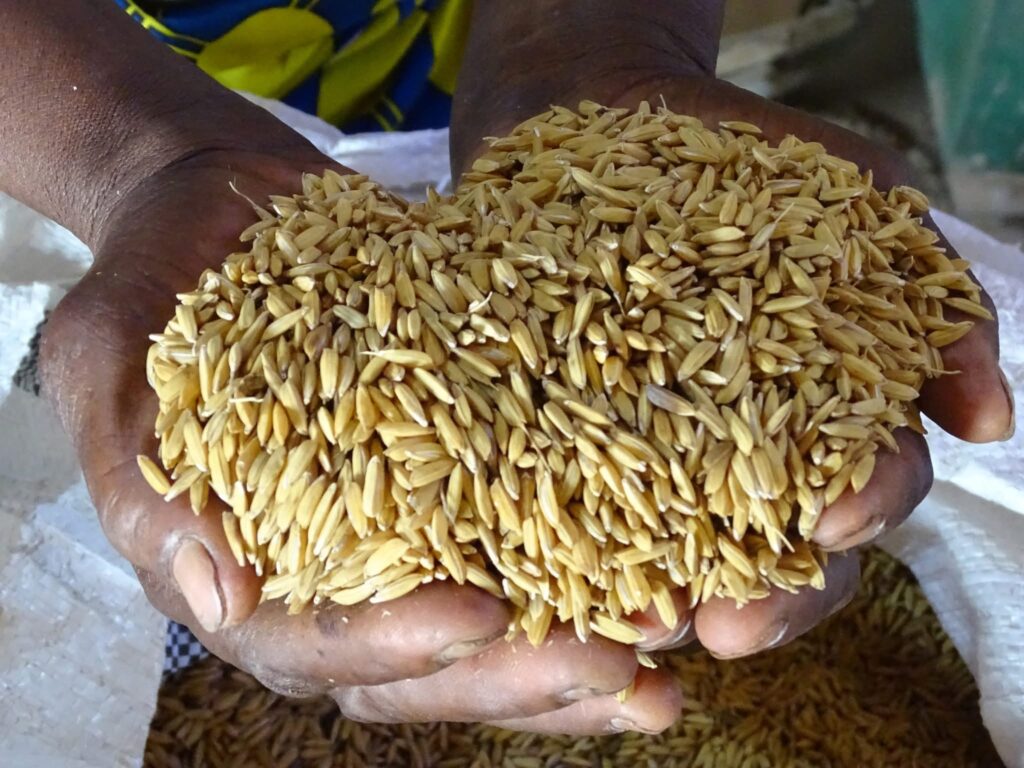
Additional support is coming from Japan through a US$2.49 million grant aimed at strengthening Ghana’s rice seed production capacity.
The Japanese grant, equivalent to approximately ¥394 million, is expected to provide combine harvesters, trucks, seed cleaning machines and other equipment to improve the production and handling of quality rice seed.
The equipment is expected to arrive in November 2026, accompanied by training for stakeholders within the rice value chain.
Complementing AfDB Backed REWARD
The support is expected to complement the AfDB Backed REWARD project by addressing some of the input and mechanisation constraints that affect rice productivity.
For the government, the combined investments represent an opportunity to build a more integrated rice industry in which farmers produce more, processors add value and local businesses capture a greater share of the economic activity generated by rice consumption.
“We have received 18.8 million dollars for the development of our rice value chain, and this is a grant. It’s not a loan. A grant from the African Development Bank.”
Minister for Food and Agriculture, Hon. Eric Opoku
The government’s approach reflects a broader shift towards treating agriculture as a commercial sector capable of generating jobs, reducing imports and strengthening Ghana’s economic resilience.
The AfDB Backed REWARD project is expected to be formally launched in November 2026 ahead of the 2027 production season.
However, achieving the 2028 target will depend on the effective implementation of the programme, particularly in irrigation, mechanisation, access to quality seed, financing, storage, processing and market linkages.
For Ghana’s rice industry, the opportunity is substantial. Reducing import dependence would not only save foreign exchange but also expand the domestic market for farmers, processors, machinery operators, logistics companies and other agribusinesses.
Hon.Opoku’s target therefore places the rice sector at the centre of Ghana’s food security and agricultural-industrialisation agenda, with the government betting on higher productivity and stronger value chain investment to move the country from rice importer to self sufficient producer by 2028.
READ ALSO:Majority Chief Whip: Disgruntled GBA Members Seek Change