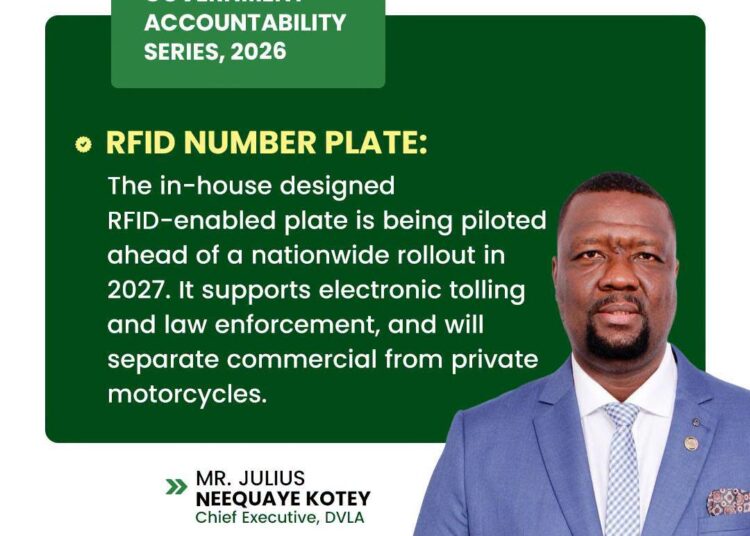
The Driver and Vehicle Licensing Authority (DVLA) has begun piloting radio-frequency identification (RFID)-enabled number plates ahead of a nationwide rollout scheduled for 2027, as part of efforts to modernise vehicle registration, strengthen security and improve road safety in Ghana.
DVLA Chief Executive Julius Neequaye Kotey disclosed the development in his Government Accountability Series report, outlining reforms that will integrate vehicle identification with electronic road tolling and traffic management systems, distinguish commercial motorcycles from private motorcycles, and introduce biometric international driving permits to improve verification.
“Ladies and gentlemen, we have completed the concept and designs for the new radio-frequency identification (RFID)-enabled number plates.”
DVLA Chief Executive Julius Neequaye Kotey
The initiatives form part of the Authority’s broader efforts to modernise vehicle registration and licensing through technology, improve law enforcement capabilities and align its documents with international standards.
DVLA Develops RFID Number Plates In-House
Mr Kotey disclosed that the DVLA had completed the design of its new RFID-enabled number plates using its internal technical capacity, without consultancy fees or external influence.

According to the Chief Executive, the Authority’s in-house team led and completed the initiative, with staff members contributing to the development of the new registration system.
The plates are currently undergoing pilot implementation ahead of the planned nationwide rollout in 2027. Mr Kotey also indicated that some motorists may already have seen the new plates on Ghanaian roads.
The introduction of RFID technology is intended to improve access to vehicle registration information by enabling instant, real-time identification. The system is expected to strengthen the connection between vehicle registration records and technology used for traffic management and law enforcement.
The reform also reflects the DVLA’s commitment to using technology to improve the efficiency of its services while supporting broader efforts to enhance road safety.
RFID Plates to Support Electronic Tolling and Crime Investigations
The new number plate system is expected to support integration with electronic road tolling systems and traffic technology that the Motor Traffic and Transport Department (MTTD) of the Ghana Police Service is expected to deploy.
RFID technology uses radio waves to identify tagged objects and retrieve associated information. In the vehicle registration context, the technology could help authorised agencies access relevant vehicle information more efficiently, depending on the system’s configuration and integration with existing databases.
Mr Kotey explained that the plates would carry information that could assist law enforcement agencies in investigating crime. The initiative places vehicle identification at the centre of the Authority’s security and road safety agenda.
By linking registration technology with relevant traffic management systems, the DVLA aims to support more efficient identification of vehicles and improve the ability of law enforcement agencies to investigate offences involving motor vehicles.
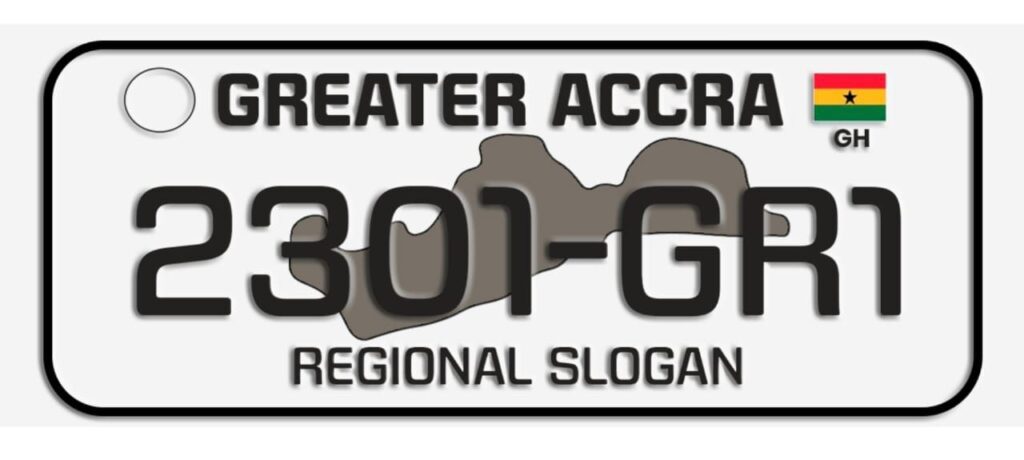
However, the report did not specify the full technical capabilities of the RFID plates, the precise information they will store or transmit, or the safeguards governing access to vehicle data. The planned integration with electronic tolling and police traffic systems will therefore be an important part of determining how the new technology operates in practice.
DVLA to Decentralise Number Plate Embossing
Alongside the introduction of RFID-enabled plates, the DVLA plans to decentralise number plate embossing to all regional offices. The measure is intended to reduce turnaround times for vehicle registration by bringing the service closer to motorists across the country.
Under a decentralised arrangement, applicants could benefit from improved access to number plate production services without relying exclusively on existing centralised facilities.
The Authority expects the change to support faster processing as it implements its broader registration reforms. The proposed decentralisation also complements the RFID initiative by addressing service delivery alongside technological modernisation.
While the report did not provide a detailed implementation schedule for the regional embossing programme, the stated objective is to reduce delays associated with vehicle registration and improve the overall experience for motorists.
New Licensing System to Distinguish Commercial Motorcycles
The DVLA is also preparing changes to its licensing and registration regime to distinguish commercial motorcycles, commonly known as okada, from private motorcycles. Mr Kotey disclosed that the Authority had completed work on differentiating private licence holders from commercial licence holders for both vehicles and motorcycles.
The reform is expected to establish a clearer distinction between individuals using motorcycles privately and those operating them commercially. Separating the two categories would provide a more structured basis for identifying vehicle and motorcycle users according to their licensing status.
It also forms part of the Authority’s wider effort to improve registration records and modernise the systems used to identify motorists. Although the Chief Executive confirmed that work on the distinction had been completed, the report did not outline the specific registration requirements, identification features or implementation timeline for the new licensing arrangement.
DVLA Completes Work on Biometric International Driving Permits
The Authority has also completed work on converting international driving permits and vehicle permits into biometric documents, a reform intended to improve verification and bring the documents closer to international best practices.
Mr Kotey highlighted concerns about the existing handwritten format, which he indicated does not conform to international standards. He further identified a verification gap involving permits issued to Ghanaian citizens travelling abroad.
“The irony is that while we verify foreign driving licences, the international driving permits we issue to Ghanaian citizens travelling abroad remain unverifiable.”
DVLA Chief Executive Julius Neequaye Kotey
The planned transition to biometric documents is intended to address this inconsistency by improving the reliability and verifiability of permits issued by the Authority. Biometric documentation generally incorporates identity-related information or features that can support authentication.
For international driving permits, improved verification could help relevant authorities establish the authenticity of documents presented by Ghanaian travellers, subject to the systems and procedures adopted by issuing and receiving jurisdictions.
The report, however, did not specify the biometric features to be incorporated, the technology that will support verification or the date when the new documents will become available.

DVLA Expands Technology-Driven Registration Reforms
The RFID-enabled number plates, revised licensing arrangements and biometric permits represent three elements of the DVLA’s ongoing modernisation agenda.
The planned reforms target different aspects of vehicle administration, from real-time identification and crime investigation to the classification of commercial motorcycle operators and the verification of international driving documents.
The nationwide RFID number plate rollout is scheduled for 2027, while the Authority has indicated that work on the designs and biometric permit conversion has been completed.
The effectiveness of the initiatives will depend on their implementation, integration with relevant systems and accessibility to motorists. For the RFID plates in particular, cooperation with electronic tolling operators and the Ghana Police Service’s MTTD will be important to achieving the intended benefits.
Through these measures, the DVLA aims to strengthen vehicle identification, improve registration services and enhance the reliability of documents issued to motorists in Ghana.
READ ALSO: Ghana Takes Oil Investment Pitch To African Energy Week 2026