Minister for Lands and Natural Resources, Emmanuel Armah-Kofi Buah, has spearheaded a pivotal regulatory transformation designed to redefine the operational baseline for Ghana’s extractive sector through the introduction of seven legislative instruments governing the Ghana Geological Survey Authority (GGSA).
New Mining Regulation Targets Geological Data Improvements by tackling historical blind spots, establishing comprehensive rules for geological mapping, geoscientific information management, ground investigations, and mineral resource exploration up to the pre-feasibility study stage.
These legal instruments, which officially came into force on August 26, 2026, are engineered to bridge information asymmetries that have long hampered tactical decisions within the mining value chain.
By addressing systemic deficiencies, the state aims to replace speculative guesswork with structured, scientific exploration frameworks that safeguard both industrial investments and ecological assets.
“The regulations are also expected to strengthen the consistency of geological investigations and provide a clearer basis for the Authority to conduct research, manage geoscientific data and advise government and industry.”
GGSA

Expanding on this administrative milestone, the legislative framework effectively closes a ten-year vacuum that persisted following the enactment of the Ghana Geological Survey Authority Act, 2016 (Act 928).
The newly operationalized instruments span a wide spectrum of technical oversight, encompassing large-scale geological maps, earthquake monitoring, seismic investigations, licensing agreements, geoscientific standards, codes of practice, and geoheritage conservation.
Industry analysts note that this rollout empowers the GGSA to transcend legacy constraints inherited from its historical iterations dating back to its origins as the Gold Coast Geological Survey in 1913 and its subsequent evolution into the Geological Survey Department in 1962.
Under the updated protocols, the Authority is positioned to enforce cross-sector consistency, manage repository databases meticulously, and furnish state actors and private enterprises with credible advisory insights.
Highlighting the structural integration of these reforms, institutional stakeholders emphasized the collaborative nature of the drafting process.
“The GGSA worked with the Ministry of Lands and Natural Resources and other stakeholders to develop the instruments and bring them into force.” This multi-agency cooperation underscores a collective commitment to institutional accountability and robust oversight across the mining ecosystem.
Diagnostic Imperatives: The Rationale Behind Sector Overhaul
The strategic impetus for this regulatory overhaul stems from structural vulnerabilities that have historically crippled artisanal and small-scale mining operations across Ghana.
Without access to certified geoscientific data, small-scale miners frequently operate in geological vacuums, leading to inefficient recovery rates, capital misallocation, and severe environmental degradation.
Prior to this intervention, the absence of enforceable subsidiary legislation under Act 928 left subterranean exploration largely unregulated, exposing vulnerable operators to predatory practices, unverified deposit claims, and high rates of project abandonment.

Establishing standardized guidelines up to the pre-feasibility threshold introduces a vital safety net, ensuring that exploratory capital is deployed on the back of empirical data rather than speculative folklore.
Furthermore, mounting macro-environmental pressures necessitated a recalibration of national seismic and geological protocols.
Rapid infrastructural expansion, coupled with intensified resource extraction, elevated the risks associated with unmonitored ground movements and unrecorded seismic anomalies.
The new statutory instruments institutionalize rigorous ground investigations and earthquake monitoring architectures, mitigating catastrophic risks to both human settlements and industrial installations.
By codifying geoscientific standards, the government is deliberately formalizing the artisanal tier, transforming informal mining clusters into transparent economic units capable of contributing meaningfully to national GDP while adhering to environmental safeguards.
Operational Mechanics and Institutional Coordination
The efficacy of the newly minted regulations hinges heavily on institutional synergy and technical outreach.
Beyond the formulation of rules, the regulatory architecture seeks to democratize access to high-resolution geological maps and data repositories that were previously locked behind prohibitive commercial barriers.
As experts observe, “The framework could help small-scale miners make better-informed exploration decisions by improving the availability and reliability of geological data.”
To realize this vision, decentralization of geoscientific advisory services is critical, ensuring that mining communities in remote districts receive actionable intelligence and technical capacity-building.

Moreover, the codification of geoheritage conservation alongside mineral exploration reflects a nuanced approach to sustainable resource governance.
The framework mandates that commercial and small-scale activities do not imperil sites of unique geological, educational, or cultural significance.
By streamlining licensing agreements and data-sharing protocols between the GGSA and sector participants, the state is curtailing administrative bottlenecks that traditionally delayed legal titling and compliance audits.
This streamlined clearance mechanism reduces the incentives for illicit mining by making structured, data-backed exploration legally viable and economically attractive for localized syndicates.
Future Outlook for Extractive Sustainability
As these regulations transition from paper to field implementation, the broader extractive economy stands at a critical juncture.
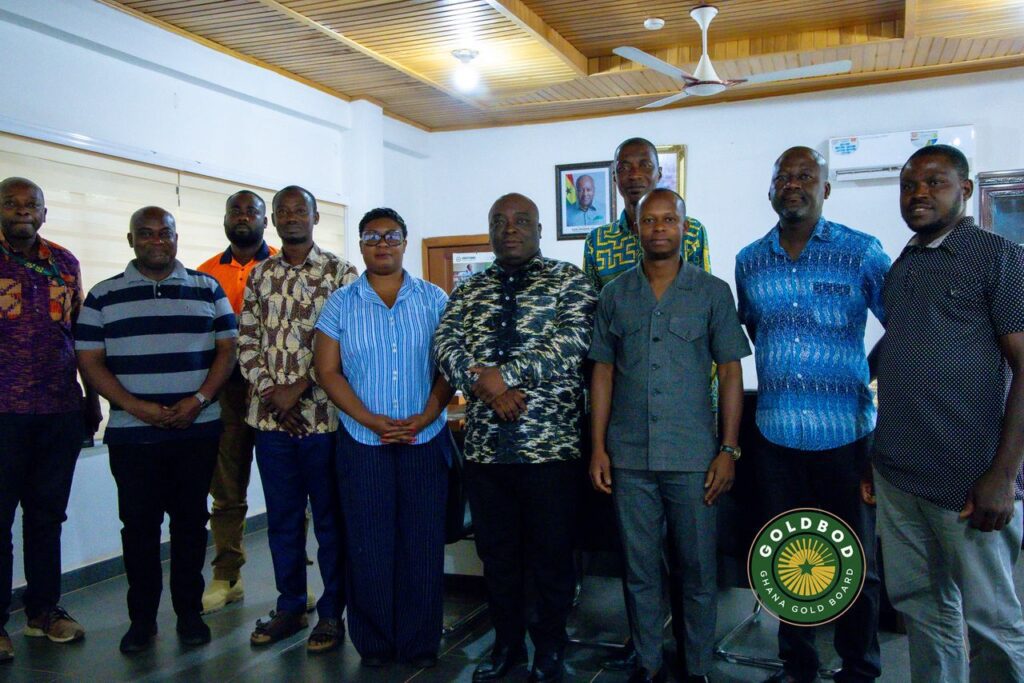
The success of the GGSA’s expanded mandate will ultimately be measured by its capacity to police standards impartially, provide continuous technical extension services, and adapt to shifting macroeconomic dynamics in global mineral markets.
If executed with steadfast political will, this decade-long legislative culmination will permanently alter Ghana’s mining landscape, fostering an environment where empirical science supersedes speculation, and sustainable resource stewardship drives long-term national prosperity.
READ ALSO: DVLA Records GH¢27m Revenue From Vehicle Stickers