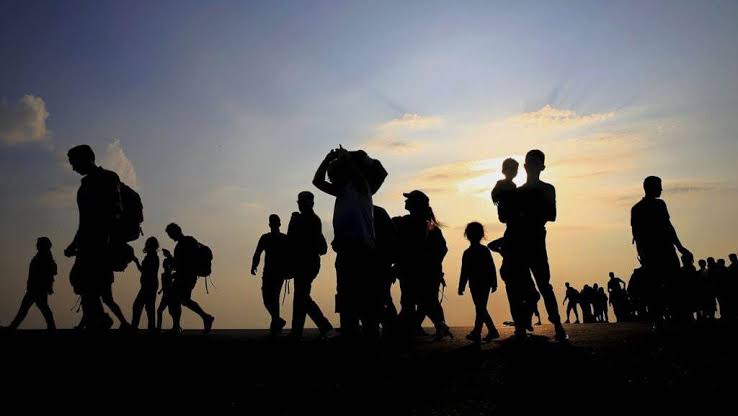
The International Organization for Migration (IOM) has recorded at least 4,414 child deaths on migration routes worldwide between 2014 and 2025; however, gaps in data collection and the misidentification of victims mean the actual figure is likely much higher.
The report, produced through IOM’s Missing Migrants Project with support from the International Data Alliance for Children on the Move (IDAC), highlighted the limited information available on the ages of migrants who die or disappear while travelling across international routes.
Over the 12-year period, IOM recorded nearly 81,000 migrant deaths and disappearances worldwide. However, 44,862 cases, representing 55.5% of the total, contained no information about the victims’ ages or age groups, leaving the number of children among the unaccounted-for cases unknown.
According to Stuart Campo, Chief Strategy Officer for IOM’s Department of Data, Insight and Policy, “every child who dies on a migration journey deserves to be counted, yet too many are missing from the data.”
“We cannot protect children from dangers we cannot see. Working with our fellow Secretariat members and partners in IDAC, we can close these gaps and give governments the evidence they need to save lives.”
Stuart Campo
Missing Age Data Obscures Scale of Child Migrant Deaths
The report identified two major gaps that prevent authorities from establishing the full number of children who die during migration journeys: the “missing figure” and the “hidden figure.”
The missing figure refers to children whose deaths are never recorded, while the hidden figure covers cases in which deaths are documented but the available information does not establish that the victims were children.
These gaps are particularly concerning for teenagers, who may be incorrectly classified as adults, preventing their deaths from being recognised as part of the toll affecting children on the move.
The report warned that the absence of reliable age information makes it difficult for policymakers to understand the specific dangers children encounter during migration and to develop interventions that respond to their needs.
Data from the Central Mediterranean migration route illustrates that in 2024, children accounted for 19% of arrivals in Italy and Malta but represented only 2% of recorded deaths.
Official Records Cover Only a Fraction of Documented Child Deaths
Moreover, the report found that official records from medical examiners and law enforcement agencies generally provide the most complete information about the ages of deceased migrants. However, these sources account for only 18% of all deaths recorded by IOM’s Missing Migrants Project.
Of the 4,414 documented child deaths, just 820 were recorded through official sources, highlighting the limitations of relying on formal records alone to establish the scale of migrant fatalities involving children.
Most of the remaining information comes from humanitarian organisations, media reports and testimonies provided by survivors and witnesses. While these sources help document deaths that might otherwise go unrecorded, they often lack the demographic details needed to establish victims’ ages.
The report called on governments to strengthen the collection and documentation of information about migrants who die during their journeys, with particular attention to children.
Among its recommendations is the systematic recording of victims’ ages and migration status, alongside improved information-sharing between law enforcement agencies, medical examiners and humanitarian organisations.
IOM also stressed that stronger data-sharing arrangements must respect data protection principles, particularly when dealing with vulnerable populations and sensitive personal information.
The report further recommended additional testing of transparent, peer-reviewed statistical methods to estimate the number of deaths that are never recorded.
IOM and UNICEF Partners Call for Better Data to Protect Children
Meanwhile, the findings have renewed calls for stronger international cooperation to improve the evidence available on migrant and displaced children, particularly as governments seek to address the risks associated with migration.
Marzia Rango, Migration and Displacement Programme Manager at UNICEF and coordinator of IDAC, emphasised the importance of developing reliable methods to identify the dangers children face and determine where protective interventions are most urgently needed.
“Continued advancements in data methods are essential to protecting the rights of children on the move. Not only can these help provide a clearer picture of the risks these children face, but also where action is most urgently needed.”
Marzia Rango
He added, “when new methods are used, however, we need to be clear about what they can and cannot tell us and ensure that child rights are safeguarded at all times.”
READ ALSO: Cheltenham Boss Hails “Immaculate” Richarlison Attitude For Spurs U-21