The International Organization for Migration (IOM) has raised concern over the number of children arriving in Europe without parents or guardians, with more than 20,000 of the 31,100 children who arrived by sea and land in 2025 travelling alone.
The IOM, UN Refugee Agency (UNHCR) and UNICEF data show that unaccompanied children accounted for 67% of child arrivals, compared with 51% the previous year.
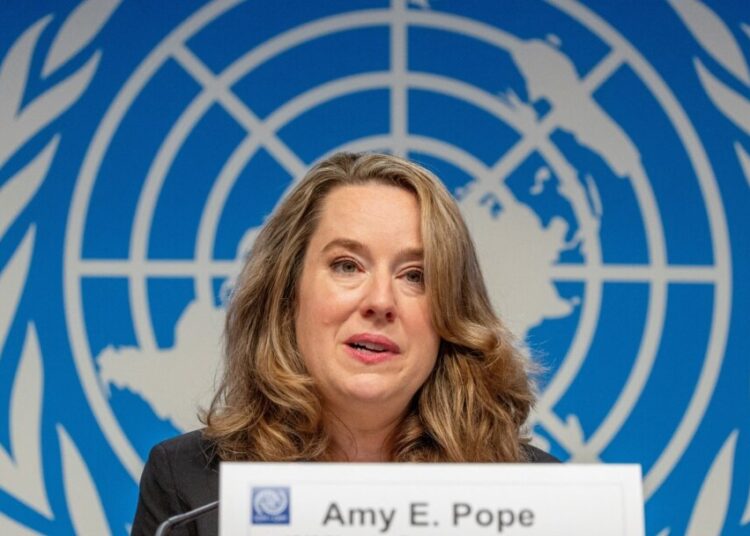
According to IOM Director General Amy Pope, “children are making difficult and dangerous journeys without a parent or guardian by their side.”
“This report shows how exposed they are to violence and exploitation when safe pathways are limited, and they have to rely on smugglers. No child should have to face these risks alone. Our shared responsibility is to work across borders to protect them, uphold their rights, and provide the care and support they need.”
Amy Pope
Meanwhile, the findings point to a troubling contradiction in Europe’s migration landscape. While overall child arrivals across Bulgaria, Cyprus, Greece, Italy, Malta and Spain declined by 25% from 2024, the proportion of children making the journey alone increased sharply.
The data suggest that the reduction in overall arrivals has not necessarily translated into safer migration conditions for children. Instead, the journeys undertaken by those who continue to travel appear to be increasingly characterised by irregular routes and greater dependence on smugglers.
The change is particularly pronounced in Italy and Spain, where 86% of children arriving in each country were recorded as unaccompanied. While the overall number of arrivals remained stable, the number of children reaching the country increased by 12% to almost 14,100 in 2025.
In addition, most of the children arriving in Italy originated from Egypt, Eritrea, Somalia, Bangladesh and Ethiopia.
According to the report, 214,600 children applied for international protection across Europe in 2025, with 79% making their applications for the first time.
Four countries accounted for approximately 71% of first-time applications: Germany with 30%, France with 19%, Spain with 15% and Greece with 7%.
Yet the rise in applications has occurred alongside a decline in some forms of organised and protection-sensitive pathways into Europe, raising concerns about whether children facing displacement have sufficient alternatives to irregular journeys.
Only 3,400 children were involved in refugee resettlement procedures to Europe in 2025, representing half of the 6,800 people undergoing such procedures. The number of children involved was substantially lower than the 8,900 recorded a year earlier.
The Voluntary Solidarity Mechanism also provided limited opportunities for children. Only 199 children were relocated between European states under the mechanism in 2025, a 67% decline from the previous year. None of those relocated was unaccompanied.
Dangerous Journeys Leave Unaccompanied Children Exposed
The risks facing children do not end when they reach European territory. Evidence gathered by the IOM from adolescents and young adults reveals the dangers encountered during the journeys themselves.
The organisation interviewed more than 4,600 people aged between 15 and 24 along the Mediterranean, West African Atlantic and Western Balkan routes.
Nearly half of those questioned about their experiences reported having experienced physical violence.
The Central Mediterranean route emerged as particularly dangerous. Among those interviewed about their experiences along the route, 28% reported being held against their will, while 17% reported being forced to work.
Libya remained the country most frequently identified as the location where abuse occurred.
The International Organization for Migration is therefore calling on European Union member states to place the best interests of children at the centre of migration and asylum decisions.
It also wants children to receive timely access to essential services and for governments to ensure that children are never detained for immigration purposes.
The organisation has urged authorities to strengthen safeguards for unaccompanied and separated children by guaranteeing prompt access to legal representation. It also wants age assessments limited to cases where they are necessary and conducted through child-sensitive processes that include a right of appeal.
These measures are particularly important because determining whether a young person is a child can affect access to protection, accommodation, legal assistance and other services.
The broader asylum figures show the scale of the responsibility facing European governments. Of the 210,900 first-instance decisions made on children’s international protection claims in 2025, 56% were positive. At the same time, rejections increased by 25%.
The figures demonstrate that child migration to Europe cannot be understood solely through the number of arrivals. The issue extends to what happens after children reach European territory, including whether they receive appropriate protection, legal assistance, and access to services while their claims are assessed.
READ ALSO: Mahama Courts Indian Investment to Boost Ghana’s Pharmaceutical and Vaccine Manufacturing