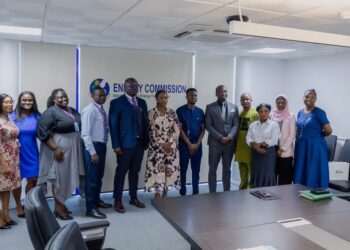
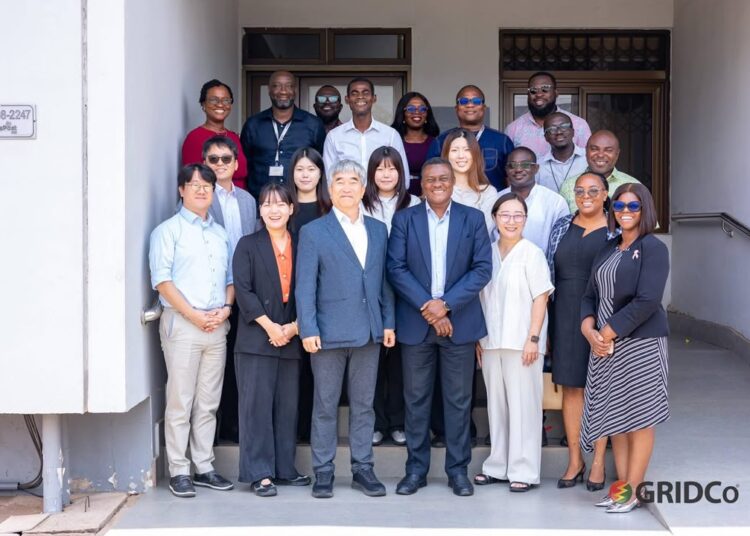
The Korea Eximbank has undertaken a two-day post-evaluation visit to the Ghana Grid Company Limited (GRIDCo), assessing the performance and wider impact of a Korea-funded transmission project on Ghana’s electricity network.
The delegation, led by Mrs Je Hea Song, engaged GRIDCo’s engineering and operations team as part of the assessment, with discussions focusing on the 330kV Prestea–Kumasi transmission line and its contribution to the national grid.
The engagement is significant because the performance of transmission infrastructure increasingly matters not only for Ghana’s domestic electricity supply but also for the country’s ability to move power across borders.
Transmission Infrastructure Supports Grid Reliability
The Prestea–Kumasi line was the central focus of the delegation’s field assessment.
GRIDCo’s Deputy Chief Executive for Engineering and Operations, Ing. Abdul Samed Ibrahim, said the project has become useful to the national electricity system since its development, including supporting Ghana’s ability to export electricity to Burkina Faso.
He made the assessment during discussions with the Korean delegation, which also included GRIDCo’s Director of the Southern Network Department, Ing. Francis Arthur.
“The line has been very useful to the national grid and for export of power to Burkina Faso”
The statement highlights an important dimension of transmission investment: its value is not limited to the volume of electricity generated.
Generation capacity can only translate into usable electricity when the transmission network has sufficient capacity to move power from where it is produced to where it is required.
For Ghana, strengthening the network also has regional implications because the country’s electricity system forms part of a wider West African power market.
Project Evaluation Looks Beyond Construction
The post-evaluation exercise provides Korea Eximbank with an opportunity to assess the practical outcomes of the investment rather than simply whether the transmission project was completed.
Such assessments can help development-financing institutions determine whether infrastructure has delivered the intended economic and operational benefits and identify lessons that can inform future investments.
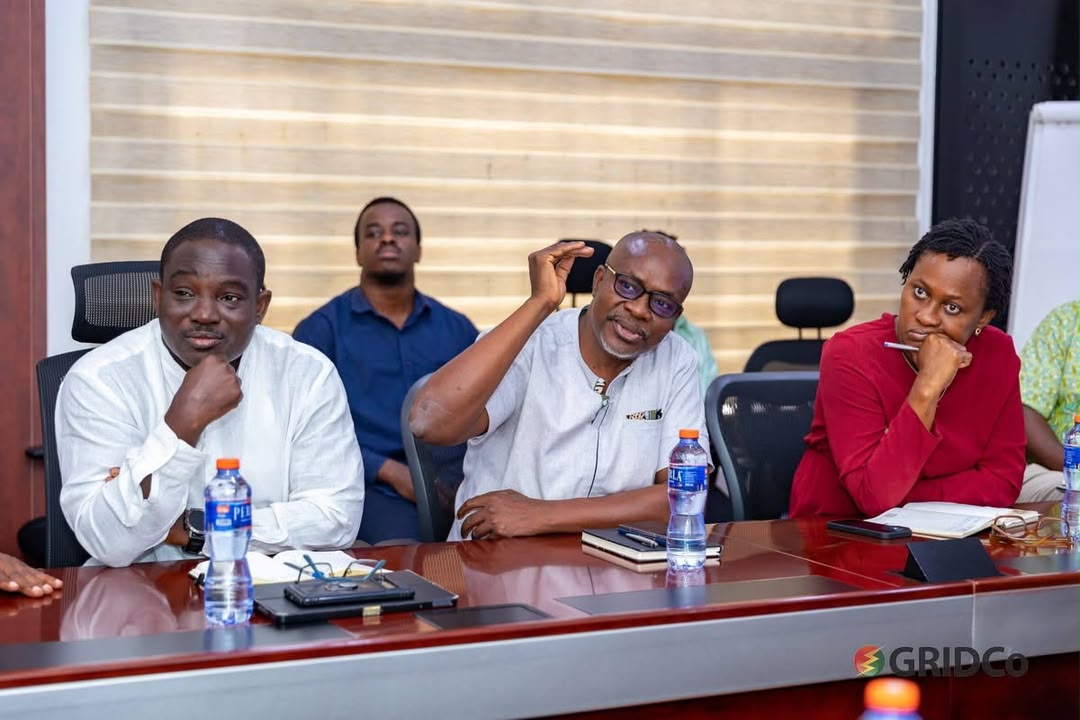
The delegation met a cross-section of GRIDCo engineering staff led by Ing. Samed, with the engagement providing an opportunity to discuss the technical performance and operational relevance of the infrastructure.
The delegation subsequently travelled to the Kumasi Operational Area to inspect the Prestea–Kumasi transmission line directly.
The field visit is particularly relevant because the effectiveness of a transmission project ultimately depends on how it performs within the wider network.
A transmission line must provide dependable connectivity, support the movement of electricity and strengthen the resilience of the system as demand and generation patterns change.
Regional Power Trade Adds Strategic Value
The reference to electricity exports to Burkina Faso adds another dimension to the project’s significance.
Ghana’s transmission infrastructure does not operate solely within the boundaries of the domestic electricity market. Stronger transmission links can facilitate regional electricity trade, allowing available generation to reach neighbouring markets when commercial and system conditions permit.
This makes investments such as the Prestea–Kumasi line relevant to Ghana’s broader position within West Africa’s interconnected power system.
“The impact of transmission infrastructure extends beyond connecting generation to consumers; it can also strengthen Ghana’s ability to participate in regional electricity exchanges.”
Excerpt from the discussions
The project’s reported contribution to exports therefore illustrates how transmission infrastructure can support both domestic grid development and regional energy integration.
For Ghana, regional electricity trade can create additional opportunities to utilise available generation capacity while strengthening cooperation with neighbouring power systems.
System Control Centre Completes Technical Assessment
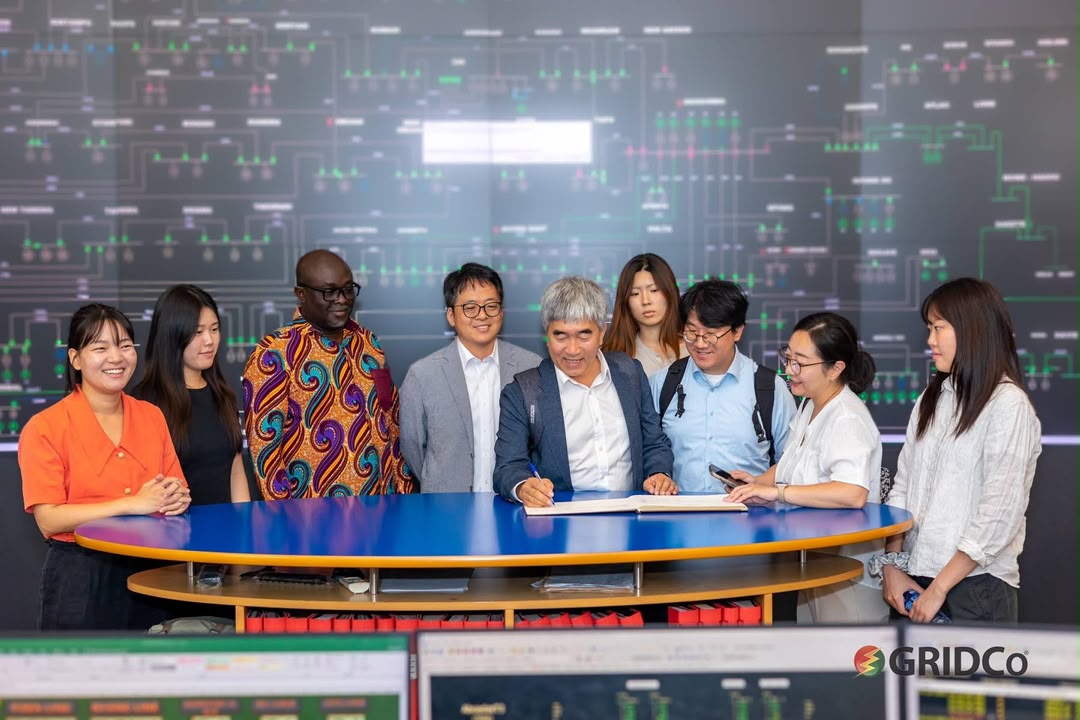
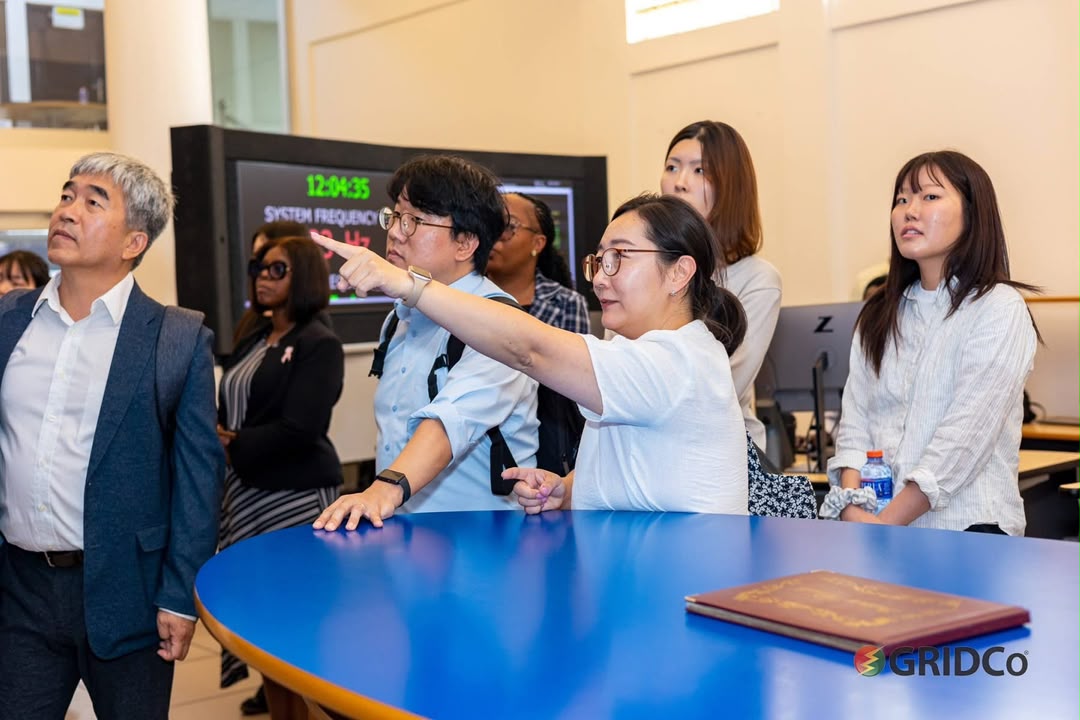
The Korea Eximbank delegation concluded its engagement with a visit to GRIDCo’s System Control Centre.
The facility provides an important operational perspective because transmission performance is ultimately linked to the ability of system operators to monitor and manage electricity flows across the network.
The visit consequently gave the delegation exposure to both the physical infrastructure and the systems responsible for managing Ghana’s transmission network.
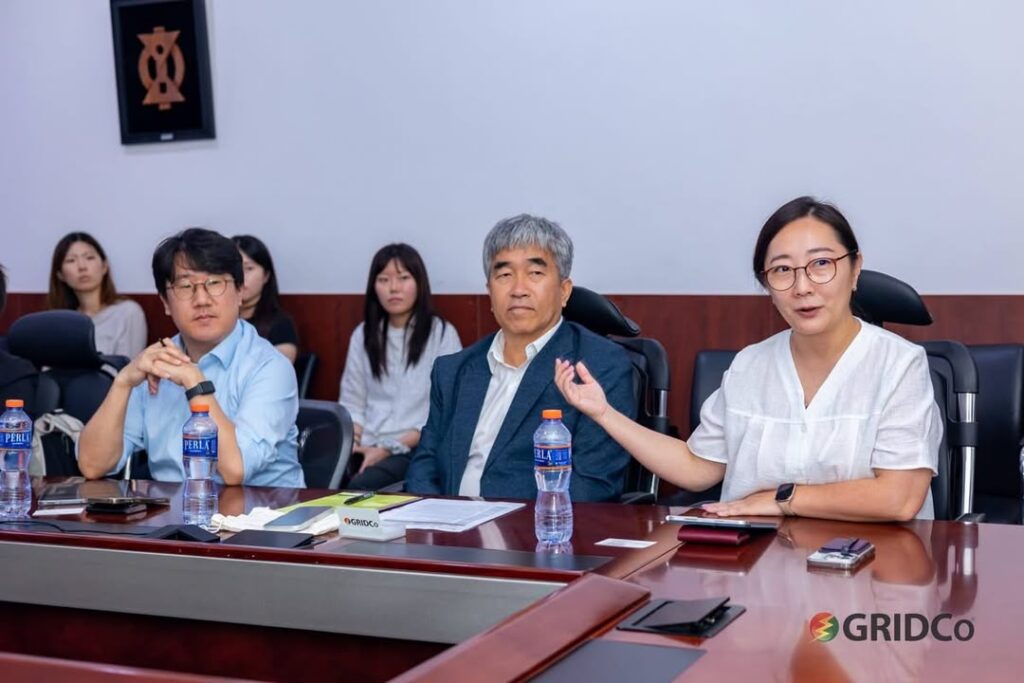
Taken together, the field inspection, technical discussions and System Control Centre visit provided a broader basis for assessing the contribution of the Korean-supported investment.
The engagement also reinforces the importance of maintaining infrastructure after construction. Transmission assets require continuous technical management, monitoring and investment if their benefits are to be sustained over their operational lives.
For Ghana’s power sector, that is increasingly important as the system evolves and electricity flows become more complex.
The assessment by Korea Eximbank could therefore provide useful lessons for future infrastructure financing, particularly as Ghana seeks to strengthen grid reliability, accommodate changing generation patterns and expand regional electricity trade.
The two-day exercise ultimately places the focus where infrastructure investment should end up: not simply on what was built, but on whether the asset is delivering measurable value to the electricity system and the wider economy.
READ ALSO: Minority Drags Gold Purchase Losses to Christian Council