The Minerals Commission has directed Goldcoast GRC Ghana Limited to immediately suspend all activities being undertaken under its reconnaissance licences within Ghana’s territorial waters.
The directive, contained in an official decision letter signed by the Chief Executive Officer of the Minerals Commission, Isaac Tandoh, follows mounting concerns and objections raised by key stakeholders regarding the grant of the mineral rights and the proposed marine exploration.
“It is therefore necessary to pause all activities to allow the relevant regulatory, environmental, ecological and social issues to be fully considered and addressed through appropriate stakeholder engagement.”
Minerals Commission
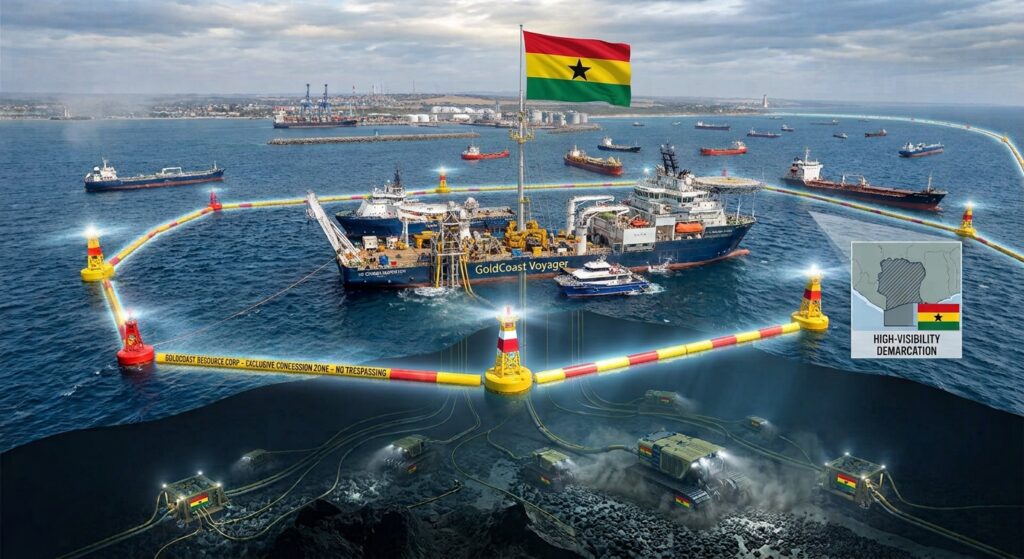
The suspension notice halts all preliminary field operations off the coast of Ghana as regulatory authorities re-evaluate the potential environmental and ecological impacts of the offshore initiative.
The Commission stressed that questions regarding the adequacy of prior consultations with affected coastal communities, artisanal fisheries groups, and marine protection advocates necessitated an immediate operational pause.
Escalating Stakeholder Resistance and Ecological Concerns
The decision by state regulators to intervene comes in the wake of intense public scrutiny from coastal livelihoods advocates, local fisheries organizations, and environmental groups.
Opponents argue that deep-sea reconnaissance and prospective dredging poses catastrophic risks to fragile marine ecosystems, fish breeding grounds, and the livelihoods of thousands of fishing communities along Ghana’s coastline.
According to official records, Goldcoast GRC was granted the reconnaissance licences earlier this year on February 9, 2026, triggering widespread calls for a full statutory review.
In response to the backlash, state regulators revealed that the firm had been cautioned in advance to comply strictly with all national environmental laws before putting machinery to sea.

The Commission said it had earlier informed the company that it was required to obtain all necessary authorisations and permits from relevant state institutions before commencing exploration activities. Regulatory officials warned that proceeding without comprehensive ecological clearance risks crippling the project entirely.
According to the Commission, failure to adequately address the concerns could expose the proposed operations to regulatory challenges and prevent the company from securing the necessary social licence to operate.
Statutory Compliance and Ministerial Oversight
To enforce complete regulatory compliance, the Minerals Commission reiterated that ministerial clearance remains a mandatory prerequisite before any mining enterprise can touch offshore seabed concessions.
The Commission reaffirmed its core oversight duty, reminding the company of the strict conditions embedded in the initial governmental sign-off.
“As stated in our letter dated 4th February 2026, which communicated the ministerial approval of the Commission’s recommendation to grant the licences, the Company must obtain all required authorisations and permits from the relevant State institutions before commencing any exploration activities,” the letter said.
Consequently, direct executive oversight has been invoked to ensure no unauthorized offshore operations proceed within national maritime borders.
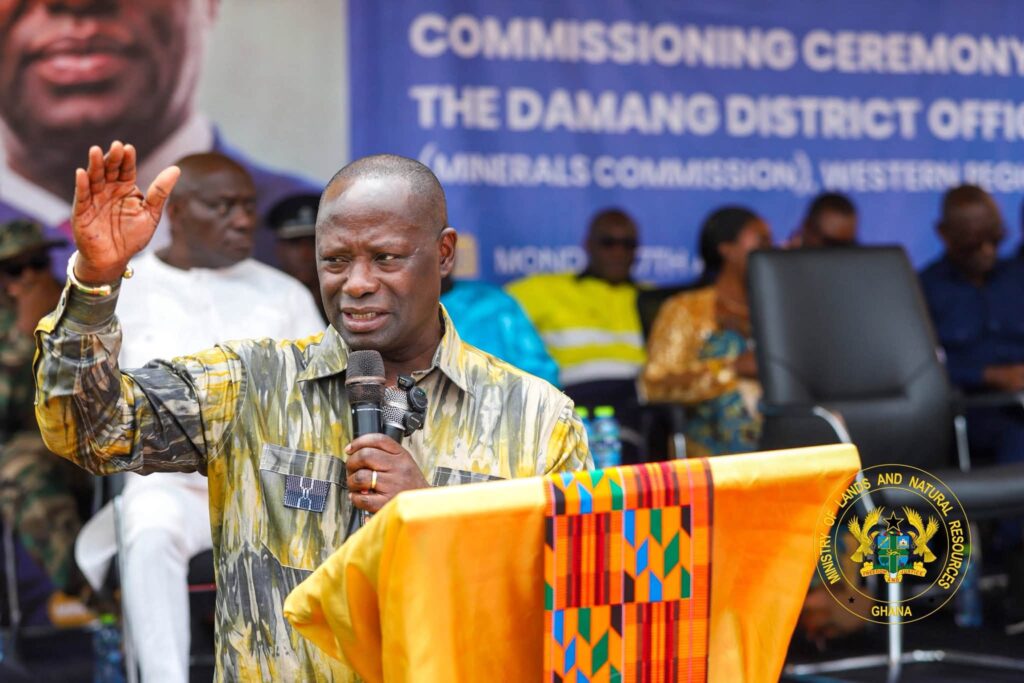
The Commission said the Minister for Lands and Natural Resources has consequently directed the immediate suspension of all activities under the licences until the Commission completes the necessary consultations and issues written ministerial authorisation for the activities to resume.
During the suspension, Goldcoast GRC is required to cooperate fully with the Minerals Commission, relevant state institutions and all affected stakeholders.
Safeguarding Ghana’s Blue Economy and Marine Biodiversity
The necessity for this regulatory intervention stems from a critical need to safeguard Ghana’s fragile marine environment and protect the national blue economy.
Offshore gold reconnaissance and exploration involve marine seismic surveys, seabed sampling, and subsea drilling activities that directly disturb marine habitats, disrupt coastal fish migration patterns, and threaten pelagic biodiversity.
Ghana’s marine fisheries sector supports millions of citizens and provides a essential source of dietary protein and coastal employment. Unregulated offshore extractive moves jeopardize this vital sector, creating acute social friction between industrial mining interests and artisanal fisherfolk.

Furthermore, this initiative highlights the broader regulatory requirement for comprehensive multi-agency oversight in Ghana’s extractive sector. Allowing mineral exploration in territorial waters without prior Environmental Protection Agency (EPA) impact assessments, Fisheries Commission consultations, and local community consent creates legal vulnerability and environmental risk.
By enforcing an immediate pause, state authorities aim to establish rigorous baseline ecological studies, clarify legal liability frameworks, and prevent catastrophic degradation of the marine shelf.
Establishing transparent stakeholder consultation protocols ensures that national economic ambitions do not override ecological conservation and local economic survival.
READ ALSO: Trump Links Student Protests In France To Migration