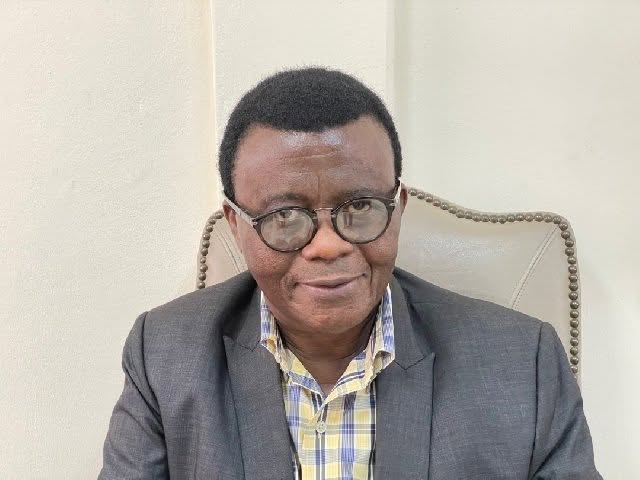
Prof. Baffour Agyemang Duah, a governance expert and co-founder of the Ghana Center for Democratic Development (CDD-Ghana), has strongly criticized the over-centralization of natural resource management and executive power, warning that state control over local wealth suppresses district-level growth.
Speaking with The Vaultz News on structural constitution reforms, he argued that withholding resource governance and economic autonomy from local assemblies out of fear that some districts might excel faster or seek secession represents an intensely regressive mindset.
“So that fear that this area has better resources, natural or human, and therefore you are allowing them to progress, I don’t know the thinking. But it is for me the most backward thinking anybody can have. Backward. It’s not every part of the country that is good.”
Prof. Baffour Agyemang Duah
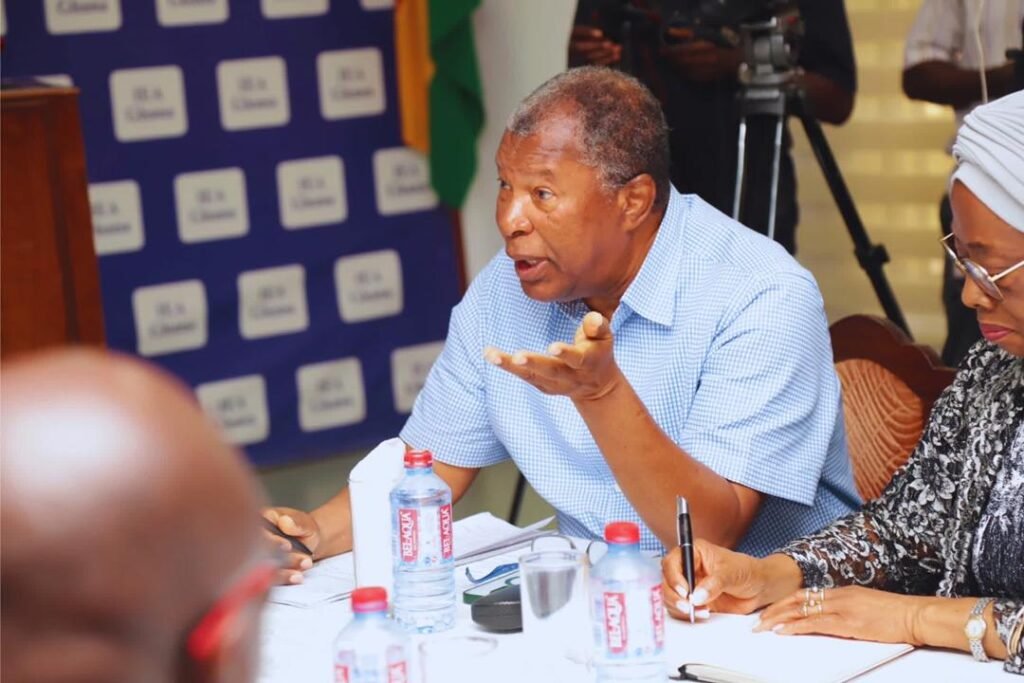
While expanding on the issue, Prof. Agyemang Duah highlighted that suppressing district capabilities creates artificially stagnant local economies across the country.
He pushed back against socialist-leaning ideological arguments that prioritize uniform poverty over competitive regional progress, stating that national equality should never mean locking every district into identical development speeds.
Instead, he argued that a functional governance framework must grant local authorities the leverage to run with their native natural and human endowments, relying on transparent fiscal taxation and targeted redistributive policies to balance development rather than starving dynamic districts of their potential.
Decentralization and Fiscal Autonomy in Extractive Governance
For minerals and extractive industry analysts, the centralization of natural resource governance in West Africa has long stood as a primary barrier to local value retention.
By concentrating all mineral rights, revenue collection, and concession approvals within central executive institutions, regional mining communities are consistently stripped of direct economic control over the resources extracted beneath their feet.
The core argument put forward by governance analysts underscores that mineral-rich districts must be empowered through devolved royalty distributions and local participatory management.
Centralized fiscal models create a systemic disconnect where local populations suffer the environmental degradation of mining operations while waiting on distant central governments to disburse development funds. Granting genuine fiscal decentralization allows resource-bearing regions to reinvest mineral revenues directly into local infrastructure, health systems, and industrial capacity.
Constitutional Reform as a Catalyst for District Growth
Reflecting on historical decentralization efforts, local districts formerly demonstrated far greater economic dynamism through community self-help projects and localized development initiatives.
The erosion of this local momentum directly stems from a constitutional architecture that centralizes ultimate executive power in the capital while leaving local governance largely performative.

Reforming the national constitution must go beyond high-level administrative adjustments to address the core division of power between national executives and district assemblies.
Without structural constitutional changes that guarantee financial independence and local democratic accountability, mining and resource-rich districts will remain incapable of converting their natural wealth into long-term, sustainable development.
Economic Realities of Resource Redistribution
A functional, modern resource model does not abandon underprivileged regions; rather, it uses state taxation mechanisms to calibrate resource distribution without hindering high-performing districts.
Attempting to enforce absolute economic equality by crippling the growth of naturally endowed regions remains counterproductive to national poverty reduction efforts.
Ultimately, achieving long-term economic transformation in the extractive sector requires moving past central management models.
Empowering local authorities to harness their natural and human assets creates a competitive, resilient national economy driven by dynamic districts rather than a singular central authority.
READ ALSO: Cabinet Approves Ghana’s BRICS Bid, Ablakwa Says, Citing Trade With India