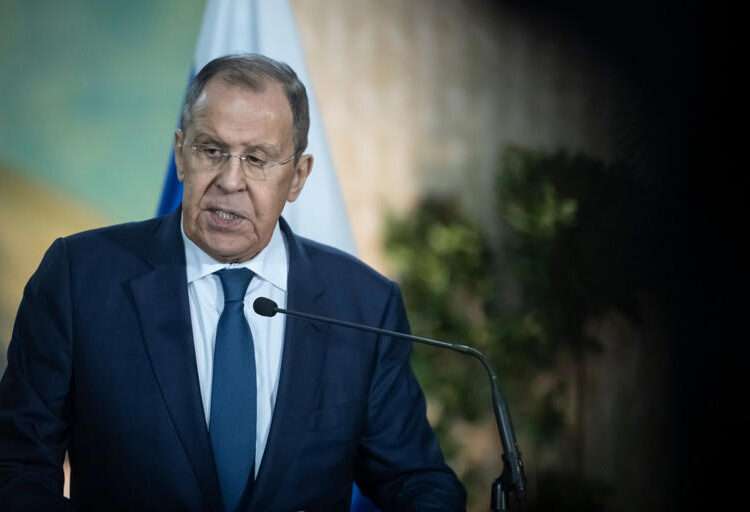
Russia has reaffirmed its commitment to its strategic partnership with Iran as Foreign Minister, Sergey Lavrov met his Iranian counterpart, Abbas Araghchi, in Tehran to discuss the ongoing war involving the United States and Israel and efforts to end the conflict.
Lavrov arrived in the Iranian capital on Monday afternoon for his first visit to the country since February 2025. The talks covered regional developments, the war on Iran, the Iranian-American negotiations and the conflict in Ukraine.
Lavrov reaffirmed Moscow’s commitment to a 20-year strategic partnership agreement with Tehran, which officially came into force on October 2, 2026.
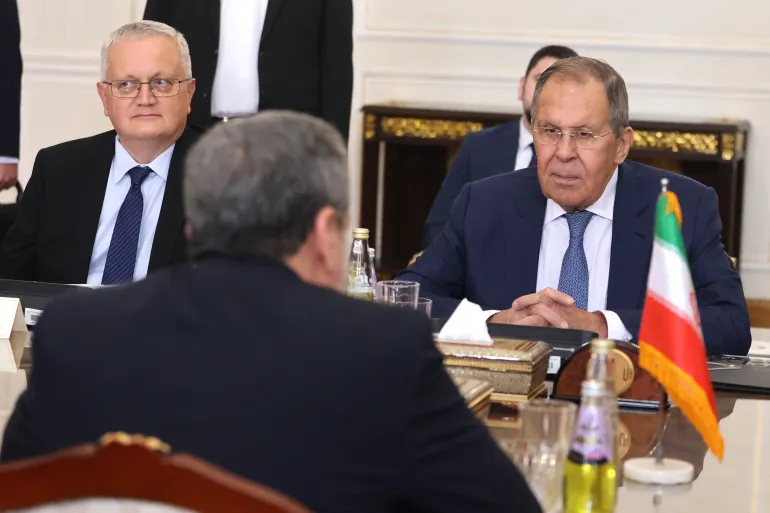
Speaking at a press briefing, Araghchi said that the discussions addressed several pressing regional and international issues. “Regarding the Gulf and West Asia, we have had talks, and also on Ukraine and the Iranian-American negotiations,” he said.
The visit comes amid months of heightened tensions following the launch of the US-Israeli war on Iran on February 28. Moscow has described Lavrov’s trip as part of efforts to ease tensions and promote diplomatic engagement.
Moscow, Tehran Call For Diplomacy, Regional Security
During the meeting, Araghchi accused Israel of dangerous regional expansion, arguing that its actions, alongside those of the United States, had contributed to the current hostilities and insecurity across the Gulf. “The lack of security in the Gulf and in the Strait of Hormuz … this is due to the Israeli-American aggression,” he said.
The Iranian Foreign Minister also criticised Washington’s decision to go to war, accusing the United States of miscalculating Iran’s strength.
“They thought Iran was weak. They have started the aggression but now and after eight months, they are in this spot.”
Abbas Araghchi
He further warned European countries against what he described as errors in their approach to regional conflicts. “Europe must open their eyes carefully because Europe, like America, is making some mistakes in calculations,” he said.
Araghchi argued that European policies had contributed to prolonged conflicts, including the war in Ukraine, and criticised European support for Israel, which he linked to the deaths of more than 80,000 Palestinians.
He also called for an end to hostilities in Yemen and Lebanon and what he described as the genocide in Palestine, while reiterating his criticism of Israel’s regional expansion.
According to Araghchi, the discussions with Lavrov reinforced the position that military action cannot provide lasting solutions to international conflicts.
He said that disputes must instead be resolved through diplomacy and political channels.
Lavrov also emphasised the need to strengthen Lebanon’s security and sovereignty following his meeting with Araghchi. He said that Moscow and Tehran shared objectives regarding Lebanon, parts of which have been occupied by Israel since March this year.
The Russian Foreign Minister is scheduled to meet Iranian President Masoud Pezeshkian later on Monday.
Lavrov also addressed developments in global energy markets, saying Moscow had no interest in volatile energy prices and needed to plan its energy strategy with a long-term perspective.
Lavrov Seeks Wider Regional Cooperation To End Conflict
Lavrov’s visit to Tehran followed his participation on Sunday in a strategic dialogue session between Russia and the Gulf Cooperation Council (GCC) in Bahrain, which was heavily targeted by Iran during the war.
During the meeting in Manama, GCC members urged Moscow to use its influence with Tehran to encourage “serious dialogue” and restore shipping through the Strait of Hormuz.
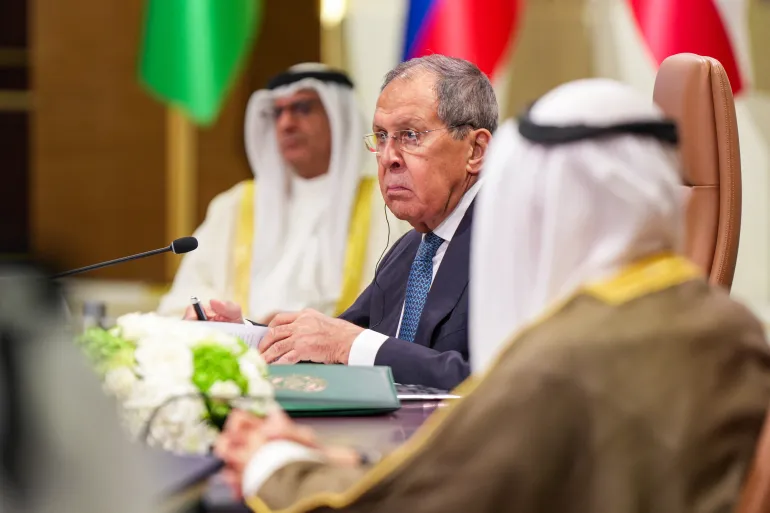
The vital maritime route has experienced severe disruption following attacks on commercial vessels, raising concerns about regional security and international trade.
Lavrov warned GCC Ministers that the Middle East was once again approaching the brink of a full-scale war. He said Russia wanted to establish a regional framework for “collective security.”
He proposed combining initiatives from countries across the region with proposals from Russia and China to restore maritime traffic and support lasting peace.
The Russian Foreign Minister also called on other regional states, including Iraq and Jordan, which have been hit by Iranian strikes, to participate in efforts to establish a broader security arrangement.
Lavrov expressed support for the memorandum of understanding signed between Iran and the United States in June, which later collapsed, describing it as a potential framework for reducing tensions.
The diplomatic engagements in Bahrain and Tehran reflect Moscow’s efforts to maintain dialogue with both Iran and Gulf Arab states as the conflict continues to affect regional security, maritime trade and energy markets.
While Russia and Iran have reiterated their shared emphasis on diplomacy, the meetings come amid continued disagreements over the causes of the war and the actions required to bring it to an end.