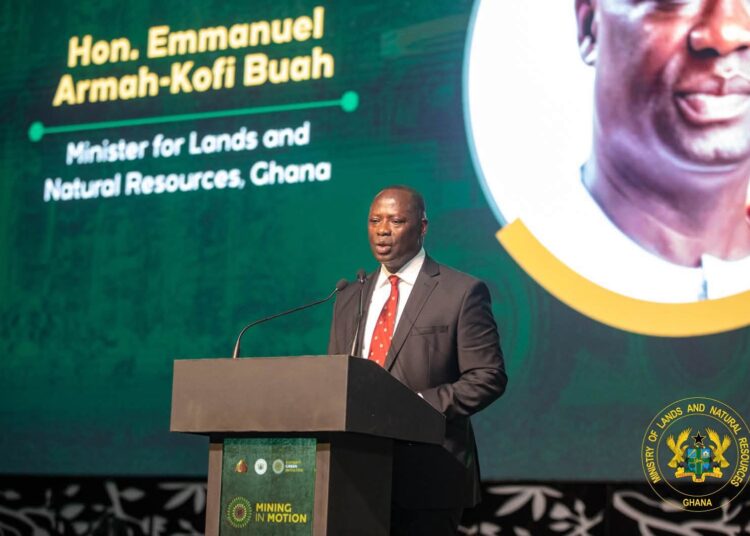
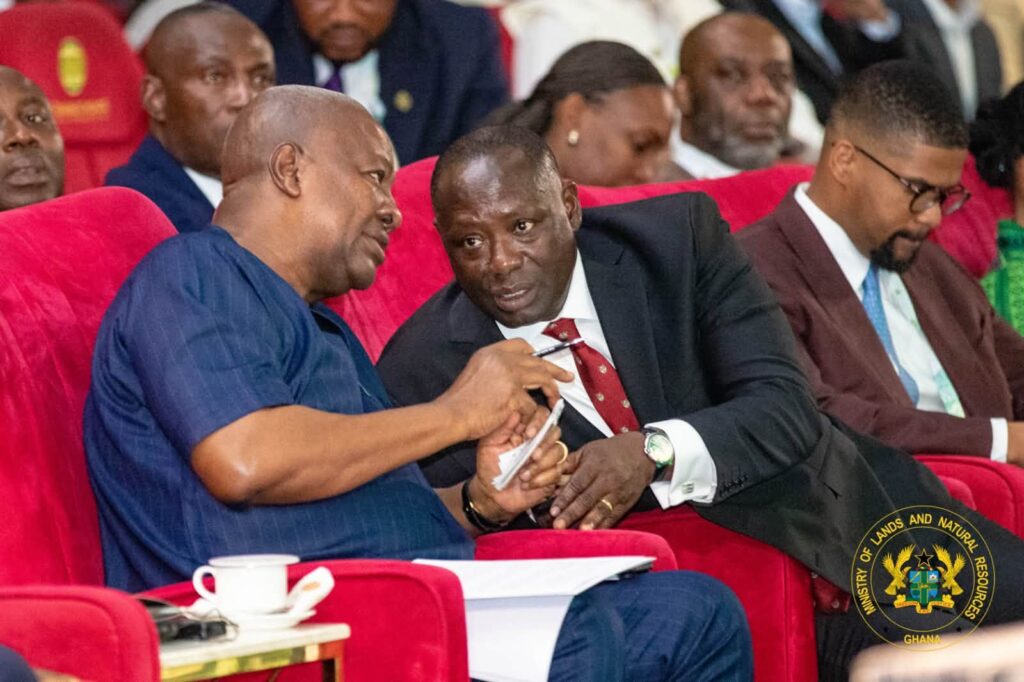
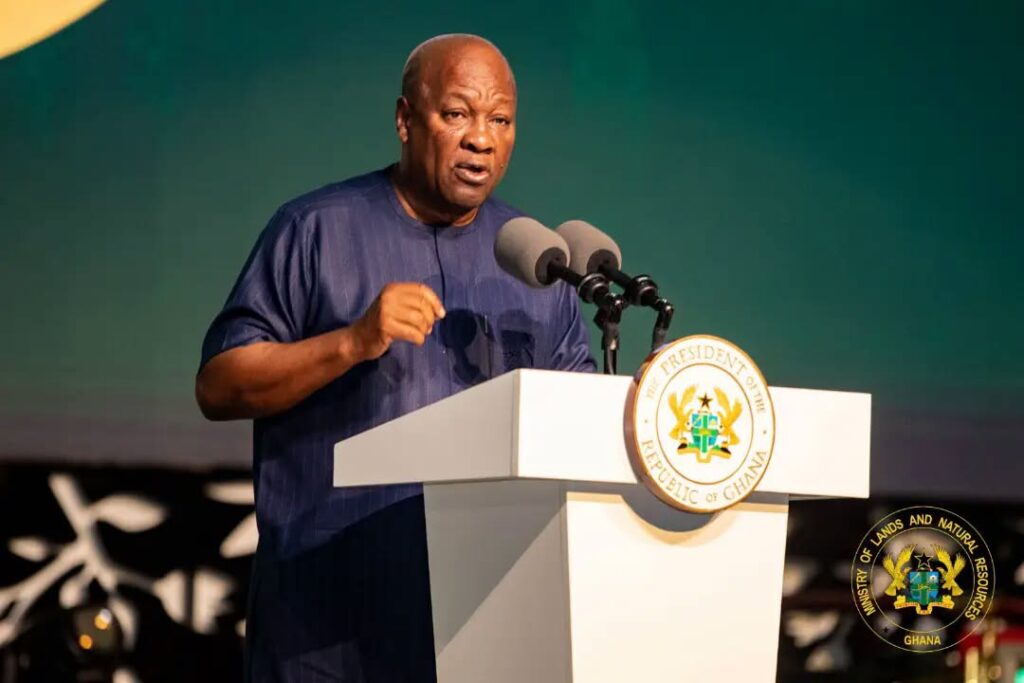
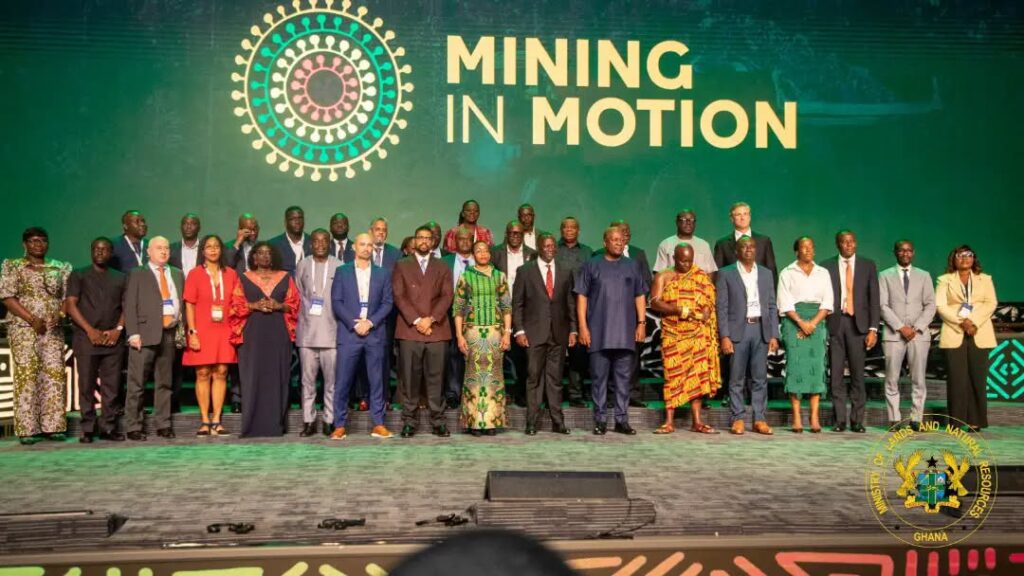
Honorable Emmanuel Armah-Kofi Buah, Minster for Lands and Natural Resources called on global investors and international stakeholders at the Mining in Motion Summit in Accra to shift focus from raw extraction toward establishing local industrial ecosystems, manufacturing enterprises, and skilled labor pools across the continent.
The Minister for Lands and Natural Resources stressed that the true benchmark of economic triumph for African nations lies in value retention rather than export volumes alone, emphasizing that current legislative updates seek to strengthen local content, procurement networks, refining capabilities, and gold traceability frameworks.
“Under the theme “One Continent. One Voice on Minerals,” our message was clear: the world needs Africa’s minerals but Africa’s priority is what those minerals build at home including industries, skills and lasting prosperity for our people.”
Honorable Emmanuel Armah-Kofi Buah
Economic Imperatives and the Drive for Value Addition
The historical reliance of African nations on raw commodity exports has long exposed domestic economies to volatile global market swings while denying local populations the compounding benefits of industrialization.
By shifting focus toward localized processing for high-value materials like lithium, aluminum, and gold, resource-rich states can drastically increase domestic employment figures and Gross Domestic Product contributions.
This transition directly addresses historical economic disparities, ensuring that raw material wealth translates into tangible infrastructure, robust capital accumulation, and sustained macroeconomic growth.
Intensive policy shifts are fundamental to breaking the dependency on foreign manufacturing centers.
Expanding refining capacity keeps fiscal rewards within national borders, creating a cascading effect across auxiliary sectors such as technology, logistics, and corporate services.
According to industry analysis, retaining raw processing capabilities can multiply export revenues manifold while fostering a resilient economic framework capable of withstanding external shocks.
Legislative Reforms and Community Empowerment
To solidify investor confidence while safeguarding indigenous interests, the Ghanaian government has advanced comprehensive structural and legislative overhauls.
Cabinet recently granted approval to a revised Minerals and Mining Policy alongside proposed amendments to the Minerals and Mining Act designated for parliamentary review.
These updates introduce stringent mandates governing licensing protocols, local participation thresholds, and community development agreements.
Government strategy also incorporates proactive measures to eliminate illicit mining operations and rehabilitate impaired ecologies through targeted interventions like the Responsible Cooperative Mining and Skills Development Programme (rCOMSDEP).
Odeneho Nana Okyere Kusi Ntrama, representing the Asantehene Otumfuo Osei Tutu II as the Omanhene of Essumeja, underscored that regulatory changes must maintain operational efficiency, transparency, and high labor safety standards.
He noted that minimizing partisan friction and regulatory uncertainty is vital to shielding stakeholders from excessive financial risk.
Strategic Outlook and Sustainable Partnership
Achieving long-term prosperity across Africa’s extractive landscapes demands a delicate balance between aggressive resource nationalism and welcoming international collaboration.
Transparent regulatory frameworks coupled with robust enforcement mechanisms serve as the cornerstone for mitigating operational uncertainties.

As regional policy directions evolve, the active inclusion of traditional leadership and local cooperatives ensures that grassroots communities maintain a vested interest in industrial preservation and ecological restoration.
Ultimately, transforming mineral endowments into generational wealth requires unwavering commitment from both public administrators and private capital partners.
By bridging the gap between raw extraction and advanced manufacturing, African economies can secure a competitive, sustainable footing in the global supply chain, ensuring that future generations inherit prosperous and industrialized societies.
READ ALSO: NHIS Uncapping Frees GH¢4 billion for Health Sector