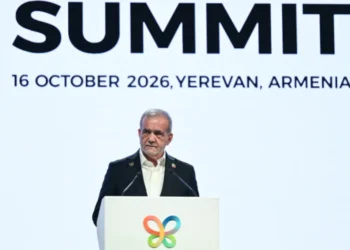
Masoud Pezeshkian’s use of the term “ecocide” has drawn attention to the potential scale and duration of environmental destruction in the Iran war.
However, Peace and Security Analyst Dr. Victor Doke has cautioned that describing damage in such terms does not automatically establish responsibility or produce accountability. “Whatever name you bring it, you allude to it, doesn’t mean you automatically have accountability and transparency with regards to that,” he said.
His comments follow the Iranian President’s warning that military operations are causing lasting environmental damage. Speaking at the 17th Conference of the Parties to the United Nations Convention on Biological Diversity in Armenia, Pezeshkian accused the United States and Israel of damaging Iran’s natural environment through attacks on industrial and energy facilities.
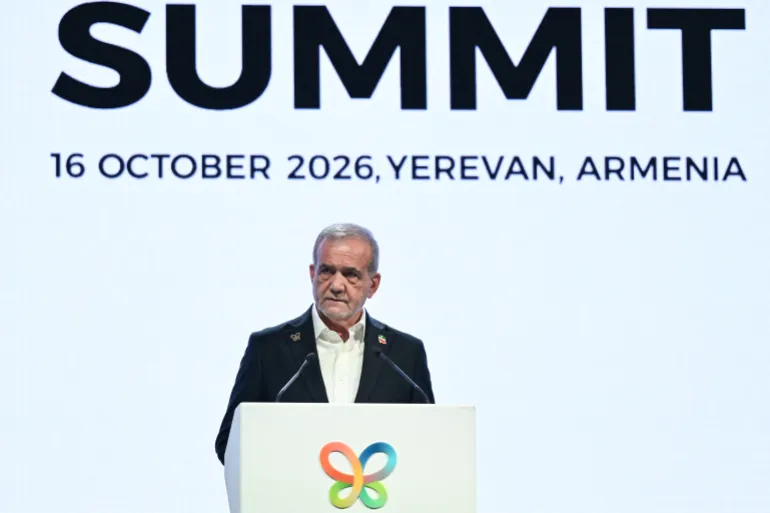
The Iranian President said that the strikes had triggered fires, released pollutants and contaminated water and soil, with consequences for forests, wetlands and wildlife habitats. He described the destruction as “ecocide” and called for stronger international mechanisms to protect biodiversity and support environmental restoration.
Speaking with The Vaultz News, Dr. Doke argued that competing claims over who initiated the conflict could make it difficult to secure agreement on responsibility for environmental harm.
“Now, it doesn’t necessarily mean that it would lead to accountability and transparency, because nobody would take responsibility for it. It would only bring accusations, because from the two fronts, U.S. could accuse Iran of starting the war. Iran could also accuse U.S. of starting the war. And so, these accusations won’t necessarily lead to accountability.”
Dr. Victor Doke
For Doke, accountability requires more than accusations exchanged by the parties. It requires an institution capable of investigating the damage, examining the conduct of those involved and establishing responsibility through an appropriate process. “When you talk about accountability, there is supposed to be an organization that is going to lead the process for the two actors to answer questions and come up to take responsibility with regards to their actions,” he said.
Environmental Consequences To Extend Beyond Battlefield
According to Dr. Doke, the environmental consequences of the US-Iran war could extend far beyond the battlefield, threatening livelihoods, regional stability and post-conflict reconstruction.

Fellow with the Faculty of Academic Affairs and
Research (FAAR) at the KAIPTC.
Dr. Doke said that environmental protection must be considered an essential part of conflict prevention and recovery, rather than a secondary concern. “In every conflict where the environment is part of, it determines to some extent the outcome of the conflict,” he said, adding that environmental conditions also shape the prospects for reconstruction after hostilities end.
He explained that farmers need productive land, communities depend on forests and people rely on marine ecosystems for fishing and other livelihoods. Damage to these resources can therefore undermine the economic foundations of communities long after fighting stops.
Dr. Doke also mentioned the regional implications of environmental harm, particularly in the Middle East, where countries and economies are connected through shared ecosystems and critical infrastructure.
He warned that the consequences of damage within Iran could extend to neighbouring states, especially if pollution or disruptions to marine environments affect resources beyond national borders.
Dr. Doke cautioned that environmental degradation could also contribute to displacement and migration. Communities unable to farm, fish or access essential resources may be forced to move, placing additional pressure on host communities. “If it isn’t enough, then it means they’ll come into conflict with those host indigenes,” he said, describing how competition over limited resources could generate tensions beyond the original conflict.
International Law Provides Avenues For Redress
Dr. Doke said that international treaties and legal frameworks already impose obligations on parties to armed conflicts, including rules governing the protection of the natural environment.
He identified the International Court of Justice (ICJ), which hears disputes between states, and the International Criminal Court (ICC), which prosecutes individuals for crimes within its jurisdiction, as possible avenues for addressing relevant legal questions.
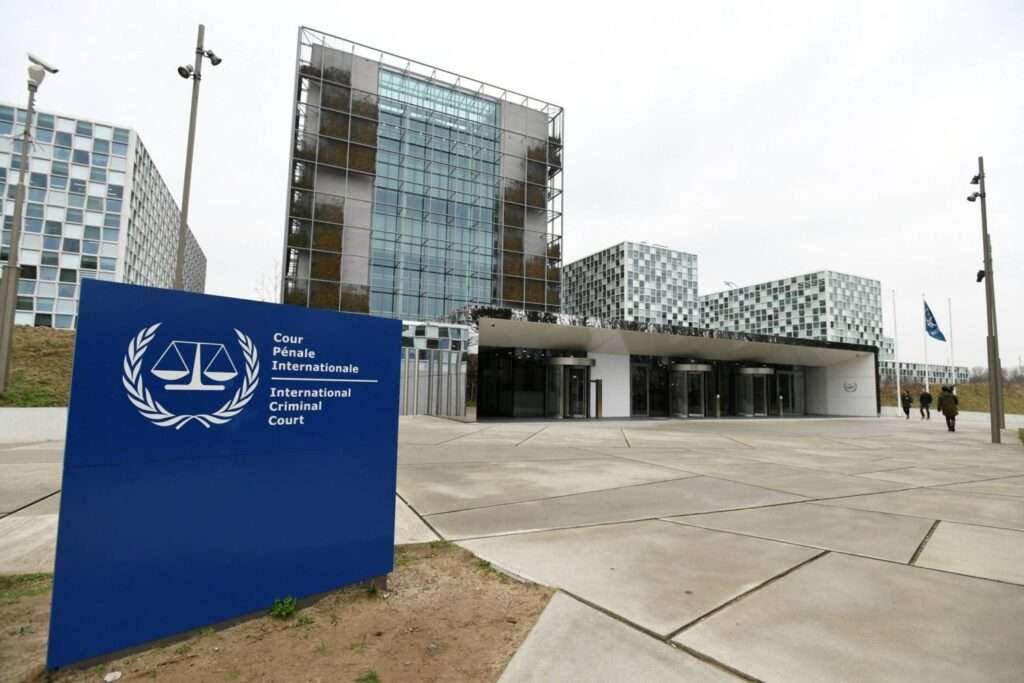
He also stressed that countries should respect existing rules intended to limit environmental destruction during military operations.
However, the availability of legal mechanisms does not mean that every allegation will lead to a successful case or that responsibility can be established without evidence. Jurisdiction, applicable legal standards and the circumstances of each incident remain important considerations.
Dr. Doke said that environmental assessments would be essential to understanding the consequences of the conflict and determining what restoration measures are required.
Sanctions May Complicate Environmental Recovery
Additionally, the Analyst warned that economic sanctions could further constrain Iran’s capacity to address environmental damage, particularly if the country must simultaneously meet its population’s basic needs.
Environmental recovery can require extensive funding for scientific assessments, specialist expertise, pollution management and the restoration of damaged ecosystems. “Placing sanctions on a country economically means that you wouldn’t have inflows of finances to even tackle your domestic problems,” Doke said.
He argued that international institutions could help address these constraints by coordinating recovery programmes and bringing in implementing partners, provided such efforts were undertaken in agreement with the affected country. “The sanctions on Iran should not be an impediment to what international community or the organizations in charge of environmental protection,” he said.
His proposal places emphasis on international cooperation, particularly where the resources needed for recovery exceed a conflict-affected country’s capacity.
Global South Faces Wider Economic Risks
Moreover, Dr. Doke warned that environmental damage could compound economic difficulties in developing countries already exposed to high energy costs and other external pressures.
He said that disruptions affecting the region could have consequences for oil supplies and prices, adding to the financial burdens facing countries in the Global South.
Further damage to natural resources and infrastructure, he argued, could increase recovery costs while reducing the resources available to address immediate social and economic needs.
Pezeshkian has called for stronger international mechanisms to protect biodiversity, greater funding for restoration and recognition of the challenges facing developing countries affected by conflict, sanctions and climate pressures.
Doke’s analysis emphasizes the importance of establishing the extent of environmental damage, identifying appropriate legal avenues and coordinating recovery efforts across borders.
Ultimately, he said, environmental protection must form part of the international response to conflict because the consequences can persist long after military operations end.
The challenge, therefore, is not simply to acknowledge environmental destruction, but to establish what happened, determine responsibility where the evidence permits and ensure that affected communities and ecosystems receive the support needed to recover.